
₹10L, ₹20L or ₹30L Salary? What You Really Need to Live Comfortably in India’s Top Cities in 2026
Rising Costs Are Redefining “Good Salary” in Metro Cities
The idea of a “good salary” in India’s metro cities has changed dramatically. In 2026, rising inflation—especially soaring rents and daily living expenses—has put significant pressure on earnings. Today, the real question is not just how much you earn, but how much you’re able to save after covering essential costs.
In cities like Mumbai, Bengaluru, and Delhi, even high salaries often feel insufficient due to the increasing cost of living.
What Does It Cost to Live in Tier-1 Cities?
The biggest expense in metro cities is rent, followed by food, utilities, and transportation. While a basic monthly expense for a single person may start around ₹27,000, in Tier-1 cities it can easily rise to ₹50,000–₹60,000 or more.
Here’s an approximate rent range for a 1BHK apartment:
- Mumbai: ₹30,000 to ₹60,000+
- Bengaluru: ₹20,000 to ₹30,000
- Delhi NCR: ₹18,000 to ₹30,000
Clearly, housing costs alone can significantly impact your financial health.
Why Rent Plays a Decisive Role
Two individuals earning the same salary can have completely different financial outcomes depending on their rent. For example, someone paying ₹20,000 monthly rent will save far more than someone paying ₹50,000.
This is why rent often becomes the defining factor in determining your lifestyle and savings potential. Experts recommend saving at least 20% of your income, which means your earnings must comfortably exceed your expenses.
Monthly Expenses in Other Major Cities
Even outside Tier-1 cities, living costs are rising steadily. Here’s a snapshot of monthly expenses (excluding rent):
- Pune: ₹25,000 – ₹45,000
- Hyderabad: ₹12,000 – ₹50,000
- Chennai: ₹15,000 – ₹50,000
- Kolkata: ₹20,000 – ₹40,000
While these cities may be slightly more affordable, costs can still escalate depending on lifestyle choices.
How Much Salary Is Actually Enough?
Let’s break down what different salary levels mean in 2026:
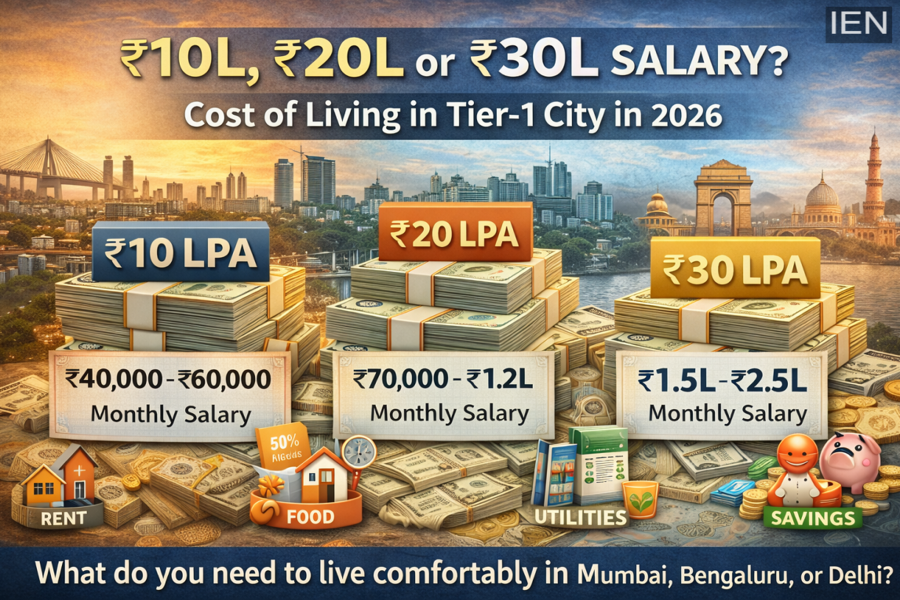
₹5–8 LPA (₹40,000–₹60,000/month)
- Covers basic needs
- Very limited or no savings
- Financial stress likely in metros
₹9–15 LPA (₹70,000–₹1.2 lakh/month)
- Decent lifestyle
- Some savings possible
- Limited flexibility for emergencies or luxury
₹18–30 LPA (₹1.5–₹2.5 lakh/month)
- Comfortable living
- Regular savings and investments
- Better lifestyle choices
₹40 LPA+ (₹3 lakh/month and above)
- Financial freedom
- Strong wealth-building opportunities
- Ability to manage lifestyle, savings, and emergencies with ease
Why Even High Earners Feel the Pressure
A noticeable trend in 2026 is that even people with high salaries feel financially stretched. The reason? Lifestyle inflation. As income increases, expenses tend to rise as well—often at the same pace.
Over time, this reduces the ability to save, making even a ₹20–₹30 LPA salary feel insufficient in expensive cities.
What Defines a Comfortable Life Today?
A truly comfortable lifestyle is no longer just about covering expenses. It includes:
- Consistent savings (at least 20%)
- Emergency fund availability
- Ability to handle unexpected expenses
- Balanced spending on lifestyle and leisure
In simple terms, a good salary is one that allows you to live, save, and grow your wealth simultaneously.
Final Takeaway
In India’s Tier-1 cities, ₹10 LPA may cover basic needs, ₹20 LPA can offer stability, but ₹30 LPA or more is often required for a truly comfortable and stress-free life in 2026.
As living costs continue to rise, financial planning, disciplined spending, and smart saving habits are more important than ever. Your salary alone doesn’t define your financial health—how you manage it does.
