
Zero Tax on ₹15 Lakh Salary? Here’s How Smart Planning Can Eliminate Your Tax in New Regime
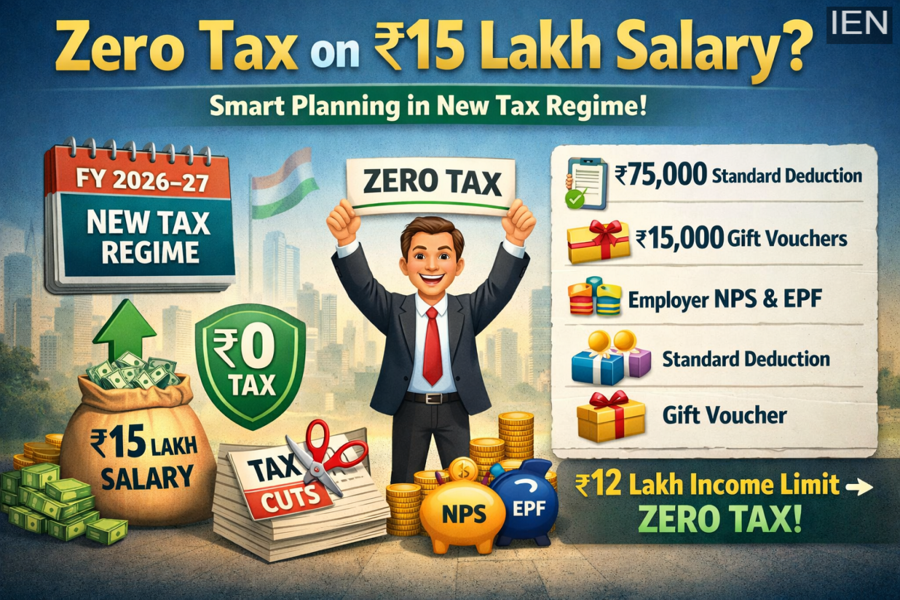
If you believe that a higher salary always means paying more tax, this update may completely change your perspective. Under India’s new tax regime for FY 2026–27, it is possible to legally reduce your tax liability to zero—even with a salary close to ₹15 lakh. The key lies in smart salary structuring and understanding available benefits.
Let’s break down the complete calculation in a simple and practical way.
How the New Tax Regime Works
The new tax regime has now become the default system for taxpayers in India. While it offers lower tax rates, it allows limited deductions. However, certain benefits and exemptions still help reduce your taxable income significantly.
✔ Zero Tax Up to ₹12 Lakh (After Rebate)
If your taxable income is up to ₹12 lakh, you may not have to pay any income tax due to rebate provisions under tax rules.
Standard Deduction Boost
Salaried individuals get a flat standard deduction of ₹75,000.
👉 Example:
- Salary = ₹12.75 lakh
- Standard deduction = ₹75,000
- Taxable income = ₹12 lakh
- Result = Zero tax liability
Additional Benefit: Tax-Free Gift Vouchers
From FY 2026–27, companies can offer gift vouchers up to ₹15,000, which are not taxable.
👉 This means:
₹12.75 lakh + ₹15,000 = ₹12.90 lakh income effectively tax-free
How ₹14.80 Lakh Salary Can Become Tax-Free
With proper salary structuring, even a higher salary can result in zero tax. Here’s a simplified example:
| Component | Amount (₹) | Explanation |
|---|---|---|
| Total CTC | 14,80,000 | Full salary package |
| Basic Salary | 7,32,500 | Around 50% of CTC |
| Employer NPS (14%) | 1,02,550 | Tax benefit |
| Employer EPF (12%) | 87,900 | Tax benefit |
| Standard Deduction | 75,000 | Fixed deduction |
| Gift Voucher | 15,000 | Tax-free benefit |
| Total Deductions | 2,80,450 | Total savings |
| Taxable Income | ~11,85,000 | Falls under rebate limit |
👉 Result: No tax payable
Conditions to Avail This Benefit
To achieve zero tax on higher salaries, you must ensure:
- Your salary includes employer contributions to NPS and EPF
- Your salary structure is optimized by your company
- You are a salaried employee
- You fall under the new tax regime
New Tax Slabs (Effective April 1, 2026)
Here’s how the revised tax structure looks:
- ₹0 – ₹4 lakh → 0%
- ₹4 – ₹8 lakh → 5%
- ₹8 – ₹12 lakh → 10%
- ₹12 – ₹16 lakh → 15%
- ₹16 – ₹20 lakh → 20%
- ₹20 – ₹24 lakh → 25%
- Above ₹24 lakh → 30%
Why This Strategy Works
The idea is simple:
Reduce your taxable income, not your actual earnings.
By combining:
- Standard deduction
- Employer contributions (NPS + EPF)
- Tax-free perks
…you can legally bring your taxable income below ₹12 lakh and enjoy zero tax benefits.
Final Takeaway
The new tax regime is not just about lower tax rates—it’s about smart planning. With the right salary structure and awareness of benefits, even a ₹15 lakh salary can result in zero tax liability.
Before making financial decisions, consult your employer or a tax advisor to structure your salary efficiently. A little planning today can save you a significant amount of tax tomorrow.
