
Zero Balance Bank Account Explained: Free ATM Withdrawals, UPI Access and Easy Banking for Everyone
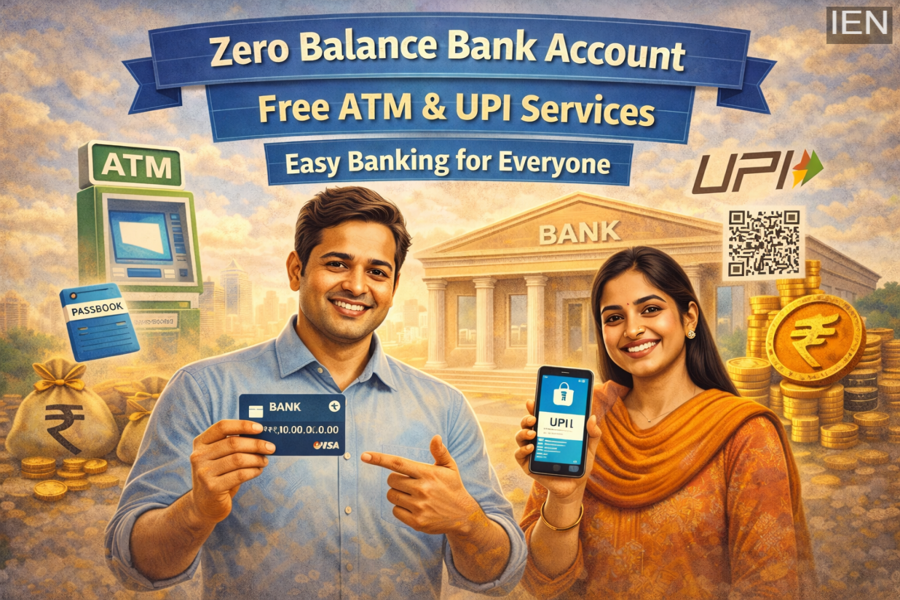
Banking in India is becoming more accessible and convenient as financial inclusion continues to expand across the country. To make banking services available to a wider population, the Reserve Bank of India (RBI) introduced the Basic Savings Bank Deposit (BSBD) Account, commonly known as the zero balance account.
This type of bank account allows customers to open and maintain a savings account without the requirement of maintaining a minimum balance. In simple terms, account holders do not need to worry about penalties if their account balance falls below a certain limit.
The initiative has been designed to bring more people into the formal banking system, especially individuals who may have irregular incomes or limited savings. Students, homemakers, daily wage workers, and small traders can all benefit from this simple and accessible banking option.
What Is a Zero Balance Account?
A Basic Savings Bank Deposit (BSBD) Account is a special savings account introduced under RBI guidelines to encourage financial inclusion. Unlike regular savings accounts, it does not require customers to maintain a minimum balance.
Even if the balance drops to zero, banks cannot impose penalties on the account holder. This feature makes the account particularly useful for individuals who do not maintain large savings or who use the account mainly for basic transactions.
The BSBD account is also closely linked with several government initiatives aimed at expanding banking access across rural and semi-urban areas.
Key Features and Benefits
Zero balance accounts offer several essential banking facilities that help users manage their money easily. Some of the main benefits include:
Free ATM Withdrawals
Account holders can withdraw cash from ATMs free of charge, although the number of free withdrawals allowed each month may vary depending on the bank.
UPI and Digital Payment Access
Customers can use UPI, mobile banking, and internet banking services to send and receive money digitally. This makes the account compatible with modern digital payment systems widely used in India.
Free Debit Card and Passbook
Most banks provide a debit card and passbook at no additional cost, allowing customers to access ATM services and maintain transaction records.
Simple and Paperless Account Opening
Opening a zero balance account is usually quick and easy. Many banks offer paperless application processes, enabling customers to open accounts digitally without lengthy paperwork.
Banks Offering Zero Balance Accounts
Almost all major banks in India provide zero balance accounts under the BSBD framework. These include both public sector and private sector banks.
Some of the leading banks offering this facility include:
-
State Bank of India (SBI)
-
Punjab National Bank (PNB)
-
Bank of Baroda
-
HDFC Bank
-
ICICI Bank
-
Axis Bank
Public sector banks have played a major role in expanding this facility to rural areas and smaller towns, while private banks often offer faster digital onboarding through mobile apps and online platforms.
How to Open a Zero Balance Account
Opening a BSBD account is straightforward and requires only basic documentation. Typically, the following documents are required:
-
Aadhaar card
-
PAN card
-
Passport-size photograph
There are multiple ways to open the account:
Online Application:
Customers can apply through the bank’s official website or mobile application.
Video KYC:
Many banks offer video KYC verification, allowing applicants to complete identity verification digitally using Aadhaar and PAN.
Bank Branch Visit:
Those who prefer offline processes can visit the nearest bank branch and complete the account opening procedure in person.
Important Things to Know
While zero balance accounts offer many benefits, there are a few limitations customers should keep in mind.
-
The number of free ATM withdrawals may be limited depending on the bank.
-
Some banks may not provide cheque book facilities for this type of account.
-
Individuals who frequently make large financial transactions may find a regular savings account more suitable.
Despite these limitations, the account remains a valuable option for people who need basic banking services without financial restrictions.
A Step Toward Financial Inclusion
The introduction of zero balance accounts represents a major step toward expanding financial services across India. By removing the minimum balance requirement and simplifying the account opening process, the RBI has made it easier for millions of people to access formal banking.
For individuals who want simple, affordable, and digital-friendly banking, the Basic Savings Bank Deposit Account offers a practical solution. It not only helps people manage their finances but also supports India’s broader goal of building a stronger and more inclusive digital economy.
