
Will you get 5 kg or 35 kg of food grain with the ration card, and which documents are required?
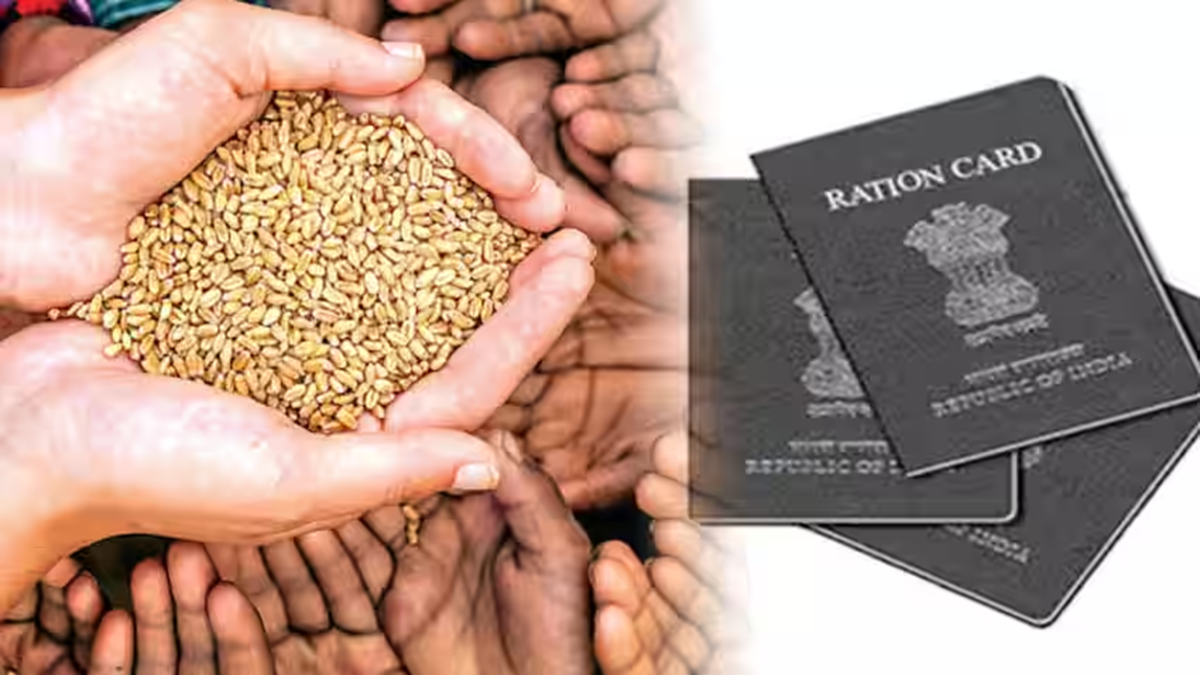
A ration card is not merely a document for obtaining subsidized rations; for many families, it is a vital means of accessing government food schemes. Through it, eligible families receive food grains like wheat and rice at subsidized rates. Under the National Food Security Act (NFSA), eligible families receive rice, wheat, and other food grains in accordance with established rules. State governments determine the rules and eligibility criteria associated with ration cards.
In Delhi, the ration card process has been digitized. Applications for new ration cards and for adding family members began on the e-District portal in May. Applicants with old, pending applications have also been allowed to update necessary information and documents by having their applications returned to their login accounts.
What is a ration card, and what are its benefits?
With a ration card, eligible families can collect their allocated share of food grains from government ration shops, also known as Fair Price Shops. Under the NFSA, families in the Antyodaya Anna Yojana (AAY) category receive 35 kg of food grains per family each month. Meanwhile, the Priority Household (PHH) category provides for 5 kg of food grains per person. Ration cards are also used in various places as records of family and residence. However, whether they are accepted as mandatory proof of identity or address for every government service depends on the specific rules of that service.
What is the difference between APL, BPL, and Antyodaya cards?
The terms APL (Above Poverty Line) and BPL (Below Poverty Line) were widely used in older ration card classification systems. However, under the current national system established by the NFSA, the primary beneficiary classifications are AAY and PHH. State governments determine the process for identifying and selecting eligible families. AAY (Antyodaya Anna Yojana) is intended for the most needy families; such families receive 35 kg of food grains per family per month. PHH families receive 5 kg of food grains per person.
How do I get a new ration card? You can apply online for a new ration card in Delhi. By logging in or registering on the e-District portal, you can select the relevant service offered by the Department of Food and Supplies. The portal provides the facility to apply for AAY (Antyodaya Anna Yojana) or Priority Household cards.
Applications can be submitted online from the comfort of your home. Those who face difficulties with the online process can seek assistance from a nearby facilitation center. Once the application is submitted, the department verifies the documents and eligibility.
**Which documents are required?**
For a new application in Delhi, key documents include an Aadhaar card, proof of residence, and a recent income certificate. Aadhaar details of family members must also be provided in the application. Applicants with previously pending requests have also been asked to resubmit their applications along with a valid family income certificate and the necessary documents.
Documents such as Aadhaar, Voter ID, driving license, passport, registered rent agreement, bank passbook, or electricity/water bills may be accepted as proof of residence. However, the specific list of documents may vary depending on the service being availed.
**How to add or remove a name from the ration card?**
A new family member's name can be added to the ration card. A dedicated service for "New Member Addition" is available on Delhi's e-District portal. Similarly, there is a "Member Deletion" service to remove a family member's name. In cases of deletion, relevant supporting documents may be required depending on the reason; for instance, a death certificate might be requested in the event of a death. Relevant documents may also be required in situations such as marriage or changes in family composition.
**How to update the address and mobile number?**
Various services are available on the e-District portal to modify ration card records in Delhi. These include updating member details, changing the head of the family, transferring the ration card within Delhi, and updating other information. A new proof of residence may be required if the address changes. Accurate Aadhaar and ration card details must be provided when updating a mobile number or other information. The department may verify documents after the application is submitted.
Therefore, before applying, keep the Aadhaar details of all family members, income certificates, and address-related documents ready. Eligibility is determined according to state regulations; hence, it is always best to apply through the official portal of the respective state.
Disclaimer: This content has been sourced and edited from News18 Hindi. While we have made modifications for clarity and presentation, the original content belongs to its respective authors and website. We do not claim ownership of the content.
