
Will there be a charge for failed ATM transactions? How many times can you withdraw cash for free? RBI issues new rules for ATMs and PoS.
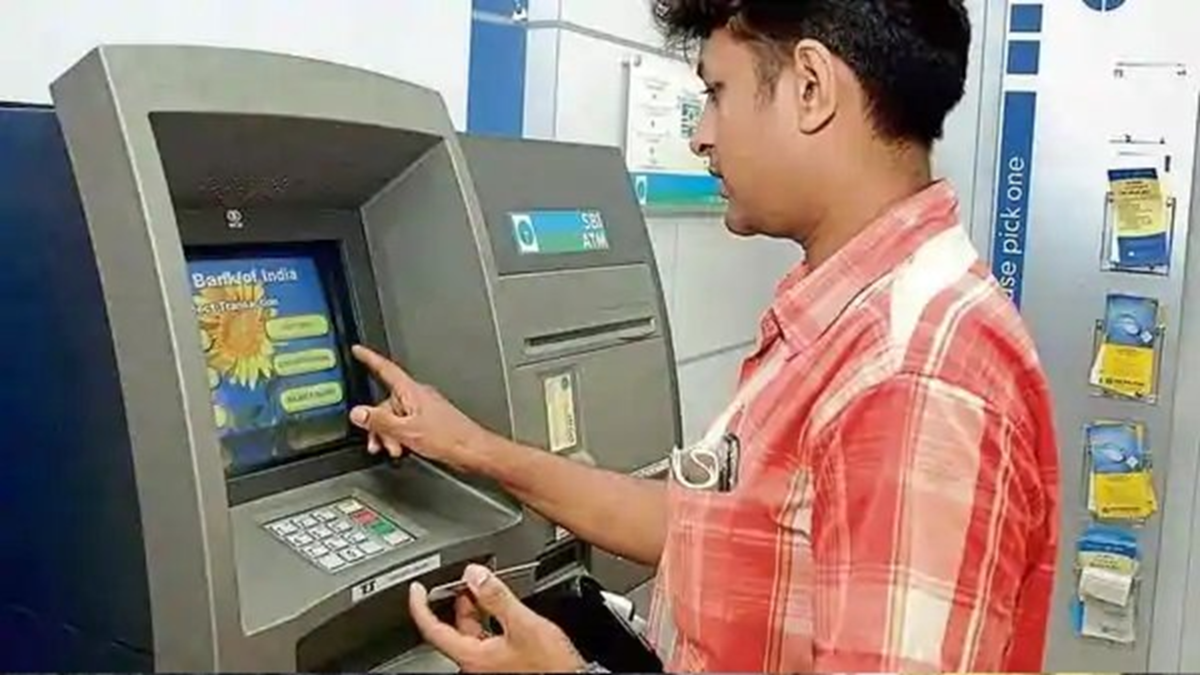
On November 27, the Reserve Bank of India (RBI) consolidated all its existing instructions regarding cash withdrawals via Automated Teller Machines (ATMs) and Point-of-Sale (PoS) terminals into a single 'Master Direction'. Consequently, 17 previous circulars issued between 2008 and 2022 have been repealed.
Under these new guidelines, banks are required to inform customers about the number of 'free ATM transactions' they have already utilized during the month, as well as the charges applicable to any subsequent withdrawals. Banks must also clearly indicate whether an ATM is located in a 'metro' or 'non-metro' area, enabling customers to better understand their free transaction limits.
When do these instructions come into effect?
The RBI's new directives have come into immediate effect and apply to all Scheduled Commercial Banks, Regional Rural Banks, Cooperative Banks, authorized payment system providers, and system participants. The RBI has mandated that banks implement a system to keep customers informed about the number of free transactions they have used in a given month and the potential charges for any further transactions.
How will banks provide this information?
Banks operating ATMs must disclose—via on-screen messages, stickers, or posters—whether the ATM is situated in a metro or non-metro area. Furthermore, they must ensure that the location data for each ATM remains accurate and up-to-date in their databases to minimize the scope for disputes.
What is the limit for free ATM withdrawals?
It should be noted that there has been no change to the existing limits on free ATM transactions. Customers with savings accounts are entitled to 5 free transactions (covering both financial and non-financial transactions) per month at their own bank's ATMs. At ATMs of other banks, customers are entitled to 3 free transactions in metro cities and 5 in non-metro cities. It should be noted that even if a customer uses both types of ATMs, the total limit for free transactions remains 5.
What are the charges?
Banks may, at their discretion, offer a higher number of free transactions. For transactions exceeding the prescribed limit, the charge cannot exceed ₹23 per transaction (plus applicable taxes). Banks are required to establish a policy, approved by their board, for the imposition of these charges.
No charges can be levied on ATM transactions that are not completed. The RBI has clarified that transactions failing due to technical issues (such as hardware, software, or communication problems) or a lack of cash shall not be considered 'valid ATM transactions.'
Similarly, if a transaction fails due to an error on the part of the bank or the service provider (such as an incorrect PIN or a validation-related issue), no charges shall be applied. Banks must provide information regarding the maximum cash withdrawal limit at ATMs, the number of free transactions, and any applicable charges in English, Hindi, and the local language.
What are the guidelines for PoS?
UPI has also been included within the scope of PoS (Point of Sale) cash withdrawal limits. Under these integrated guidelines, cash can be withdrawn from PoS terminals using debit cards, full-KYC prepaid payment instruments (PPIs), and UPI. The limit is ₹2,000 per transaction, with a cumulative monthly limit of ₹10,000 across all locations.
If any charges are levied on customers, they cannot exceed 1 percent of the transaction amount. This facility must be available at merchant establishments, "regardless of whether the cardholder makes a purchase there or not."
Interoperable Cardless Cash Withdrawal
If a customer withdraws cash alongside a purchase, the receipt must "separately display the amount of cash withdrawn." Banks are required to offer this facility—subject to board approval—and must conduct appropriate due diligence on the merchant establishments.
Merchants are advised to clearly display the availability of this facility and any applicable charges. The RBI has retained the provisions for interoperable cardless cash withdrawals at ATMs. This process utilizes UPI for customer authorization, with settlement facilitated through the 'National Financial Switch' or the respective ATM network.
What about the 17 previous circulars?
The 17 previously issued circulars have been withdrawn. These rescinded circulars contained regulations concerning ATM customer charges, limits on free transactions, resolution of failed transactions, cash withdrawals at Point of Sale (PoS) terminals, UPI-based cash withdrawals at merchant locations, and interoperable cardless cash withdrawals.
For grievance redressal, banks and PPI (Prepaid Payment Instrument) issuers must adhere to the 'RBI Integrated Ombudsman Scheme, 2026.' Furthermore, existing directives regarding the turnaround time (TAT) for resolving failed transactions and the compensation payable to customers remain in effect.
Disclaimer: This content has been sourced and edited from Dainik Jagran. While we have made modifications for clarity and presentation, the original content belongs to its respective authors and website. We do not claim ownership of the content.
