
Will the ₹500 note be discontinued? Can the economy function using only ₹100 and ₹200 notes?
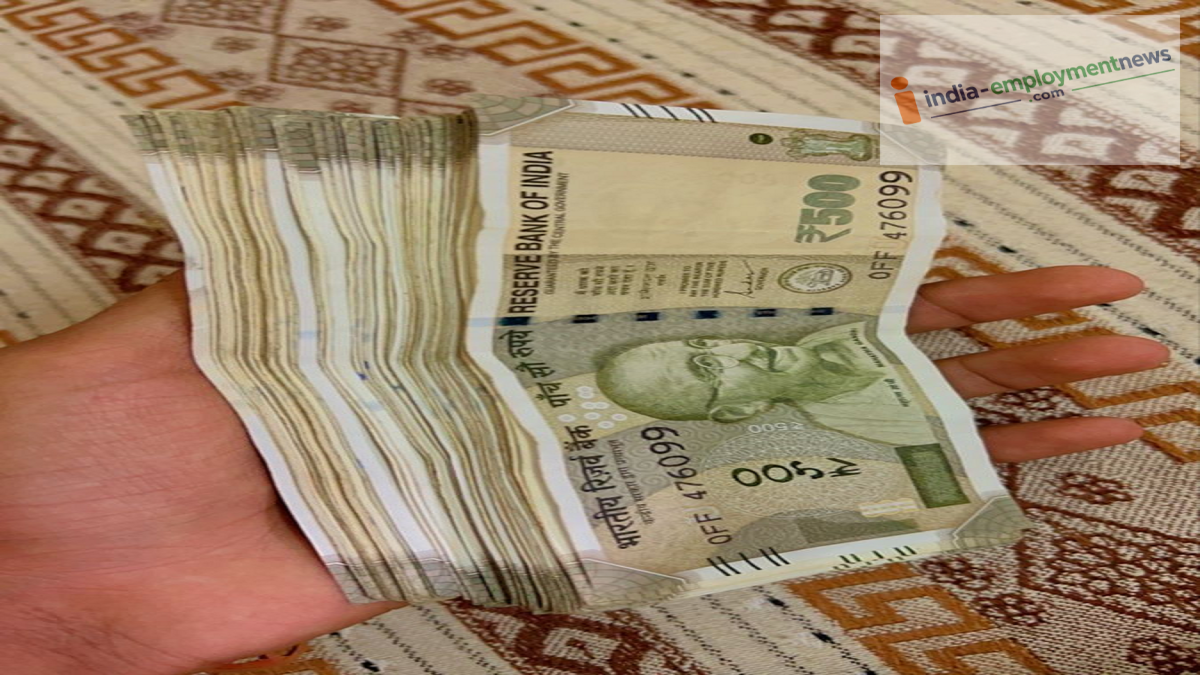
Chandrababu Naidu has called for the discontinuation of the ₹500 note. Let’s explore what impact this might have on small business owners, the general public, and the economy—especially as the use of UPI continues to grow.
Andhra Pradesh Chief Minister N. Chandrababu Naidu has sparked a new debate by suggesting that the ₹500 note be discontinued in India. He proposes promoting the use of ₹100 and ₹200 notes while further strengthening digital payments. The rationale behind this is that high-denomination notes make it easier to hoard black money, pay bribes, and use cash for election-related expenses.
However, the issue goes beyond just black money. If the ₹500 note were to be withdrawn, could the national economy function using only smaller-denomination notes? Would daily operations remain smooth for everyone—from vegetable vendors and grocery store owners to small-scale entrepreneurs? And, with the rapid rise of UPI, could digital payments completely replace cash? Let’s find out.
Why is the ₹500 note important?
According to an RBI report dated October 23, 2026, approximately ₹7.40 lakh crore worth of ₹500 notes were in circulation. This accounted for about 85.8% of the total value of all currency in circulation.
This indicates that the ₹500 note is not used solely for large-value transactions. It plays a significant role in everyday activities—such as purchasing household groceries, refueling vehicles, buying medicines, paying electricity bills, and facilitating the daily transactions of small business owners.
How much have UPI transactions grown? India has made significant progress in digital payments over the last few years. Today, everything from tea stalls and vegetable carts to auto-rickshaws and grocery stores accepts payments via QR codes. However, this does not mean that the need for cash in the country has been eliminated.
According to the latest data from the NPCI, approximately 25.46 billion (2,546.67 crore) transactions were processed via UPI in October 2026, with a total value exceeding ₹31.52 lakh crore. The number of UPI transactions in October saw an increase of about 5.8% compared to September.
Why is the ₹500 note important for small businesses?
A typical grocery store owner might conduct business worth ₹10,000–₹20,000 in a single day. Customers often pay using ₹500 notes, and the shopkeeper uses this same cash to purchase stock from wholesale markets or to make payments to smaller vendors and suppliers. If the ₹500 note were unavailable, the shopkeeper would have to handle a much larger volume of ₹100 and ₹200 notes.
This would increase the burden of storing, counting, and transporting cash. Furthermore, arranging for small change can also be a significant challenge for small business owners.
Will 'black money' be eliminated?
Chandrababu Naidu argues that high-denomination notes make it easier to hoard large sums of cash and facilitate the distribution of money during elections. If only ₹100 and ₹200 notes were in circulation, transporting large amounts of cash would become significantly more difficult.
This could help curb certain illicit transactions conducted in cash. However, it is unrealistic to assume that the abolition of the ₹500 note would automatically put an end to black money and corruption. Black money is not held solely in the form of cash; it can also be stashed in assets such as real estate, gold, *benami* (proxy-held) properties, and various other forms.
Can the economy function on 100 and 200-rupee notes?
As inflation rises, the prices of goods and services increase, requiring people to spend more money than before. Larger denomination notes make it easier to pay significant amounts and manage cash. Furthermore, in a country like India, many people still rely on cash for their daily transactions. Consequently, depending solely on 100 and 200-rupee notes would force people to carry a larger number of banknotes.
While digital payments can alleviate this issue to some extent, access to the internet, smartphones, and banking facilities is not uniform everywhere. Therefore, the need for cash cannot be overlooked.
