
Will OTT subscriptions and SIP autopay become more expensive? From the stock market and insurance to petrol—how much will the charges be?
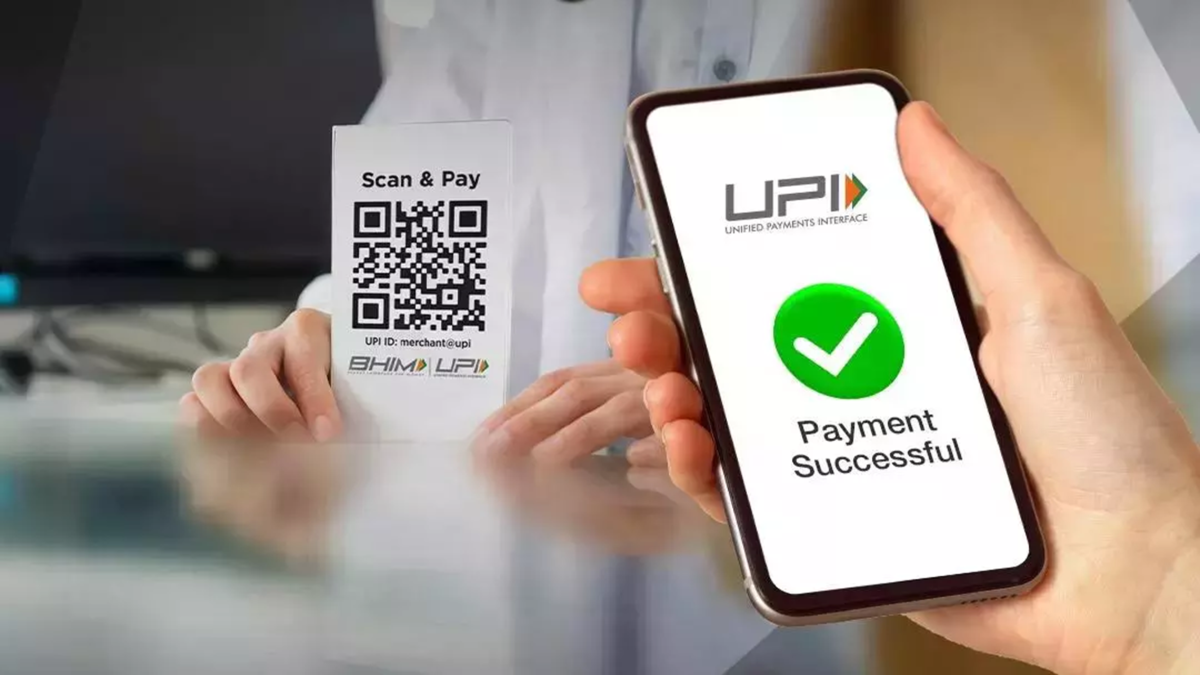
UPI MDR Charges: A uniform MDR (Merchant Discount Rate) will not apply to all UPI payments; distinct rules have been established for different sectors. Separate MDR structures exist for capital markets, insurance, petrol pumps, government bill payments, and education payments.
In many of these categories, there is no MDR for payments up to ₹2,000. For larger payments, a system involving either a flat fee or a maximum cap has been implemented. The NPCI has outlined the specific MDR rates applicable to each sector.
No charges on UPI Autopay payments
Users who utilize UPI Autopay need not worry about the MDR applicable to select UPI payments. This category includes OTT subscriptions like Netflix and Amazon Prime, as well as automatic deductions for utility bills (electricity and water) and mutual fund SIPs.
The NPCI has clarified in its FAQs that the prescribed MDR charges will not apply to UPI Autopay transactions.
What is the MDR for capital market payments?
An MDR of 0.02% will apply to UPI payments related to capital markets, subject to a maximum cap of ₹300 per transaction.
This rule applies to payments involving regulated capital market entities, such as asset management companies (AMCs for mutual funds), SEBI-registered stockbrokers, securities dealers, and investment platforms. It covers transactions like purchasing debt instruments, investing in mutual funds, and loading funds into broker wallets.
What charges apply to insurance premiums?
A separate MDR structure applies to insurance premiums. For premium payments exceeding ₹2,000, an MDR of 0.04% or a flat fee of ₹5 will be charged—whichever is applicable.
This means that for payments in this category, the MDR will not increase proportionally with the transaction amount. This arrangement is particularly beneficial for those paying large premiums, as the fee will not rise based on a percentage for substantial payments made once or twice a year.
Rules for UPI payments at petrol pumps
A flat MDR of ₹5 has been set for UPI payments exceeding ₹2,000 at petrol pumps. This means that the MDR will not increase in proportion to the rise in the petrol bill amount.
Meanwhile, the MDR will be zero for fuel payments up to ₹2,000. This implies that no MDR will be charged on small payments for petrol or diesel.
What is the MDR for electricity and water bills?
There is a separate arrangement for utility payments such as electricity, water, and piped natural gas. An MDR of ₹5 per transaction has been set for utility payments exceeding ₹2,000. No MDR will be charged on payments up to ₹2,000.
This covers electricity bills, municipal water charges, and payments for piped natural gas. The objective of this system is to keep digital bill collection cost-effective for government boards and municipal bodies.
What are the rules for school and college fees?
Education-related payments have also been placed in a separate category. This includes school fees, university term fees, and entrance exam fees for institutions. MDR will be completely waived for education payments up to ₹2,000. For payments exceeding ₹2,000, the benefit of a flat fee or a capped fee structure will apply.
This will reduce the burden of percentage-based fees on large education payments, enabling schools, colleges, and students to make substantial fee payments digitally.
Why are there different MDR rates for different sectors?
The NPCI states that payment patterns on UPI vary across sectors. While some sectors involve small, frequent payments, others—such as capital markets, insurance, and education—may involve large, one-time payments.
For this reason, distinct MDR structures have been adopted for these sectors. In some cases, the MDR is percentage-based, while in others, a flat fee or a maximum cap has been set. This approach aims to keep MDR costs under control for large payments.
Disclaimer: This content has been sourced and edited from Money Control. While we have made modifications for clarity and presentation, the original content belongs to its respective authors and website. We do not claim ownership of the content.
