
Will making UPI payments during foreign travel become expensive? Understand the full breakdown of the 0.4% fee across 11 countries..
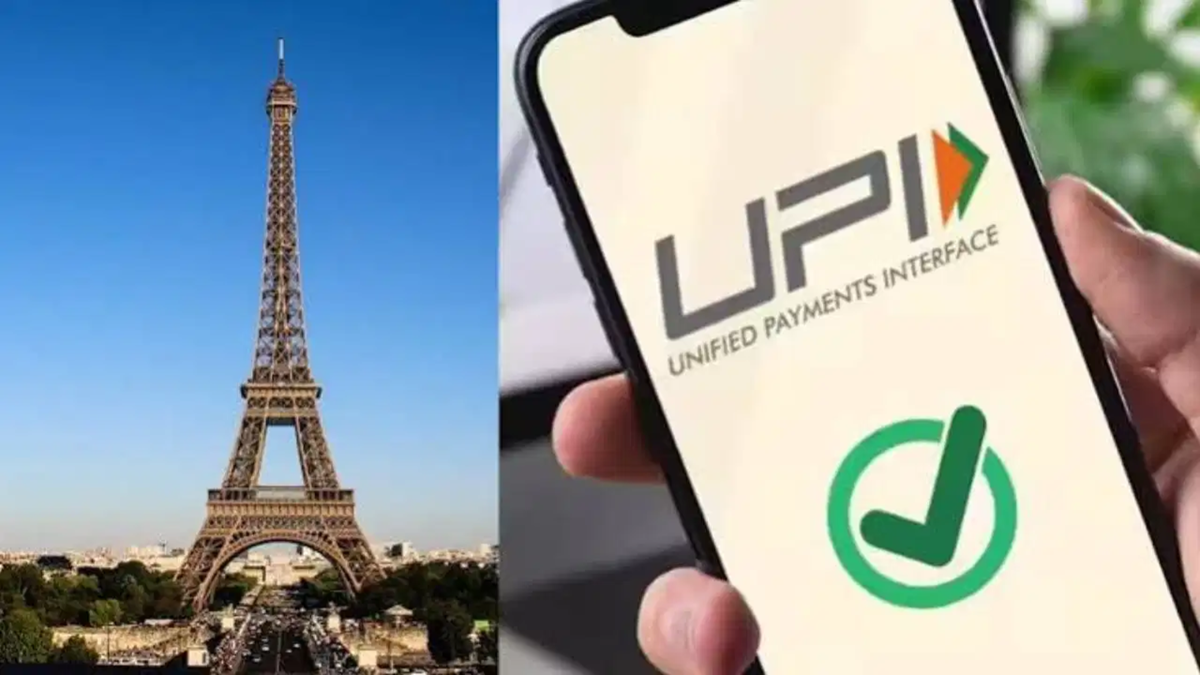
The new regulations regarding a 0.4% Merchant Discount Rate (MDR) on merchant transactions exceeding ₹2,000 in India—effective October 15—have piqued the interest of not only domestic users but also Indian travelers visiting foreign countries and Non-Resident Indians (NRIs). With UPI services currently active in 11 major countries—including France, Singapore, the UAE, Nepal, and Mauritius—under the NPCI's international arm, NIPL, a question is rapidly emerging: will this new fee structure impact payments made by scanning foreign QR codes globally?
However, according to the NPCI and financial experts, international UPI transactions operate based on cross-border forex regulations and agreements with foreign partner banks. The 0.4% MDR framework applicable domestically is focused solely on merchants registered in India (P2M). This simply means that Indian tourists making UPI payments abroad will not bear the burden of this domestic MDR fee, and their international digital payment experience will remain as transparent and seamless as before.
**UPI Network Operates in 11 Countries**
Under NIPL (NPCI International Payments Limited), the international arm of the NPCI, UPI services are active in 11 major countries worldwide:
**Europe & Middle East:** France, United Arab Emirates (UAE), Qatar, Greece.
**South & East Asia:** Singapore, Nepal, Bhutan, Sri Lanka, Maldives, Cambodia, Mauritius.
**Will Payments Made Abroad Be Affected?**
**Zero Fees for Customers:** The NPCI and the Ministry of Finance have clarified that UPI will remain completely free for general customers. Whether you buy tea in India or a pastry in France, no direct UPI charges will be levied on the customer. No impact on P2P transfers: The zero-charge policy for person-to-person money transfers will remain in effect.
International merchant fee structure: The 0.4% MDR, effective from October 15, 2026, applies only to merchants registered in India (P2M). Outlets accepting UPI abroad operate based on foreign currency exchange rates and the rules set by NIPL’s partner banks overseas. Indian MDR regulations do not impose any additional burden on customers for merchant payments made abroad.
How does UPI payment work abroad?
When an Indian user scans a UPI QR code—for instance, at Singapore’s Changi Airport or near the Eiffel Tower in France:
The amount is deducted directly from the user's Indian bank account in Indian Rupees (INR).
Just before the payment is made, the prevailing currency exchange rate and standard forex charges are transparently displayed on the payment app.
Changes to UPI payments in India
The government has announced that a small charge will apply to ‘Click-and-Pay’ UPI transactions exceeding ₹2,000 for merchant payments in India; however, there will be no charge for person-to-person transactions. The new UPI Merchant Discount Rate (MDR) framework will come into effect on October 15. In its new guidelines for the Unified Payments Interface (UPI), the National Payments Corporation of India (NPCI) stated that a 0.4% charge will apply to such transactions made by customers to merchants.
The charge is capped at ₹300 per transaction, and the Ministry of Finance has advised banks to ensure that merchants do not pass this cost burden on to customers. For merchant categories such as railways, telecom services, insurance, and fuel, the NPCI has announced a flat charge of ₹5 on UPI payments exceeding ₹2,000.
However, Indian travelers using UPI abroad and residents of those countries need not worry about the new MDR regulations; their international UPI digital payment process will remain secure and free of charge, just as before.
Disclaimer: This content has been sourced and edited from TV9. While we have made modifications for clarity and presentation, the original content belongs to its respective authors and website. We do not claim ownership of the content.
