
Will Expensive Crude Oil Make Daily Essentials Costlier? Here’s What It Could Mean for Consumers
A sharp rise in crude oil prices is beginning to worry India’s consumer goods and food processing sectors, with companies warning that if the Middle East crisis drags on, the pressure could eventually show up in the prices of everyday essentials. For now, many companies say they are absorbing the extra cost themselves, but that cushion may not last much longer.
The biggest concern is simple: when oil becomes expensive, transport, packaging, manufacturing and distribution costs all start rising together. That means the impact is not limited to petrol and diesel. It can gradually spill over into packaged food, edible oil, dairy items, snacks, beverages, personal care products and several other household-use categories.
Why Crude Oil Matters So Much for Daily Prices
Crude oil affects the economy in more ways than most consumers realise. It is not only used as fuel but also plays a key role in transportation, packaging materials, chemicals, plastics and industrial processing. So when oil prices jump sharply, companies across sectors feel the heat almost immediately.
That is exactly what is happening now. India’s crude import benchmark has moved sharply higher in March compared with February, reflecting the stress created by geopolitical tensions and supply concerns linked to West Asia. Public and market-tracking reports show a clear spike in India’s oil import basket during March.
Which Everyday Items Could Be Affected First?
If higher crude prices remain elevated for several more weeks, the first visible pressure is likely to appear in categories that depend heavily on logistics, plastic packaging, edible oil imports and fuel-intensive distribution.
1. Packaged Food and Snacks
Biscuits, namkeen, ready-to-eat food, beverages and packaged staples may face cost pressure because of:
- higher freight expenses
- rising packaging costs
- increased factory operating expenses
Many FMCG firms are already evaluating whether they should raise prices or reduce pack sizes if cost pressure continues.
2. Edible Oils
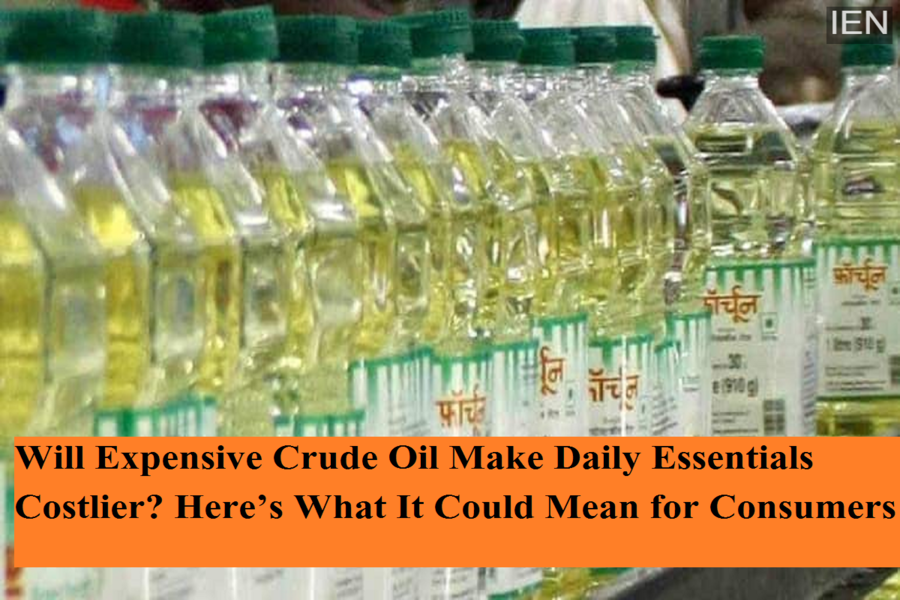
Edible oil is among the most sensitive categories because it is closely linked to import costs and shipping expenses. Companies in the segment have already indicated that if supply chain disruption continues for more than a short period, retail edible oil prices may rise.
3. Dairy and Cold-Chain Products
Milk-based and refrigerated products may also feel the pressure because transportation, chilling, storage and distribution all depend on fuel-intensive infrastructure. Companies in this space have also signaled that if current conditions persist, some part of the burden may ultimately be passed on to the consumer.
4. Household Consumables
Items such as bottled beverages, plastic-packed grocery products, detergents and low-ticket daily-use items may also see pressure because many of them rely on petrochemical-based packaging materials.
Are Prices Going Up Right Away?
Not necessarily — and that is the key point.
At the moment, many companies appear to be trying to hold retail prices steady, at least temporarily, instead of passing on the full burden immediately. This is usually done to protect demand, avoid customer backlash and remain competitive in a price-sensitive market like India.
But this strategy works only for a limited time.
If crude stays high for just a few days or a couple of weeks, many firms may continue to absorb the impact. But if the pressure stretches into a longer period, companies may have to choose between:
- increasing prices,
- reducing pack sizes,
- lowering trade discounts,
- or accepting lower profit margins.
In India, this often shows up first not as a dramatic headline price hike, but as gradual increases or “shrinkflation” — where consumers pay the same price for slightly less quantity.
Why the Middle East Situation Matters So Much for India
India is highly dependent on imported crude oil, and a significant portion of global oil movement is linked to sensitive shipping routes in and around West Asia. Even if there is no full supply disruption, fear of disruption alone can push crude prices up sharply.
That matters because India imports most of its energy needs. A sustained oil rally can affect:
- import bills
- transport costs
- the rupee
- inflation
- and eventually household budgets
Recent economic commentary and market coverage suggest that while India may have some inflation cushion in the short term, prolonged energy stress can still raise cost pressure across the economy.
So, Should Consumers Be Worried?
At this stage, panic is unnecessary — but indifference would also be a mistake.
The current trend does not automatically mean that all grocery bills will suddenly jump overnight. However, if crude prices remain elevated and geopolitical tensions do not ease, then a rise in the prices of some daily essentials becomes increasingly likely.
What consumers should watch over the next few weeks:
- Edible oil prices
- Packaged food MRP changes
- Transport and delivery charges
- Small quantity reductions in common products
- Fuel-related revisions that affect logistics
In many cases, the earliest warning signs appear quietly at the retail level before broad inflation becomes visible in official data.
Final Takeaway
Yes, expensive crude oil can eventually make daily essentials more expensive, but the effect is usually indirect and delayed rather than immediate.
Right now, many companies are still trying to shield consumers from the full impact. But if the Middle East crisis continues and oil prices stay high, categories such as edible oil, packaged foods, dairy products, logistics-linked goods and plastic-packed essentials may start becoming more expensive in the coming weeks.
In short: the pressure is building — the only real question is how long companies can keep absorbing it.
