
Will E10 petrol make a comeback for older vehicles? Here is the recommendation given to the government..
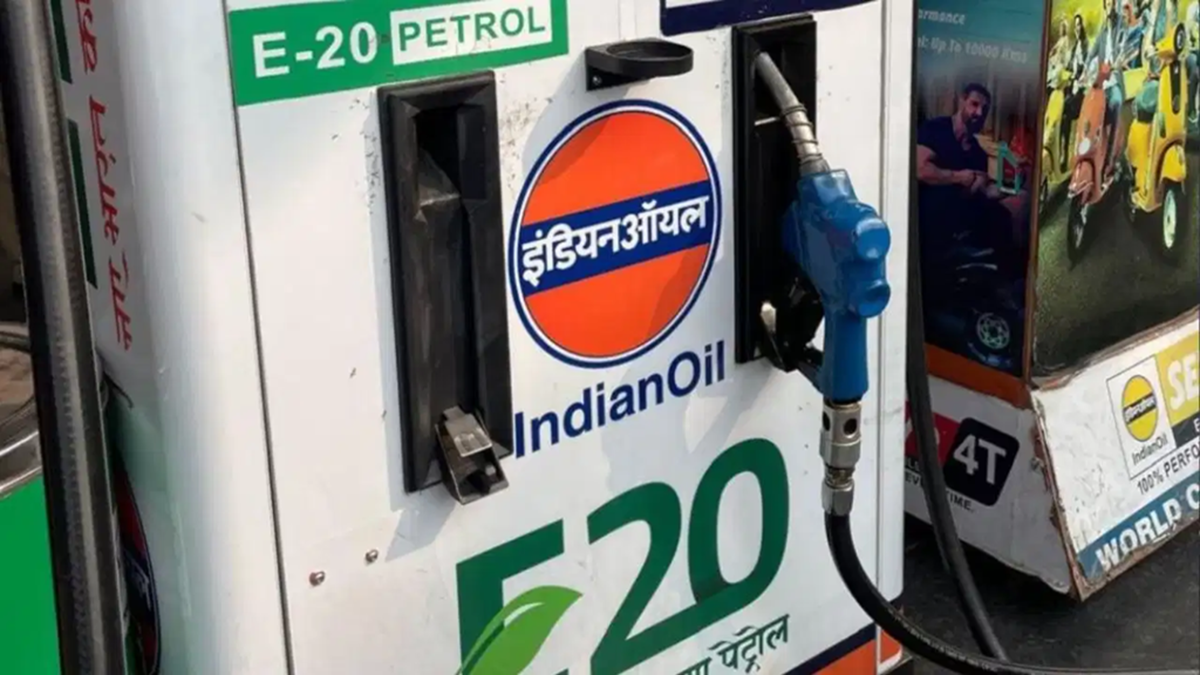
There has been ongoing discussion in India regarding E20 petrol. Chief Economic Advisor V. Anantha Nageswaran has now suggested that the government should make petrol with lower ethanol content—such as E10—available at petrol pumps alongside E20. He believes this could significantly alleviate concerns for owners of older vehicles. Nageswaran made these remarks in an article co-authored with Akash Poojari, an advisor in the Department of Economic Affairs. According to them, having the option of lower-ethanol petrol like E10 alongside E20 would make it easier to operate older vehicles.
Last month, the government clarified that there is currently no proposal to reintroduce low-ethanol petrol variants like E0 or E10. E20 was rolled out nationwide last year, and it has been the standard grade available at petrol pumps since April.
Why does E20 reduce mileage?
According to Nageswaran and Poojari, ethanol contains about two-thirds the energy of petrol. Consequently, increasing the ethanol content in petrol leads to a slight drop in mileage. They estimate that E20 could result in an energy-related difference of approximately 6–7%. However, they dismissed claims circulating online about a mileage drop of up to 30% as incorrect. They also noted that blending ethanol reduces emissions of certain pollutants, such as carbon monoxide and unburnt hydrocarbons.
Why is it a problem for older bikes and scooters?
The primary concern relates to older two-wheelers—specifically those manufactured before the BS4 era—that utilize carburetors. Reports suggest there could be around 75 to 80 million such older two-wheelers in India. Carburetors cannot automatically adjust fuel intake to account for the extra oxygen present in E20 petrol. As a result, the engine may receive less fuel relative to air when running on E20, potentially causing it to run hotter. Rubber seals in older vehicles can also pose a problem. If these seals are not designed for ethanol, prolonged exposure to the fuel could cause them to deteriorate.
Why could E10 be the solution?
The report notes that replacing these rubber seals is not prohibitively expensive, but doing so for millions of older vehicles would take a significant amount of time. Therefore, while the process of making older vehicles E20-compatible is underway, the E10 option could be made available at petrol pumps. Nageswaran and Pujari believe that offering both E10 and E20 options would alleviate concerns for owners of older vehicles. Additionally, this approach could help manage overall ethanol consumption rather than simply driving it up.
How viable is moving beyond E20?
Questions have also been raised regarding higher ethanol blends like E27 or E30. India imports crude oil worth approximately ₹11–12 lakh crore annually, and E20 is estimated to reduce this import bill by about 3–4%. However, higher ethanol levels would increase the demand for maize and other grains. Maize accounts for nearly half of India's ethanol production. Its cultivation requires land and water—resources that are also essential for other agricultural needs. The authors noted that rising demand for maize could put pressure on oilseed crops such as soybean, groundnut, and mustard. Therefore, ethanol policy should not be viewed solely through the lens of petrol requirements but must also consider food security, water resources, and farmers' incomes.
What should the government do?
Nageswaran and Pujari suggest that the government reintroduce lower-ethanol petrol for older vehicles while maintaining the current focus on E20. They also recommend reviewing pricing and water-related regulations for maize and reconsidering import duties on edible oils. According to them, the core debate is not merely about whether E20 damages engines; the broader issue concerns how India intends to utilize its land, water, and crops for ethanol production.
Disclaimer: This content has been sourced and edited from TV9. While we have made modifications for clarity and presentation, the original content belongs to its respective authors and website. We do not claim ownership of the content.
