
Why Has Paperwork Not Ended in 'Digital India'? Discover 5 Key Facts About eKYC
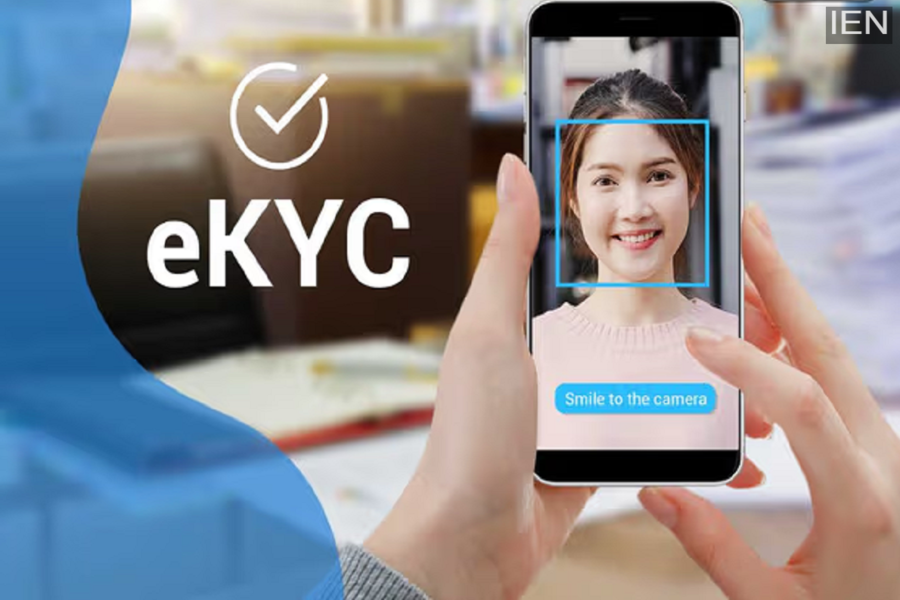
eKYC: Why do banks repeatedly ask for documents? Understand the hidden legal complexities and the 'data game' behind the phenomenon of 'KYC Repetition' in Digital India. Find out why agencies do not trust each other's verification processes.
eKYC: India has built the world's finest digital infrastructure. From Aadhaar to DigiLocker, everything is at your fingertips. Yet, when it comes to opening a bank account, investing in mutual funds, or purchasing insurance, the same old 'KYC' specter rears its head once again.
In 2016, the government introduced CKYC (Central KYC) to ensure that, once verified, you would not have to resubmit your documents. However, the reality today remains that every new app and every new bank still demands the very same Aadhaar and PAN details from you. Why, after all, has a 'miracle' akin to UPI not yet materialized in the realm of KYC?
The Burden of Responsibility: "My Customer, My Responsibility"
Legally speaking, no bank or financial institution can place absolute trust in a verification process conducted by another entity.
Independent Verification: Under the PMLA (Prevention of Money Laundering Act), every institution is mandated to conduct its own independent 'due diligence.'
Accountability: If a fraud were to occur in the future, a bank cannot simply claim, "I opened this account based on the CKYC verification." The ultimate responsibility would rest with that specific bank; consequently, they choose not to take the risk and instead conduct the KYC verification themselves.
Lack of Coordination Among Regulators
In India, different financial sectors are governed by distinct regulatory bodies (e.g., the RBI for banking, SEBI for the stock market, and IRDAI for insurance).
Disparate Standards: The KYC regulations and data depth requirements vary across different regulators. The specific information required by SEBI, for instance, may not necessarily be present within the existing data records held by the RBI. System Disconnect: Data sharing between CERSAI (which manages CKYC) and SEBI’s KRAs (KYC Registration Agencies) is not yet fully seamless.
The Real Game of ‘Data’
Experts believe that KYC is not merely a legal formality, but also a mechanism for data collection.
Customer Profiling: Companies track your demographic information and behavioral patterns to cross-sell new products to you.
Updated Data: Frequent KYC updates ensure that companies always possess your most current address and mobile number.
Technical Flaws in CKYC
In principle, CKYC is a sound concept; however, in practice, it suffers from several shortcomings:
Incomplete Data: Often, the CKYC registry contains outdated photographs or incomplete addresses—details that financial institutions frequently refuse to accept.
Delayed Updates: If you update your address at one institution, that change does not immediately reflect across the entire system (CKYC), thereby necessitating a fresh verification process.
How Can This System Be Improved?
To create a more efficient and seamless system, the following five changes are essential:
- Unified Framework: A standardized KYC form and set of regulations applicable to all regulatory bodies (RBI, SEBI, IRDAI).
- Real-Time Updates: Information updated at a single point should automatically reflect across the entire system instantaneously.
- Portability: Much like mobile number portability, a similar facility for ‘KYC Portability’ should be introduced.
- Deep Integration with DigiLocker: The mandatory and universal adoption of DigiLocker and Aadhaar for the verification of documents.
- Data Protection: Strict adherence to the DPDP Act (Digital Personal Data Protection Act) to ensure that the risk of spam and fraud—arising from repeated data sharing—does not escalate.
