
Why Billionaires Are Leaving the UK: Inside the Appeal and Hidden Risks of Tax-Free Countries Like UAE and Qatar
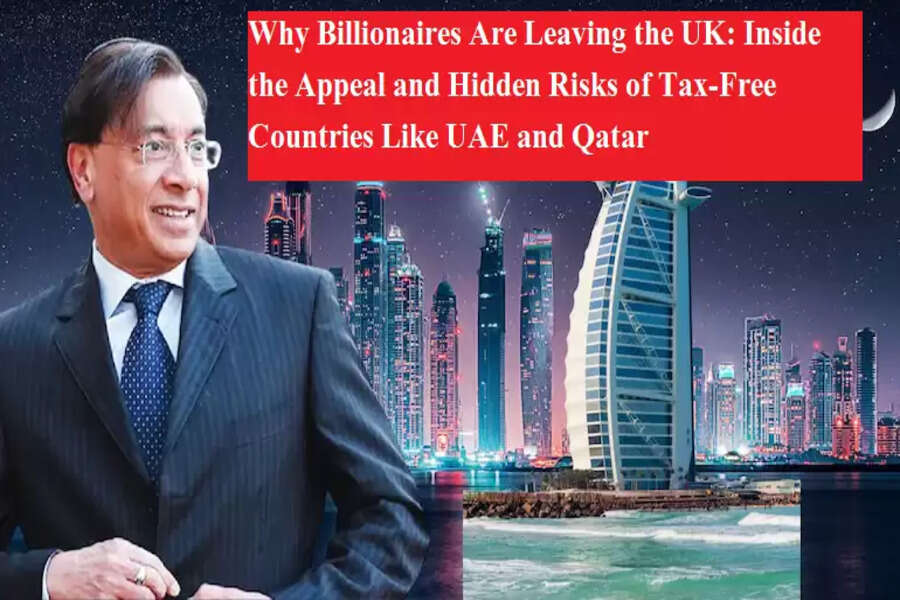
A growing number of ultra-wealthy individuals are moving out of the United Kingdom amid rising concerns about higher taxes on the rich. The latest name reportedly planning an exit is Lakshmi Mittal, the Indian-origin steel tycoon and chairman of ArcelorMittal, the world’s second-largest steelmaker. According to UK media, Mittal is preparing to relocate to Dubai or Switzerland, driven by fears of a steep wealth tax and tougher rules under the UK’s Labour government.
His move has reignited discussion on a larger trend: the flight of high-net-worth individuals from high-tax economies to tax-free or low-tax destinations such as the UAE, Qatar, Monaco, and the Bahamas. But how do these countries function without personal income tax? And is life in a tax-free nation really as glamorous as it sounds?
Why the Super-Rich Are Leaving the UK
A report by The Sunday Times reveals that the UK government is considering a wealth tax targeted at the super-rich, aiming to support its struggling economy. Mittal—whose net worth is estimated at nearly ₹1.8 lakh crore—is currently among the UK’s top ten richest individuals.
Several other wealthy families are also planning to move abroad, especially after the government announced multiple tax changes:
1. Exit Tax Proposal (up to 20%)
The UK’s new finance minister, Rachel Reeves, is reportedly drafting a proposal to introduce an “exit tax” of up to 20% on wealthy individuals who move their tax residency out of the country. This measure alone is expected to raise over £20 billion.
2. Steep Increase in Capital Gains Tax
Capital gains tax has already gone up—from 10% to 14% in April 2025—and is expected to climb to 18% in 2026.
3. 40% Inheritance Tax
A major concern among wealthy families is the UK’s 40% inheritance tax, which applies not only to UK assets but can also extend to wealth held globally. This has become a key push factor prompting billionaires to shift to countries where inheritance tax is zero.
4. End of Non-Domicile (Non-Dom) Status
The government has abolished the nearly 200-year-old Non-Dom system, which earlier allowed wealthy foreign residents to pay tax only on income earned in the UK. Its removal has accelerated the exodus of high-net-worth individuals.
Several known entrepreneurs—including Revolut’s co-founder Nik Storonsky and India-born tech founder Herman Narula—have already moved to Dubai.
How Do Tax-Free Countries Survive Without Income Tax?
Countries like the UAE and Qatar do not charge personal income tax, meaning residents can keep their full salary. But that doesn’t mean these nations are truly “tax-free.”
1. Massive Revenue From Oil and Gas Exports
Much of their government revenue comes from natural resources. Oil and gas exports fund infrastructure, subsidies, social benefits, and public spending—reducing the need for direct taxation.
2. Indirect Taxes: VAT, Excise, Corporate Tax
The UAE levies VAT, excise duty, and corporate tax. Goods and businesses are taxed, but individuals are not. This model attracts global professionals, investors, and companies.
3. Tourism and Real Estate Boom
Dubai alone welcomed nearly 10 million visitors in the first half of 2025, generating significant revenue. A booming real-estate market adds to government earnings.
Dubai May Be Tax-Free, But Living Costs Are Extremely High
Despite zero income tax, Dubai ranks among the world’s costliest cities. Chartered Accountant Nitin Kaushik highlighted the stark difference in living expenses:
-
1BHK rent: ₹1.5–3 lakh per month
-
Milk: ₹120 per litre
-
Monthly metro pass: ₹8,500
-
Comparable Mumbai costs are almost 70% lower
In other words, whatever money you save in taxes often gets absorbed by the cost of living—also known as the “lifestyle tax.”
Job Security Is a Real Challenge in the UAE
Dubai’s biggest risk is visa-linked employment. Losing a job means losing the right to stay in the country. Employees often get:
-
Only 30–60 days to find a new job
-
NO legal protection against sudden layoffs
-
NO mandatory severance in many cases
Entire departments can be laid off in one day—something rarely possible in India or the UK due to stronger labour laws.
Tax-Free Countries Work for the Wealthy, Not Everyone
While tax-free countries benefit the rich, low-income workers often suffer:
-
Lower wages
-
Long work hours
-
Weak labour protections
-
No overtime pay
-
Minimal work-life balance
A viral Reddit post summed it up:
“The rich save tax. The poor pay it indirectly through low salaries.”
The Dubai Dream Isn’t for Everyone
Experts like Nitin Kaushik warn that moving to Dubai can be rewarding—but only for those with strong skills, a solid network, and financial backing. Others may struggle with high living costs and job insecurity.
The same holds true for Monaco, Bermuda, and the Bahamas—nations with no income tax but some of the highest living costs on Earth.
Conclusion: Tax-Free Isn’t Always Tension-Free
Tax-free countries may look appealing from the outside, but living there comes with trade-offs. Yes, you save on income tax—but you pay much more for housing, transportation, food, and security. Before relocating to a tax haven, one must evaluate the cost of living, job stability, and personal financial goals. Otherwise, the benefits of tax savings can quickly be overshadowed by hidden “lifestyle taxes.”
