
Which jobs are stalled due to the OBC 'creamy layer' rules, and what is the extent of the impact?
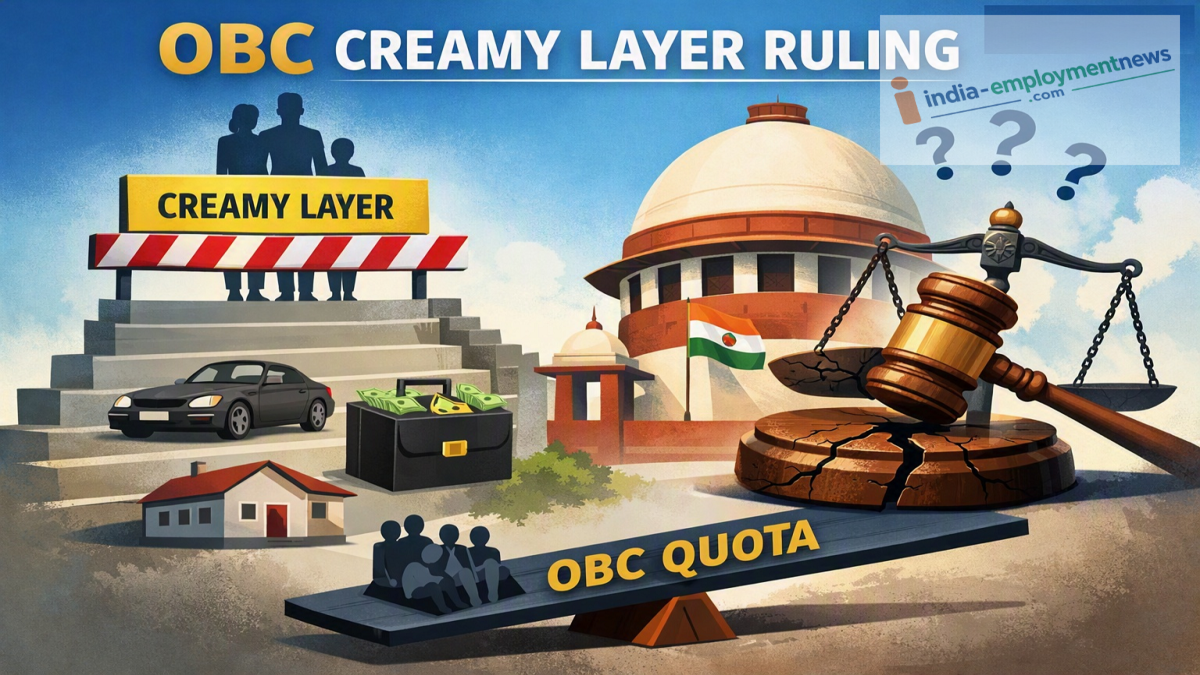
The training of officers who have cleared the UPSC Civil Services Examination has been stalled for over two months. This is the first time that the foundation course at LBSNAA (Lal Bahadur Shastri National Academy of Administration) has been halted in this manner.
There is significant uncertainty surrounding various government positions—including the prestigious Indian Administrative Service (IAS)—as well as admissions to higher educational institutions. The training of officers who have cleared the UPSC Civil Services Examination has been stalled for over two months. This is the first time that the foundation course at LBSNAA has been halted in this manner.
This confusion arose following a Supreme Court ruling on March 11 regarding the 'creamy layer' criteria for the Other Backward Classes (OBC) category. The core question is whether these new rules will apply only to future recruitments or if they will also affect recruitment processes from the past 10 to 14 years that are still ongoing. The central government has approached the apex court to seek clarity on this complex issue.
What was the Supreme Court's March 11 ruling?
On March 11, a bench comprising Justice PS Narasimha and Justice R. Mahadevan ruled that the 'creamy layer' status for OBC reservation cannot be determined solely based on the parents' income. The Court clarified that the parents' professional rank and social status must also be taken into account. Furthermore, the Court noted that applying different reservation criteria based on whether a candidate's parents are employed in the government sector versus the private or public sector constitutes unfair discrimination. This Supreme Court decision has provided significant relief to UPSC candidates who, despite passing the examination, were previously excluded from employment solely because their parents' income placed them within the 'creamy layer.' However, this has also created a legal complication regarding how this change should be applied to past recruitment processes.
Why has the training for IAS officers been halted? The careers of 958 candidates who qualified for the 2025 Civil Services Examination currently hang in the balance. According to the rules, their training at the Lal Bahadur Shastri National Academy of Administration (LBSNAA) in Mussoorie was scheduled to begin in the third week of August or early September, but it remains stalled. The Department of Personnel and Training (DoPT) has compiled data on candidates from the past 14 years to assess various aspects, and a petition has been filed in the Supreme Court seeking clarification. While the DoPT has assured that this delay will not adversely affect the officers' service conditions or seniority, they remain in limbo, awaiting the start of their training. The government is seeking a clarification from the Supreme Court on how its eventual ruling should be implemented on the ground. The Supreme Court reserved its judgment in this matter on September 24; the verdict is yet to be delivered.
Beyond the UPSC: Impact on other recruitment processes
The scope of this dispute extends well beyond the Civil Services. It is suggested that if this rule is applied to past recruitment cycles, candidates who were denied the benefits of reservation over the last 10 to 14 years—due to the 'creamy layer' criteria—might seek to change their rank, service, or cadre. This could trigger a serious legal crisis concerning the seniority and cadre allocation of officers who have already been in service for the past decade. Furthermore, the implications are not limited to the UPSC; they could also affect past and ongoing recruitment processes conducted by the Staff Selection Commission (SSC), the Railway Recruitment Boards, and the banking sector. Additionally, OBC admissions that have already taken place at central universities and premier institutions—such as IITs, IIMs, AIIMS, and NITs—could also be impacted, as students previously excluded based on income criteria might now demand a re-evaluation of their status.
