
What will happen if the government does not present the general budget?
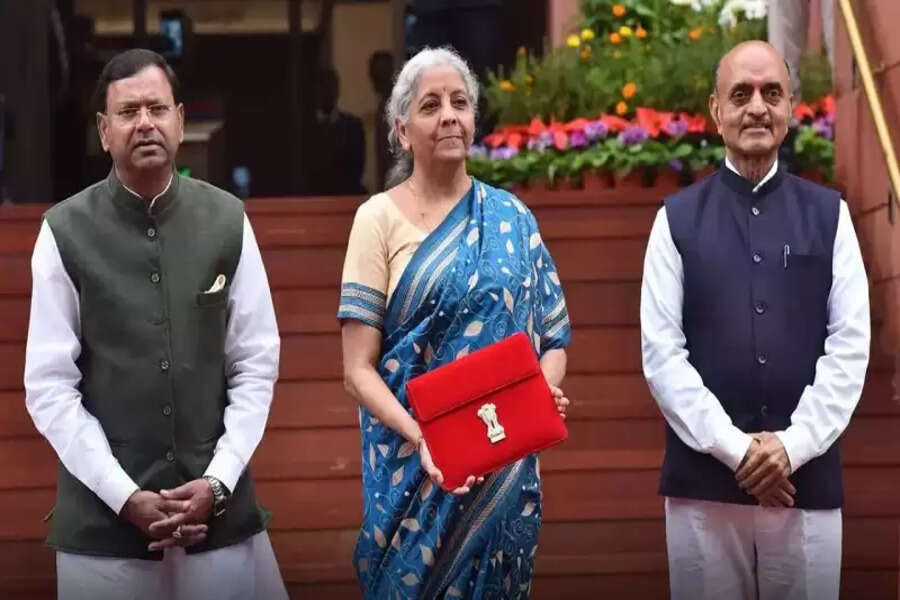
Every year the general budget is presented by the Finance Minister in the Lok Sabha. It contains an account of the income and expenditure of the central government. But what will happen if the government does not present the budget or the budget is not passed in the Lok Sabha? Let us know why the central government will face a crisis if this happens.
After the formation of the 18th Lok Sabha, the newly elected members took oath in the first session. Now the budget session of Parliament is going to start from July 22, in which the Finance Minister will present the general budget. During the budget session which will run till August 12, the budget will be presented on July 23, on which the eyes of the whole country are fixed. However, imagine what will happen if the government does not present the budget or if the budget is not passed in the Lok Sabha.
Every year the Union Budget or the general budget is presented by the Union Finance Minister in the Lok Sabha, which contains an account of the income and expenditure of the central government. For this, provision has been made in Article 112 of the Constitution, according to which the Finance Minister presents the budget.
Parliament's approval is necessary for the money spent.
The budget document is an annual financial statement, in which expenditure and income are shown in three parts. These include Consolidated Funds, Contingency Funds and Public Accounts. If the government does not present the budget in Parliament, then it will not be allowed to withdraw money from the Consolidated Fund.
Actually, provision for Consolidated Fund has been made in Article 266 of the Constitution. All the revenue received by the government, all the loans taken by the government and the amount received from the recovery of the loan given by the government are converted into Consolidated Fund. All the expenses of the government are run from this Consolidated Fund, for which the approval of the Parliament is necessary. No amount can be withdrawn from this fund without the approval of the Parliament.
Parliament's approval is also required for contingency needs
Similarly, there is a provision for Contingency Fund in Article 267 of the Constitution. This fund remains under the control of the President. In case of any emergency, the government uses this fund after the approval of the Parliament. Later, the amount withdrawn from the contingency fund is replenished by withdrawing the same amount from the accumulated fund and putting it in the contingency fund.
On the other hand, the public account funds do not belong to the government. It includes provident fund and small savings etc. funds, which have to be replenished by the depositor. Except in some cases, the approval of the Parliament is not necessary for the payment of the public account fund.
Passing the budget is necessary to save the government
For the central government, presenting and passing the budget in the Parliament is not necessary only for expenses. If the government does not present the budget in the Parliament or the budget presented by it is not passed in the Lok Sabha, then the government itself is in trouble. If the budget presented by the Union Finance Minister in the Lok Sabha is not passed by the majority, then it is understood that the ruling party is in minority. It does not have the appropriate number of members to run the government.
Technically, it means that the central government has lost the vote of confidence in the Lok Sabha. Due to this, the entire government has to resign. That is, whenever the annual Union Budget is not passed in the Lok Sabha, the Prime Minister will submit the resignation of his Council of Ministers.
In the history of Indian democracy, it has never happened that the budget presented by the Central Government has not been passed by the Lok Sabha. In fact, no government has ever presented a budget in a minority situation. The question of not passing does not arise in this. It is necessary for the budget to be passed by the Lok Sabha only, because in a way the Finance Bill is included in it. The Finance Bill does not require the approval of the Rajya Sabha.
