
What is the state of Hindi in the medical sector, and what happened to the country’s first Hindi-medium model?
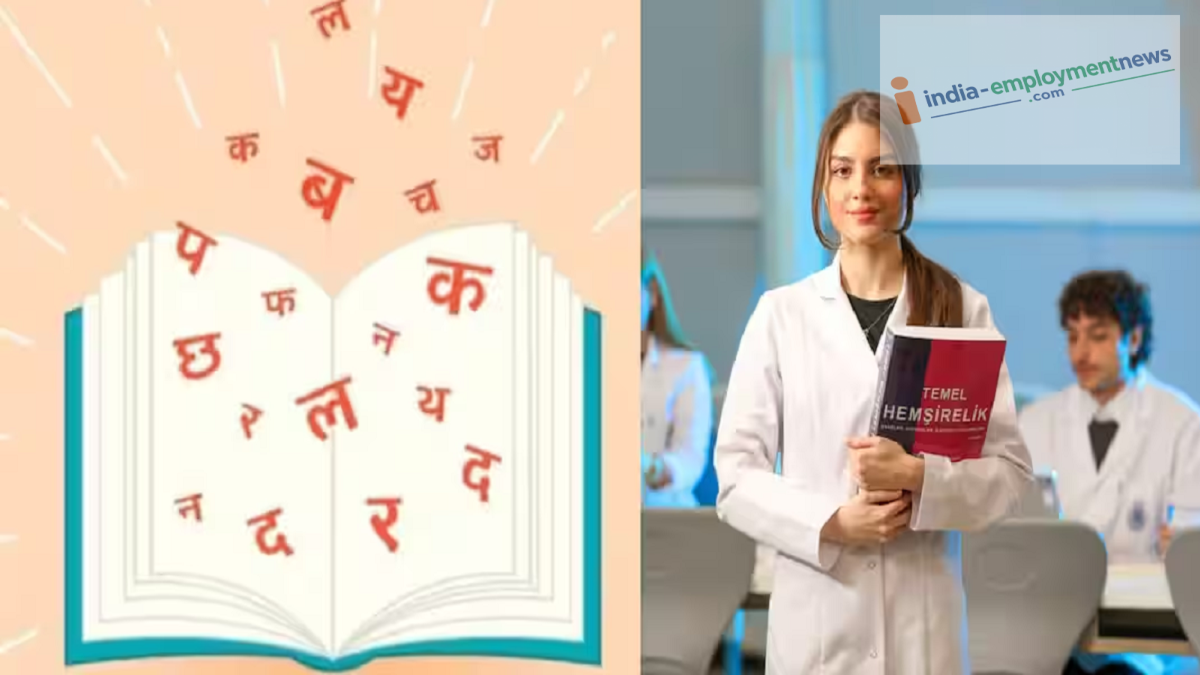
Amidst ongoing discussions about the promotion of Hindi, questions are being raised regarding the current status of the country’s first major experiment—launched in Madhya Pradesh—to promote medical education in Hindi.
Hindi Diwas is celebrated every year on September 14. It was on this day in 1949 that the Constituent Assembly adopted Hindi, written in the Devanagari script, as the official language of the Union. Although the debate regarding Hindi in the Constituent Assembly lasted for nearly three years, a provision was also made to continue using English for official work. Today, amidst conversations about promoting Hindi, the situation surrounding the pioneering experiment in Madhya Pradesh—aimed at fostering medical education in Hindi—is raising questions.
A model for offering MBBS studies in Hindi was developed in Madhya Pradesh, but the current state of this model is vastly different. Let us take a look at the status of Hindi in the medical sector and what became of the country’s first Hindi-medium model.
The Country’s First Hindi Model in the Medical Sector
About three years ago, Madhya Pradesh introduced MBBS studies in Hindi as an alternative to the English medium. This was viewed as a significant model regarding the language of instruction in medical education. The government spent approximately ₹10 crore to establish this system and had 50,000 medical textbooks printed in Hindi. Additionally, ‘Mandar Kendras’ (specialized centers) were set up in medical colleges, where teams of doctors translated medical textbooks into Hindi. However, the current situation reveals that despite the availability of books and the established infrastructure, students have not developed confidence in the Hindi medium of instruction.
No Student Took the Hindi Exam in Three Years
A team of over 300 doctors translated 16 MBBS textbooks into Hindi. Approximately ₹2 crore was spent on translation, ₹5.5 crore on printing, and around ₹3 crore on the Mandar Kendras. Initially, the number of books printed was determined based on student enrollment. Under the new system, colleges are being provided with only about 25 to 30 percent of the copies they request. However, the biggest challenge in this entire experiment relates to student examinations. Despite the availability of bilingual question papers, not a single student has taken an exam by writing answers in Hindi over the past three years. A prevailing perception among students—that writing answers in Hindi could result in low marks or even a score of zero—is considered a major reason for this.
Locks on many ‘Mandar’ centers; books remain unused
The status of the ‘Mandar’ centers established for Hindi-medium medical education varies. Reports indicate that the center at Gandhi Medical College, Bhopal, is locked, with Hindi textbooks sitting unused in storage. Similarly, at Indore Medical College, a large number of books remain packed in boxes rather than being put to use. The situation is different in Ratlam, however; thanks to annual book fairs organized by Dr. Anita Mutha, approximately 80 percent of the Hindi textbooks have reached the students.
Momentum stalled after initial enthusiasm
Following the launch of the Hindi-medium MBBS program, more than 50 review meetings were initially held at the Chief Minister and ministerial levels. Interactions took place with students, and members of the ‘Mandar’ team were honored; however, the working committee has not met for nearly a year now. Tasks such as teacher training and the preparation of clinical records have also failed to progress. A lack of a dedicated budget for the Hindi cell has also emerged as an issue.
NMC seeks a report
The matter has now reached the National Medical Commission (NMC). The Commission has sought comprehensive information from Madhya Pradesh regarding the Hindi-medium MBBS experiment. This includes data such as sample Hindi question papers, sample answer sheets, and the percentage of students opting for the Hindi medium for various questions.
Picture unclear for Hindi medium in engineering as well
The state of technical education in Hindi within Madhya Pradesh also does not appear to be very robust. Rajiv Gandhi Proudyogiki Vishwavidyalaya (RGPV) has not yet initiated the process to obtain AICTE approval for offering B.Tech courses in Hindi, even though Hindi textbooks for the first and second years of B.Tech are available on the AICTE’s e-Kumbh portal and RGPV itself served as the nodal agency for their translation. Currently, while examination question papers at the university are provided in a bilingual format, there is no system in place for pursuing the entire course of study in the Hindi medium. However, Vice-Chancellor Prof. Alok Sharma has spoken of efforts to secure permission and additional seats from the AICTE to conduct engineering studies in Hindi.
