
What is the power of LNG fuel? How will DEMU trains pick up speed? Find out everything..
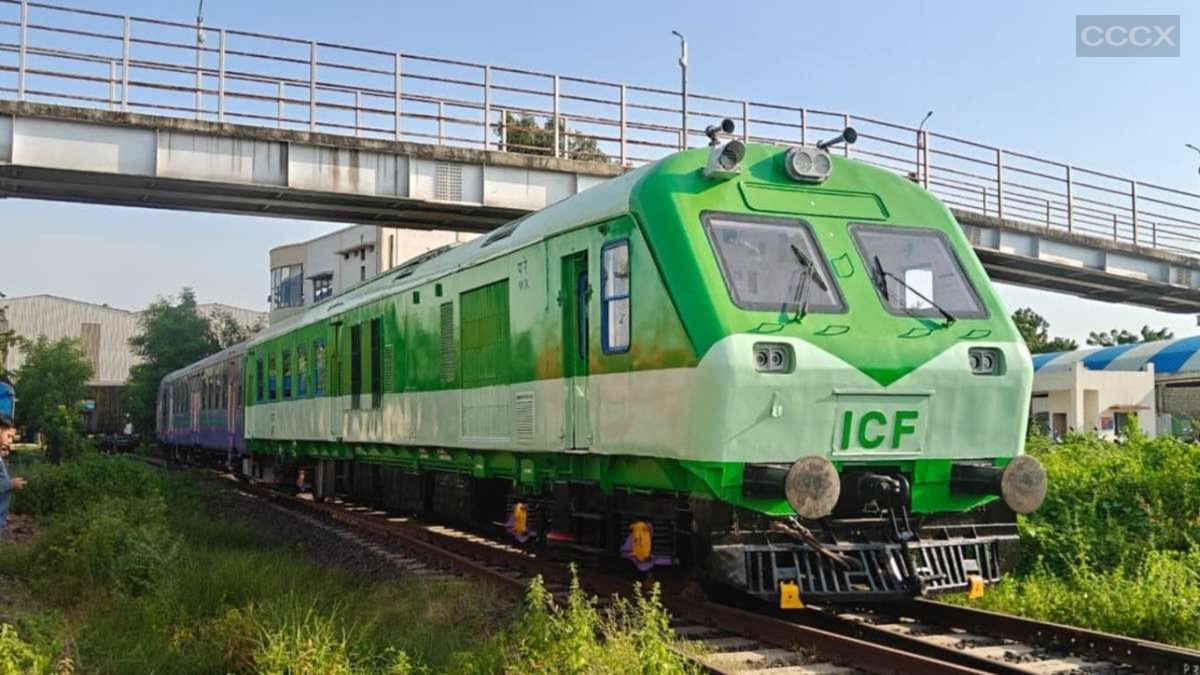
LNG, or Liquefied Natural Gas, is an environmentally friendly fuel. Indian Railways is now set to use this fuel to operate trains. India's first LNG-powered train is being launched from Sabarmati. Countries such as the USA, Russia, China, Canada, and Spain already utilize LNG, and India has now joined this list. Currently, the first LNG train is operating between Sabarmati and Mehsana Junction in Gujarat. These trains employ dual-fuel technology, similar to how cars use both CNG and petrol.
Dual-fuel engine technology is used to operate LNG trains. Instead of relying on a single fuel source, the train's engine runs on a blend of diesel and LNG.
What is LNG fuel?
LNG stands for Liquefied Natural Gas, a clean, safe, and eco-friendly fuel. Experts explain that when natural gas (primarily methane) is cooled to an extremely low temperature of approximately -162°C (-260°F), it transforms from a gaseous state into a liquid. This liquefaction process reduces its volume by about 600 times, making it easier to store large quantities in compact tanks on the train and transport it over long distances.
How the train runs on LNG fuel
The Railways has stated that the national transporter is using an LNG-based fuel system in the train's Driving Power Cars (DPCs) for the first time. This new dual-fuel technology allows a single engine to run on both LNG and diesel, depending on fuel availability.
Special cryogenic tanks will be used on the train to store the LNG. A specially designed insulated tank located in the train's Driving Power Car (DPC) safely stores LNG at an extremely low temperature (-162°C). As the train operates, a re-gasification process converts the liquid LNG back into gas. This gas is fed into the engine, where it combines with diesel to serve as fuel. This process reduces diesel consumption by approximately 40% to 50%, replacing it with cleaner LNG.
LNG to Boost DEMU Train Performance
LNG technology is particularly significant for high-speed DEMU trains because it offers substantial fuel cost savings. LNG is considerably cheaper than diesel, allowing the railways to save lakhs of rupees in annual fuel costs per train. Upon combustion, LNG emits minimal smoke and harmful gases (such as carbon dioxide and sulfur oxides), making rail travel a greener mode of transport.
Due to the high storage density of fuel in its liquid state, the train can easily cover distances exceeding 200 km without frequent refueling. The dual-fuel system reduces the load on the engine and ensures smooth acceleration, thereby improving both speed and efficiency.
Disclaimer: This content has been sourced and edited from NDTV India. While we have made modifications for clarity and presentation, the original content belongs to its respective authors and website. We do not claim ownership of the content.
