
What is the PM-AASHA scheme? Find out how farmers receive the benefits of MSP under various circumstances..
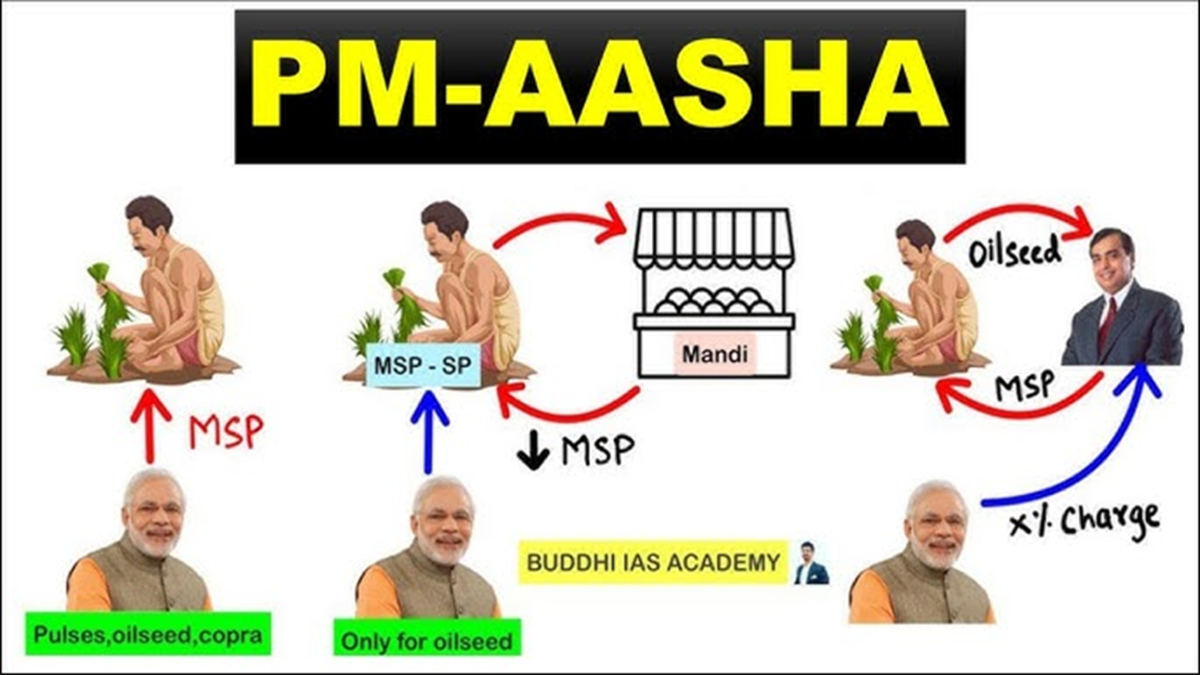
The PM-AASHA scheme strikes a balance between providing financial security to farmers, strengthening agricultural markets, and keeping food prices stable for consumers. Essentially, it is a government initiative designed to safeguard farmers' income. Pradhan Mantri Annadata Aay Sanrakshan Abhiyan (PM-AASHA) is a flagship scheme of the Central Government, launched in 2018. Its primary objective is the effective implementation of the Minimum Support Price (MSP), ensuring that farmers receive a fair price for their produce even when market rates drop, thereby preventing them from being forced to sell at low prices.
The Central Government has allocated ₹7,200 crore for PM-AASHA for the 2026-27 period, an increase from the ₹6,941.36 crore allocated for 2025-26. The actual expenditure under this scheme in 2024-25 stood at ₹5,437.99 crore.
What is PM-AASHA and why is it important?
PM-AASHA is a system through which the government aims to ensure farmers receive better prices for their produce. It comprises four main components: the Price Support Scheme (PSS), the Price Stabilization Fund (PSF), the Price Deficiency Payment Scheme (PDPS), and the Market Intervention Scheme (MIS). The specific approach adopted depends on the crop and prevailing market conditions.
What is the Price Support Scheme (PSS)?
The Price Support Scheme (PSS) is implemented when market prices for crops fall below the MSP. Under this scheme, government agencies such as NAFED and NCCF procure pulses, oilseeds, and copra directly from farmers at the MSP. Additionally, for crops like Arhar (tur), Urad, and Masoor, up to 100 percent of the state's total production can be procured.
What is the Price Deficiency Payment Scheme (PDPS)?
The Price Deficiency Payment Scheme (PDPS) is designed to compensate for the shortfall in prices; under this scheme, farmers are not required to physically sell their produce to a government agency. Instead, eligible farmers receive the difference between the MSP and the prevailing market price in notified markets. This payment is capped at 15% of the MSP value and is credited directly to the farmer's bank account. This method is primarily used for oilseed crops. Its objective is to provide MSP-based price protection without the need for large-scale physical procurement and storage.
**What is the Price Stabilization Fund?**
The Price Stabilization Fund is designed to bring stability to prices and protect consumers from sharp fluctuations in the rates of essential agricultural commodities. Under this scheme, buffer stocks of essentials like pulses, onions, and potatoes are maintained. These stocks can be released during periods of rising prices to curb inflationary trends.
The 'Price Stabilization Fund' has been merged with PM-AASHA, but it continues to be managed by the Department of Consumer Affairs.
**What is the Market Intervention Scheme (MIS)?**
The Market Intervention Scheme applies to perishable crops—specifically agricultural and horticultural produce—that are not covered under the MSP regime. It covers crops like tomatoes, onions, and potatoes. The scheme is invoked when market prices plummet—specifically, when they drop by at least 10% compared to the rates during the previous normal season.
Operations are carried out through central agencies like NAFED and NCCF, with the cost shared between the central and state governments. This scheme is particularly useful during periods of bumper harvests, when an oversupply in the market could otherwise cause prices to crash.
Notably, digital platforms such as Aadhaar authentication, e-NAM, e-Samriddhi, and e-Samyukti have been established to ensure transparency in the procurement process.
Disclaimer: This content has been sourced and edited from Money Control. While we have made modifications for clarity and presentation, the original content belongs to its respective authors and website. We do not claim ownership of the content.
