
What is the Digital Rupee, and how does it work? Learn how it differs from UPI or cash, and understand its benefits and full details..
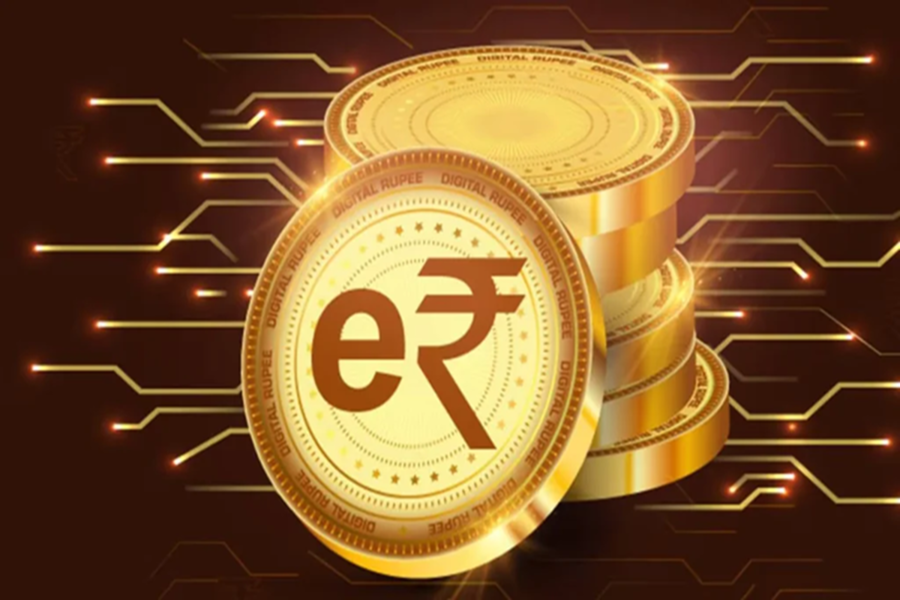
Nowadays, a new name is rapidly gaining traction: the Digital Rupee, or e₹. In reality, many people mistake it for UPI; some view it as something akin to cryptocurrency, while others simply assume it is just another form of online money. However, the truth is that the Digital Rupee is distinct from all of these; it is a digital currency issued directly by the country's central bank—the Reserve Bank of India (RBI).
So, let's understand in simple terms: What is the Digital Rupee? How does it work? And what does it mean for you?
**Understand the Full Picture in 5 Points**
* The Digital Rupee is, essentially, the RBI's digital currency.
* It is the digital form of physical cash (rupees).
* Its value remains constant at ₹1—meaning ₹1 is always worth exactly ₹1.
* It is stored in a digital wallet.
* It is distinct from UPI, although its usage may appear similar.
**Why Was the Digital Rupee Introduced?**
* Primarily to provide a digital alternative to physical cash.
* To make the financial system faster, more secure, and more transparent.
* And, to pave the way for the future digital economy.
**What Exactly is the Digital Rupee?**
* It is a Central Bank Digital Currency (CBDC).
* In other words, it is digital money issued by the RBI.
* It possesses the intrinsic value of cash, carries a sovereign guarantee (backed by the government), and enables instant transactions.
* Essentially, just as you carry banknotes in your pocket, you can carry the e₹ in your mobile phone.
**Key Highlights of the Digital Rupee**
* **Issuer:** RBI
* **Value:** Equivalent to physical cash
* **Storage:** Digital Wallet
* **Transactions:** Instant
* **Status:** Currently in the pilot phase in India
| **Features** | **Cash** | **UPI** | **Digital Rupee (e₹)** |
| **Issuer** | RBI | Commercial Banks | Directly by RBI |
| **Format** | Physical Notes | Digital Transfer | Digital Token (Cash) |
| **Internet Required?**| No | Yes | Possible Offline |
| **Bank Account?** | Not Required | Required | Not Required |
| **Interest** | None | Earned (if in account)| None (Like Cash) |
**How is the Digital Rupee Created and Issued?**
* The process is exactly analogous to that of physical banknotes.
* The RBI creates (mints) the Digital Rupee.
* It issues it to commercial banks.
* The banks, in turn, provide digital wallets to their customers.
**How is it Used?**
* You will need a bank-provided e₹ digital wallet.
* You can then send money to others.
* You can receive money.
* You can make payments at shops and merchants.
* Payments can also be made by scanning QR codes.
**What Does This Mean for You?**
You will need to carry less cash.
Payments will be faster and more secure.
You will be able to use digital money even outside of banking channels.
Simply put, it is a form of digital cash.
What is the difference between the Digital Rupee and UPI?
What is UPI?
A bank-to-bank transfer mechanism.
What is the Digital Rupee?
Money (currency) itself.
The Difference:
UPI = A payment system.
e₹ = Actual money.
What should you do now?
Check with your bank to see if the e₹ service is available.
Download the e₹ wallet app.
You can start with small transactions.
Why is this so important?
Because it could be the currency of the future.
Gradually, the reliance on cash may decrease.
The digital ecosystem is likely to expand.
What changes might occur in the future?
More banks will launch e₹ services.
It will be accepted at a wider range of shops.
The usage of cash may gradually decline.
Key Information for You:
It is important to note that the Digital Rupee is not merely an app; it is actual money. Indeed, the only difference is that it now exists in a digital format—and in the near future, your mobile phone may well take the place of your physical wallet. (Input: RBI)
