
What is the difference between TPU and GPU? Find out which is better in the world of AI.
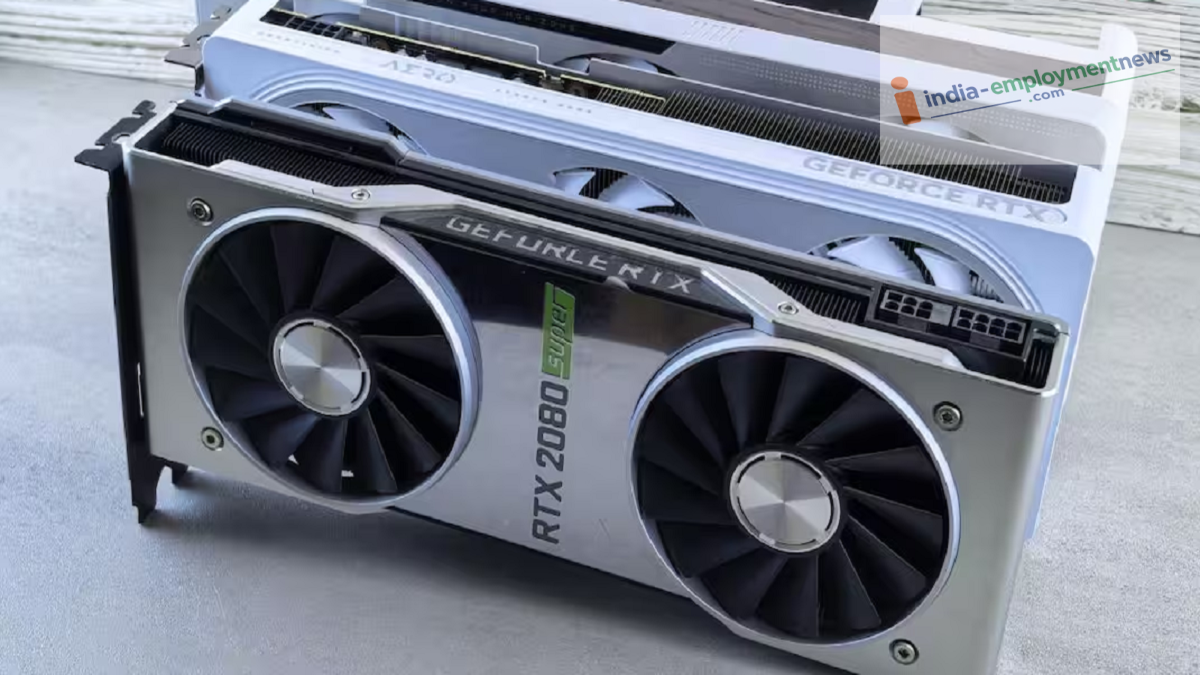
Both TPUs and GPUs are crucial for AI, yet they possess different strengths. Let’s explore how they compare in terms of speed, power, and handling AI workloads.
Artificial Intelligence (AI) has emerged as the biggest trend in the technology world today. From AI models like ChatGPT to image generation, video editing, and machine learning, high-performance computing is essential across the board. In this context, GPUs and TPUs are the most frequently mentioned components. While both are capable of rapidly processing AI workloads, their operating methods and use cases differ. Let’s understand the differences between them.
What is a GPU?
The GPU, or Graphics Processing Unit, was originally designed for computer graphics and gaming. Its primary advantage is the ability to perform thousands of small calculations simultaneously. This capability makes it highly valuable for AI and machine learning applications.
Today, GPUs are widely used for tasks such as AI model training, deep learning, scientific research, video processing, and 3D rendering. Due to their programming flexibility, they are utilized for a diverse range of AI and computing tasks.
What is a TPU?
The TPU, or Tensor Processing Unit, is a specialized chip designed specifically for AI and machine learning tasks. Developed by Google, the TPU is engineered to accelerate large-scale operations involving tensors and AI frameworks like TensorFlow.
Simply put, a GPU is a general-purpose computing chip designed for a wide variety of tasks, whereas a TPU is purpose-built for specific AI workloads.
The biggest difference between TPU and GPU
The fundamental difference between a GPU and a TPU lies in their design. GPUs are built to handle various parallel computing tasks, while TPUs are designed to accelerate AI and neural network calculations.
GPUs offer greater flexibility. It is used in various fields such as gaming, graphics, AI, video processing, and scientific computing. In contrast, TPUs focus specifically on machine learning and AI workloads.
Which is faster for AI?
It is worth noting that factors such as the AI model, data size, the framework being used, and the specific nature of the task determine whether a GPU or a TPU will deliver better performance.
TPUs are highly effective for large-scale, specialized AI workloads, whereas Goffer greater versatility for various types of AI models and experiments. This is why AI companies utilize both types of hardware depending on their specific requirements.
Which is better?
Neither the GPU nor the TPU can be declared superior in every scenario. The GPU's greatest strength is its flexibility, while the TPU's strength lies in its specialized design for AI.
If you need to perform diverse computing tasks and require greater flexibility, the GPU is the better option for you. However, if you require infrastructure optimized for large-scale AI workloads, the TPU can prove to be highly beneficial.
