
What is the difference between the blue and white Aadhaar cards? Learn the rules for 'Baal Aadhaar' and the age for getting it updated..
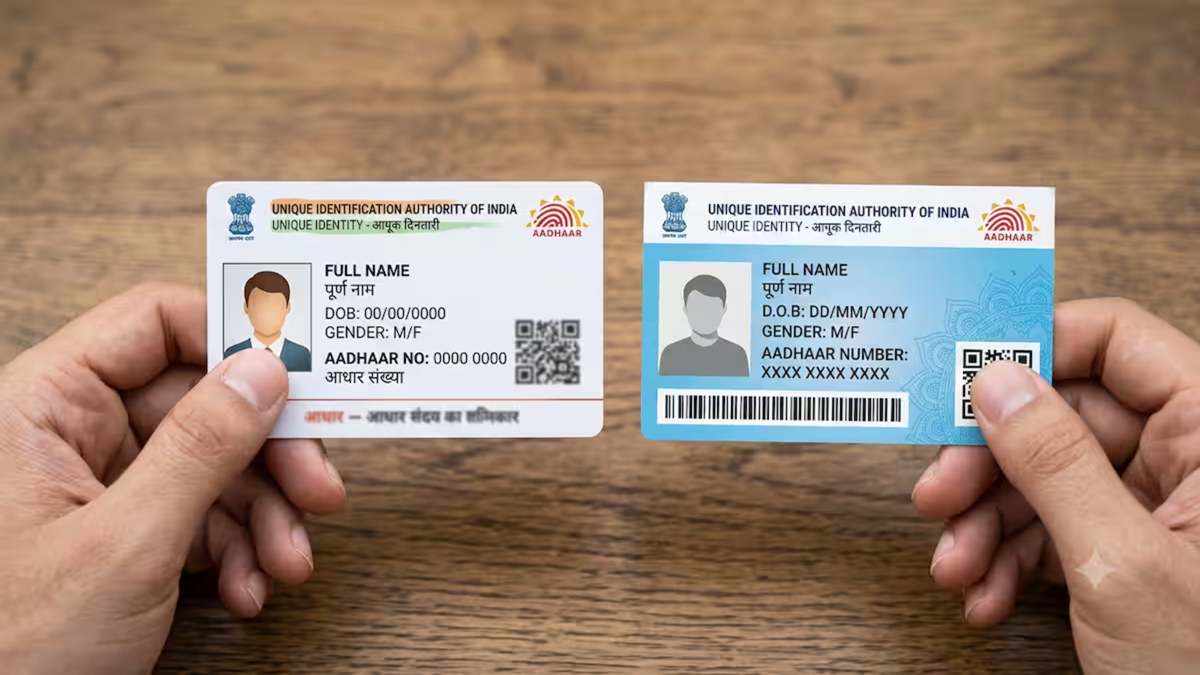
Difference Between Blue Aadhaar and White Aadhaar Cards: The Aadhaar card has become the most important identity document for every citizen in the country. The standard white Aadhaar card—which most of us possess—contains a unique 12-digit identification number, demographic data, and biometric data such as fingerprints and iris scans.
In contrast, the Unique Identification Authority of India (UIDAI) issues a special blue-colored Aadhaar card—known as 'Baal Aadhaar'—specifically for children under the age of five. Beyond just color, there are several significant and fundamental differences between these two types of Aadhaar cards that every parent should be aware of.
The primary difference between the white and blue Aadhaar cards lies in the biometric data. The white Aadhaar card, issued to adults and citizens over the age of five, stores data regarding fingerprints from all ten fingers and iris scans.
Fingerprints Are Not Collected for Children
The primary difference between the white and blue Aadhaar cards lies in the biometric data. The white Aadhaar card, issued to adults and citizens over the age of five, stores data regarding fingerprints from all ten fingers and iris scans. However, since the biometric features of young children under the age of five are constantly changing, no fingerprints or iris scans are collected when creating a blue Aadhaar card. It is issued based solely on the child's photograph, demographic details, and a link to the Aadhaar card of one of the parents.
Baal Aadhaar Must Be Updated Twice: At Ages 5 and 15
The blue Aadhaar card relies entirely on the parent's identity, whereas the white Aadhaar card serves as an independent identity document. When obtaining a Baal Aadhaar, the child's card is linked to the mother's or father's Aadhaar number. The blue Aadhaar card remains valid only until the child turns five years old. Once a child turns five, a biometric update becomes mandatory. If this update is not done after the age of five, the child's 'Blue Aadhaar' card becomes inactive. Upon updating the biometrics, it is converted into a standard white Aadhaar card. A subsequent biometric update is required when the child reaches the age of 15.
How to apply for Baal Aadhaar?
Getting a Blue Aadhaar card made for a child under the age of five is very easy. You can do so by following the steps outlined below:
Visit the nearest Aadhaar enrollment center or book an appointment online via the UIDAI website.
Carry the child's birth certificate or hospital discharge slip, along with the original Aadhaar card of either parent.
At the enrollment center, the child's photograph will be taken, and their details will be linked to the parent's Aadhaar.
Once the verification process is complete, the Baal Aadhaar card is sent to your address via post. UIDAI provides the service for a child's new enrollment and the mandatory biometric updates at ages 5 and 15 completely free of charge.
Disclaimer: This content has been sourced and edited from Dainik Jagran. While we have made modifications for clarity and presentation, the original content belongs to its respective authors and website. We do not claim ownership of the content.
