
What is Cyclone Arnab? Where did it form, and which states were affected? Understand the full story.
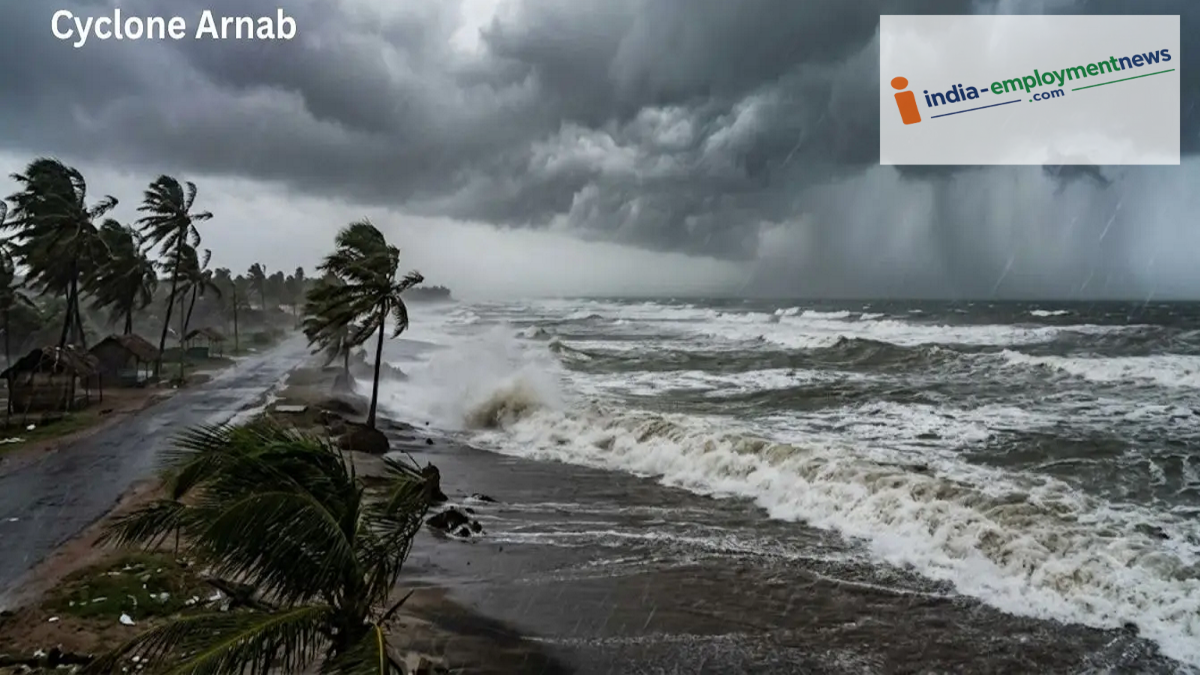
Cyclone Arnab: A weather system that developed in the Bay of Bengal has been making headlines as ‘Cyclone Arnab.’ What exactly is it, how did it form, and which regions felt its impact? In this article, learn all the details about Cyclone Arnab, the naming process, and the affected areas.
Cyclone Arnab: A weather system that developed in the Bay of Bengal during the last week of September 2026 garnered attention under the name ‘Cyclone Arnab.’ However, according to the India Meteorological Department (IMD), this system was not an official cyclonic storm but a ‘deep depression.’ It crossed the coast near Kalingapatnam in Andhra Pradesh during the intervening night of September 23–24.
Cyclone Arnab Formation: How did the weather system form?
A low-pressure area that developed over the west-central and adjoining north-western Bay of Bengal intensified first into a depression and subsequently into a deep depression on September 22, 2026. Warm sea waters, moisture, and favorable atmospheric conditions aided its development. According to IMD classification, a system with a maximum surface wind speed of 28–33 knots (approximately 52–61 km/h) is termed a deep depression. If the speed reaches 34 knots (approximately 63 km/h) or higher, it is categorized as a cyclonic storm and assigned an official name.
Who gave the name ‘Arnab’?
The name ‘Arnab’ was proposed by Bangladesh. The naming of cyclones in the North Indian Ocean is managed by the WMO/ESCAP panel, which comprises 13 countries, including India. Each country contributes 13 names, resulting in a consolidated list of 169 names. It is important to note that the presence of the name ‘Arnab’ on the list does not mean that the deep depression of September 2026 was officially assigned this name.
Cyclone Name: Check the India Meteorological Department (IMD) Official Notification Here
Affected Areas and Impact
This system caused heavy rainfall and strong winds in the northern coastal regions of Andhra Pradesh and southern Odisha. According to a report from September 25, the system had weakened into a depression over Odisha and the adjoining areas of Chhattisgarh. This posed risks of localized waterlogging, crop damage, and transport disruptions. Rainfall-related warnings for Bihar, Jharkhand, and Uttar Pradesh should be verified against the IMD bulletin for the specific date, as weather forecasts are subject to change.
Note: This event serves as a useful case study for competitive exams regarding the classification, naming, and disaster management of cyclones. While ‘Cyclone Arnab’ was a name circulating on social media, the IMD had classified the system in question as a ‘deep depression.’
Important MCQs for BPSC, JPSC, BSSC, and SSC
Question: How many member countries are there in the WMO/ESCAP panel constituted for naming cyclones in the Indian Ocean region?
A. 10 countries
B. 11 countries
C. 13 countries
D. 15 countries
Correct Answer: C. 13 countries
Explanation: The North Indian Ocean cyclone naming panel comprises 13 countries that provide the list of names.
Question: According to the IMD, at what stage is a deep depression classified as a cyclonic storm? A. At a wind speed of 17 knots
B. At a wind speed of 28 knots
C. At a wind speed of 34 knots
D. At a wind speed of 50 knots
Correct Answer: C. At a wind speed of 34 knots
Explanation: A system is classified as a 'Cyclonic Storm' and assigned a name when the maximum surface wind speed reaches 34 knots (approximately 63 km/h).
Question: In which category did the IMD classify the weather system originating from the Bay of Bengal in September 2026—which was referred to as ‘Cyclone Arnab’ on social media?
A. Severe Cyclonic Storm
B. Deep Depression
C. Super Cyclone
D. Very Severe Cyclonic Storm
Correct Answer: B. Deep Depression
Explanation: According to the IMD, the system crossed the coast near Kalingapatnam on September 23–24 and weakened into a depression by September 25.
