
What is API Setu, and how does it create a digital connection between government apps? Learn about the technology behind it.
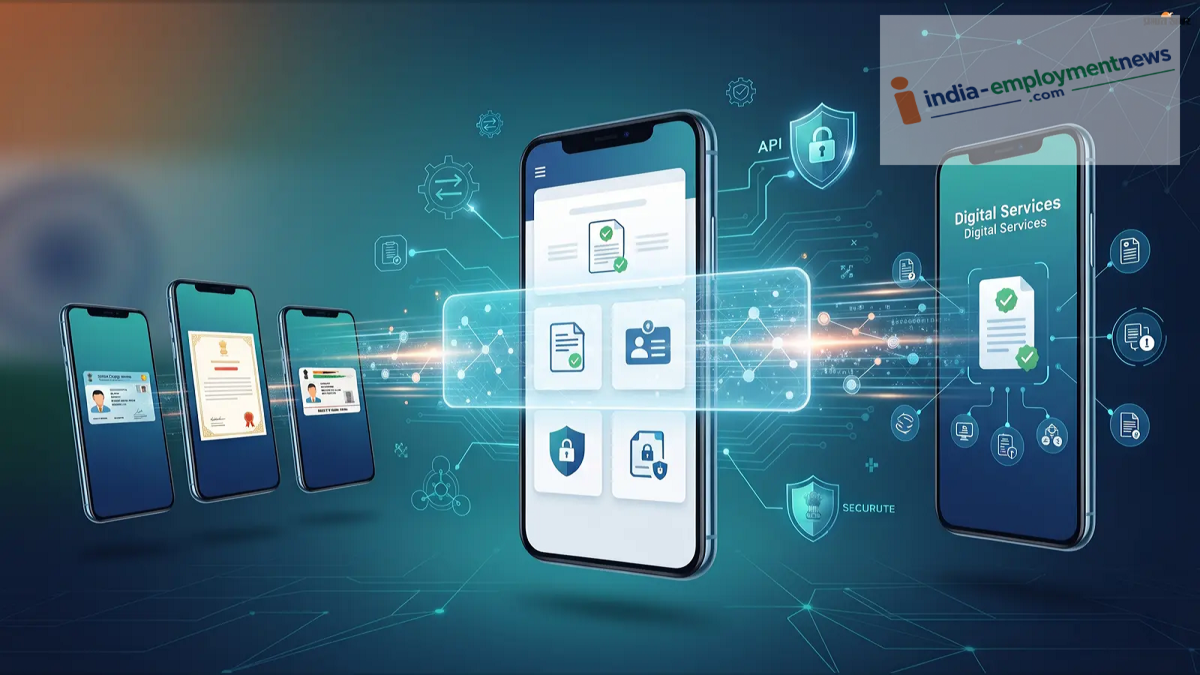
API Setu acts as a bridge between government apps and digital services. Discover how it connects platforms like DigiLocker and UMANG.
Have you ever wondered how one government app retrieves information from another? For instance, when a service requires the verification of your driving license or educational certificates, why isn't it necessary to upload a copy of the document every single time? This is made possible by a specific technology known as an API. The Government of India’s 'API Setu' uses this technology to interconnect various government digital services.
Simply put, API Setu functions as a bridge between government apps and digital platforms. It is more than just a medium for transmitting data; it is a comprehensive digital ecosystem that links government services together.
What is API Setu?
API Setu is an open API platform developed by the Ministry of Electronics and Information Technology (MeitY). It was launched in March 2020 with the objective of facilitating the exchange of information and services among various government departments, organizations, and digital platforms.
Through this platform, government departments can make their APIs available in one centralized location. Other departments and authorized developers can then discover and utilize these APIs according to their specific requirements. This eliminates the need for each department to build separate, independent systems.
First, let’s understand: what is an API?
API stands for 'Application Programming Interface.' It consists of a set of defined rules that allow two different software programs or apps to share information with each other.
Consider this example: suppose you are applying for a government service that requires information from your driving license. If that service has the authorization to connect with the relevant department's system, it can retrieve the necessary information via an API. This can reduce the need to request copies of documents every single time.
How does API Setu work?
Several technical processes operate behind the scenes. Let’s understand them in simple terms:
Registration of an API: First, a government department or organization publishes the API for its digital service on API Setu, along with information regarding its usage and technical specifications.
Searching based on requirements: Other departments or authorized developers can search for available APIs on the platform according to their specific needs.
Obtaining authorization: Simply finding an API does not grant anyone the right to use it. Processes such as registration, subscription, and approval from the respective service provider may be required.
Authentication for identity verification: Technologies like API Keys, Client IDs, and OAuth 2.0 are used to verify the source of a request and determine the level of access granted.
Data exchange: Once authorized, an application sends a request to another system. The target system responds according to established protocols, and the required information is delivered to the requesting application.
Monitoring: Features such as monitoring and logging are available to track API usage, traffic, and performance.
What is its connection to DigiLocker and UMANG?
API Setu is used to integrate various government digital platforms, including DigiLocker, UMANG, MeriPehchaan, the National Academic Depository (NAD), myScheme, and CBSE.
For instance, DigiLocker hosts digital documents such as driving licenses, vehicle registration certificates, and academic credentials. Through APIs, authorized systems can connect to these services and verify the necessary information.
Similarly, UMANG aims to provide services from various government departments on a single, unified platform. API technology plays a crucial role in facilitating seamless coordination between such platforms.
Can anyone access your government data?
The answer is no.
API Setu does not mean that any government app or private company can access the entire dataset of another platform.
Access to data depends on the rules and permissions of the specific API.
Through authentication and authorization, the identity and access rights of the requesting system are verified.
When it comes to sharing personal information, user consent and established data access policies are paramount.
In other words, API Setu is not an open repository of data, but rather a platform that connects digital services in a controlled and regulated manner.
How does it benefit the general public?
The primary advantage of API Setu is improved coordination among government services, which offers several benefits to the public:
Reduced documentation burden: Where API integration is in place, the need to repeatedly provide the same information is minimized.
Faster verification: Digital verification of documents—such as driving licenses and educational certificates—becomes easier.
Enhanced digital services: It facilitates the integration of services from various departments onto a single platform.
Support for developers: The availability of government APIs makes it easier to develop new digital services.
Overall, API Setu is a crucial component of the 'Digital India' framework, enabling systems across different government departments to connect and work together. Its objective goes beyond merely connecting applications; it aims to make government digital services more accessible, efficient, and organized for citizens.
