
Warning! World Bank Reveals How People in Cities Will 'Boil' by 2050; Heatwave's Fury to Strike the Poor
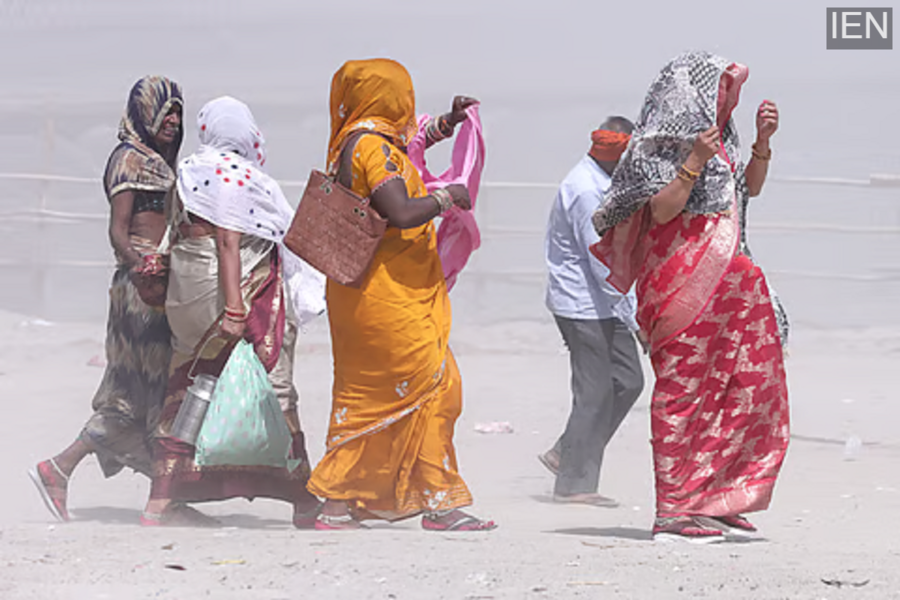
World Bank Warning: This new report by the World Bank states that the most severe impact of this phenomenon will fall upon developing regions such as West Africa and Southeast Asia.
World Bank Alert: As temperatures continue to rise, the hardships faced by people are escalating as well. Amidst this, a startling report from the World Bank has emerged, revealing that by the year 2050, the number of urban poor exposed to dangerous levels of heat could surge by up to 700%—a burden that will weigh most heavily on Asia and Africa.
A new handbook produced by the World Bank—in collaboration with UN-Habitat and UNEP—issues a stern warning: the rapid pace at which temperatures are rising is fast becoming one of the most lethal and economically damaging threats facing urban areas.
The Heatwave's Fury on the Poor
The handbook asserts that intensifying heat is a global challenge, with cities in the Global South facing the greatest risk. Low- and middle-income countries situated in hot and arid regions are expected to bear the brunt of this severe impact; consequently, adapting to climate change—despite limited resources—has become an urgent and critical priority.
According to studies, the number of urban poor living under conditions of extreme heat is projected to witness a staggering 700% increase globally by 2050. This surge is expected to be most pronounced in West Africa and Southeast Asia.
Why Are Temperatures Higher in Cities?
The World Bank has characterized this extreme heat as a "silent killer," one that will have a profound impact on health, productivity, and living standards. Due to the prevalence of concrete and asphalt, coupled with a scarcity of green spaces, temperatures in urban areas typically run 3 to 4 degrees Celsius higher than those in rural regions. If current trends persist, global GDP could decline by 1.4% to 1.7% by 2050 due to reduced productivity caused by rising heat.
What is the solution?
In its handbook, the World Bank has recommended implementing urban planning strategies, cool roofs, green infrastructure, and heat action plans. You can apply white paint or install reflective tiles on rooftops; this can lower indoor temperatures by 2 to 5 degrees.
You can plant as many trees as possible—or even create "pocket forests"—to provide both shade and cooling. Furthermore, when constructing buildings, paying attention to ventilation between structures and utilizing construction materials that absorb heat—rather than concrete—can help reduce temperatures.
