
Want to run your fridge 24/7 on solar power? What capacity panels should you install?
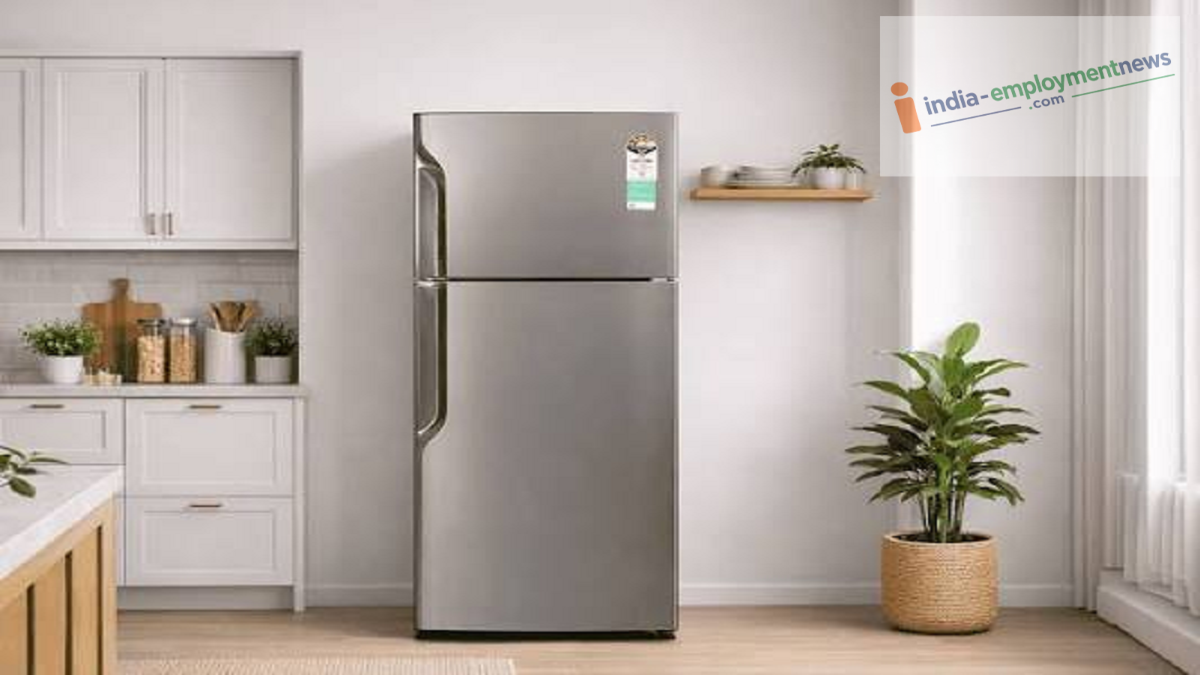
Solar panels can power various household appliances, but selecting a system with the right capacity is crucial for running a refrigerator round-the-clock. Find out how many panels you might need for your fridge.
People are increasingly adopting solar systems to meet their household electricity needs; however, simply installing a solar panel isn't enough to run a fridge 24 hours a day. You must also consider the fridge's size, its electricity consumption, and the power required to operate it. A refrigerator's compressor draws more power than usual during startup. Therefore, it is important to keep these factors in mind before installing a solar system. If you wish to run your fridge day and night using solar power, let’s look at the panel capacity required for the job.
How many panels are needed to run a fridge 24/7 on solar power?
If you want to run your fridge 24/7 on solar power, the panel capacity will depend on the fridge's size and electricity consumption. A small or mini-fridge has lower power requirements compared to a large household refrigerator. Such a fridge may require about 0.3 to 0.4 kW of power at startup, while its standard operating requirement is around 0.1 to 0.2 kW. Consequently, a single solar panel with a capacity of approximately 0.3 kW can be used for a small fridge.
What solar capacity is needed for a large fridge?
If you own a large refrigerator—especially a French-door model with a capacity of 500 liters or more—the power requirement increases significantly. Such a fridge may need about 1.2 to 1.3 kW of power to start up. Subsequently, it requires approximately 0.5 to 0.7 kW of power during the compressor's operating cycle. For such large refrigerators, you might need three to four solar panels, each with a capacity of around 0.3 kW. However, a refrigerator requires a higher surge of power during startup, so it is essential to size the solar system accordingly.
A battery is also required to run the fridge at night
If you wish to run the refrigerator on solar power around the clock, simply installing solar panels will not suffice. Solar panels primarily generate electricity during the day when sunlight is available, whereas running the fridge at night requires power stored in a battery. A solar battery or a portable power station can be used for this purpose. Therefore, for a 24-hour solar setup, it is crucial to balance both panel capacity and battery capacity so that the refrigerator can continue running at night using the energy stored during the day.
