
Viksit Bharat Rozgar Yojana 2025: What Is the VB-G RAM G Bill and How Is It Different from MGNREGA?
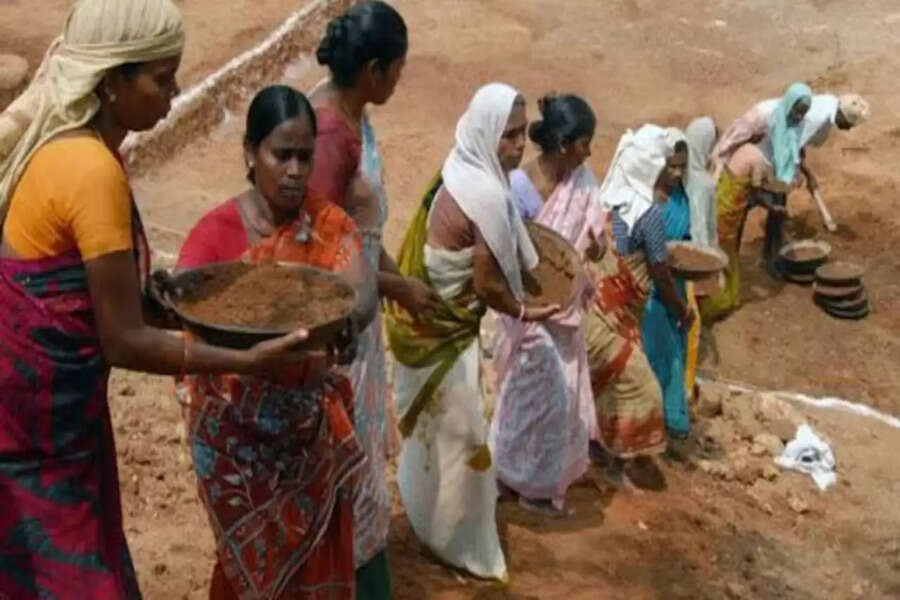
The Central Government is preparing to bring a major reform in rural employment policy. After nearly two decades, the Mahatma Gandhi National Rural Employment Guarantee Act (MGNREGA) may be replaced by a new and more comprehensive law called the Viksit Bharat Guarantee for Employment and Livelihood Mission (Rural) Bill 2025, popularly referred to as the VB-G RAM G Bill 2025.
According to the government, this change is not merely about renaming an existing scheme. Instead, it represents a shift in vision, planning, and execution, aligning rural employment with the long-term goal of Viksit Bharat 2047. Here’s a detailed look at what the VB-G RAM G Bill is, how it works, and how it differs from MGNREGA.
What Is the VB-G RAM G Bill 2025?
The Viksit Bharat Guarantee for Employment and Livelihood Mission (Rural) is proposed as a modern rural job guarantee law. Under this new framework, the government will legally guarantee 125 days of paid employment per year to every rural household willing to work.
Unlike earlier models that focused mainly on short-term wage employment, the new law emphasizes long-term rural development. The objective is to create durable assets in villages while simultaneously ensuring stable income opportunities for rural workers. Employment generation and infrastructure development will go hand in hand.
Priority Areas Under the New Rural Employment Law
The VB-G RAM G Bill clearly categorizes work into four major areas to ensure better planning and effective use of funds:
-
Water Security Projects
These include pond construction, water conservation, irrigation facilities, groundwater recharge, and watershed management to support agriculture and drinking water needs. -
Core Rural Infrastructure
Development of roads, village connectivity, and basic public facilities to improve access to markets, schools, and healthcare services. -
Livelihood-Linked Infrastructure
Construction of warehouses, rural markets, storage facilities, and production-related structures aimed at generating non-farm income opportunities. -
Climate and Disaster Resilience Works
Projects focused on flood control, drought mitigation, soil conservation, and protection from natural disasters.
All projects will be integrated into a national digital platform, enabling better monitoring, transparency, and long-term planning.
How Is VB-G RAM G Different from MGNREGA?
The most visible difference is the increase in guaranteed employment from 100 days to 125 days per household. However, the changes go much deeper:
-
Under MGNREGA, work was often fragmented and not always linked to broader development goals.
-
Under the new law, each village will prepare its own Viksit Gram Panchayat Development Plan, which will be aligned with national infrastructure and development programs.
-
Planning, execution, and accountability will be more structured, ensuring measurable outcomes rather than scattered projects.
How Will the Rural Economy Benefit?
The VB-G RAM G Bill aims to strengthen the entire rural economy, not just employment numbers. Water conservation projects will boost agricultural productivity, while better roads and connectivity will improve access to markets. Livelihood-linked infrastructure will help villagers earn beyond farming, creating diversified income sources.
As more money flows into rural areas, local consumption is expected to rise, boosting small businesses and reducing distress migration to cities. The law also takes agricultural seasons into account. State governments will be allowed to pause government works during sowing and harvesting seasons, ensuring that farm labour availability remains balanced and farmers’ costs stay under control.
Benefits for Rural Workers
For rural labourers, the new law promises 25% more employment days, better work planning, and predictable income. Payments will be fully digital, minimizing delays, wage deductions, and corruption. If employment is not provided on time, payment of unemployment allowance will be mandatory, strengthening workers’ legal rights.
Why Replace MGNREGA?
The government argues that rural India has changed significantly since 2005. Poverty levels have declined, digital payments are widespread, and livelihood options have expanded. At the same time, audits revealed serious issues under MGNREGA, including fake job cards, misuse of funds, bypassing digital attendance systems, and machine-based work shown as manual labour. In 2024–25 alone, irregularities worth around ₹193 crore were reportedly detected.
Moreover, only a small percentage of households were able to complete the full 100 days of work, raising questions about efficiency and relevance.
How Will Transparency Improve?
The new rural job guarantee law will rely heavily on technology-driven monitoring. AI tools will help detect fraud, while GPS tracking and mobile-based reporting will monitor work sites in real time. Social audits will be mandatory twice a year in every panchayat, and all expenditure details will be made public.
The scheme will be centrally sponsored, with a 60:40 cost-sharing ratio between the Centre and states for most regions. Northeastern and hill states will receive higher central assistance, ensuring states are not burdened financially.
Disclaimer:
This article is based on policy proposals and government statements available at the time of publication. Final provisions of the VB-G RAM G Bill 2025 may change once the legislation is formally introduced and passed.
