
VB-G Ram G: MGNREGA will cease operations after June 30; a 125-day rural employment law will come into effect starting July 1..
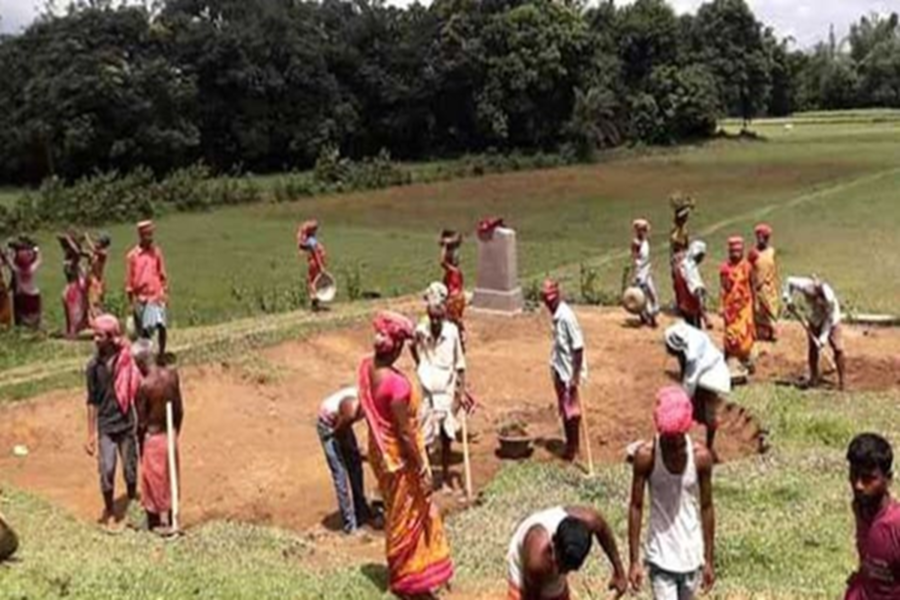
VB-GRAMG: On Monday, the Central Government issued a notification for the implementation of a new law related to rural employment. This new legislation is titled the 'Viksit Bharat Rozgar aur Aajeevika Guarantee Mission (Gramin)' (VB-GRAMG), 2025. This law will replace the nearly 20-year-old MGNREGA Act. This new regulation is set to come into force across the entire country starting July 1, 2026. A notification signifies an official government order through which a law is legally brought into effect. Following the issuance of this notification, states have been directed to prepare their systems, staff, and schemes to ensure that this new law can be implemented at the grassroots level by the scheduled date.
Rural Employment Law to Take Effect from July 1
The VB-GRAMG Bill was introduced in the Lok Sabha on December 16, 2025. It was passed by the Lok Sabha on December 18, 2025, and subsequently received approval from the Rajya Sabha shortly after midnight on December 19, 2025. Thereafter, it received Presidential assent on December 21, 2025. Now, by issuing the notification on Monday, the Ministry of Rural Development (MoRD) has clarified that this law will be implemented nationwide starting July 1, 2026.
The MGNREGA Act was enacted in 2005. Under this legislation, every rural household was guaranteed 100 days of wage employment within a financial year. Under that law, state governments would submit their annual plans based on the demand for work on the ground, and the Central Government was required to release funds accordingly. Now, two major changes have been introduced in the new VB-GRAMG Act: first, regarding the number of workdays; and second, regarding the mechanism for financial allocation between the Centre and the States.
Increase in Workdays
Under the new law, every eligible rural household will now be entitled to 125 days of work within a financial year. This implies that, under the new legislation, the guarantee of employment will be for 25 days more than what was provided under MGNREGA. **Revised Funding Mechanism**
Previously, under MGNREGA, state governments would submit work plans based on their specific requirements, and the Central Government would provide the entire funding amount. There was no fixed ceiling on expenditure under this system. Now, however, the Central Government will establish a fixed expenditure ceiling for each state. If a state exceeds this limit, the state government itself will be required to bear the cost of the additional expenditure.
**Funding Allocation Mechanism**
The funding allocation ratio for this scheme has been set at 60:40; that is, the Central Government will bear 60% of the expenditure, while the state governments will bear the remaining 40%. Northeastern and Himalayan states will receive enhanced financial assistance from the Centre. In Union Territories that do not have a Legislative Assembly, the Central Government will shoulder the entire expenditure. The total annual expenditure on this scheme is estimated to be approximately ₹1.51 lakh crore, inclusive of the states' share. Of this amount, the Central Government's share is projected to be approximately ₹95,700 crore.
Under the new regulations, it has also been mandated that every work plan must be derived from the 'Viksit Gram Panchayat Plan' (VGPP). Subsequently, these plans will be aggregated at higher administrative levels and integrated into the 'Viksit Bharat National Rural Infrastructure Stack.'
Disclaimer: This content has been sourced and edited from News18 Hindi. While we have made modifications for clarity and presentation, the original content belongs to its respective authors and website. We do not claim ownership of the content.
