
Vande Bharat's technology will amaze you: Electricity is generated the moment brakes are applied
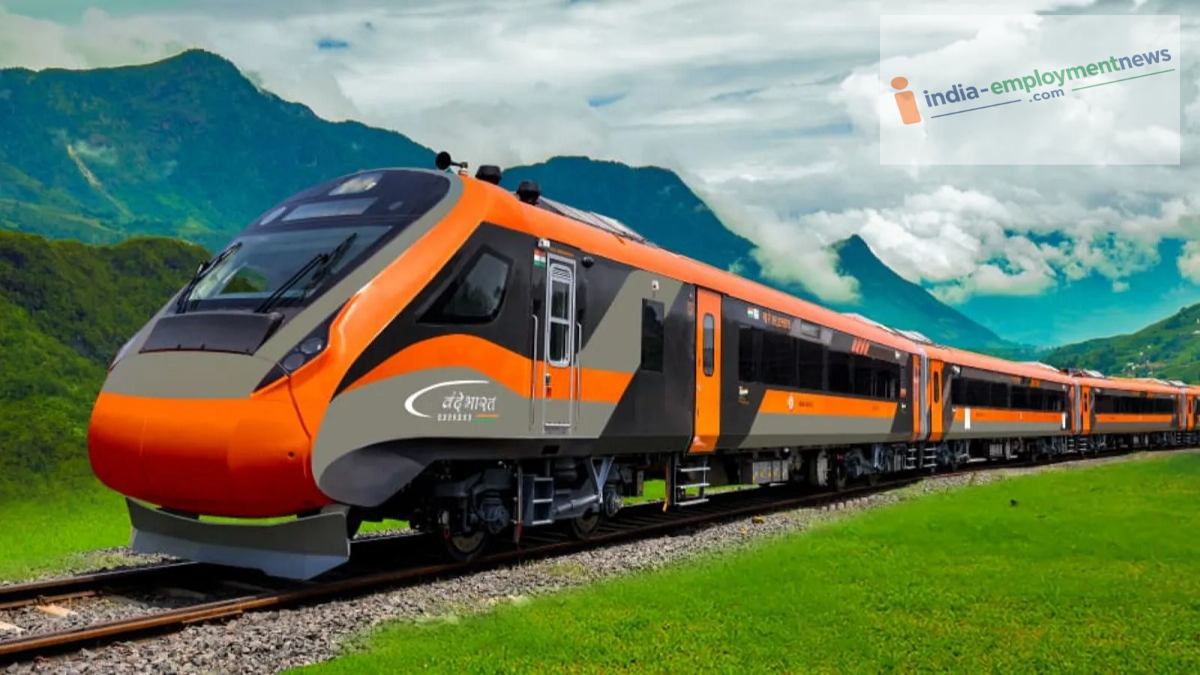
Vande Bharat utilizes electro-pneumatic and regenerative braking technologies. This enables the train to come to a safe halt even when traveling at high speeds.
Vande Bharat is distinguished not only by its speed and comfort but also by its highly modern braking technology. To bring this high-speed train to a quick and safe stop when necessary, a combination of electric and pneumatic braking systems is employed. A notable feature is that a portion of the train's energy can be converted back into electricity during braking.
Vande Bharat employs an electro-pneumatic (EP) braking system alongside electric dynamic or regenerative braking. According to railway technical documents, regenerative braking is prioritized when a braking command is issued. Pneumatic braking provides additional stopping power when required. In other words, rather than relying on a single system, the train is designed to stop safely by combining both technologies.
Capability to stop safely even at high speeds
Vande Bharat's braking system has been engineered with high-speed operations in mind. Railway specifications mandate the capability to bring the train to a halt within a distance of less than 1,250 meters using emergency brakes while traveling at 160 km/h. Requirements are also in place to ensure necessary braking performance is maintained even if the regenerative braking system fails to operate.
In August 2026, an Emergency Braking Distance (EBD) test was conducted on the country's first freight train based on the Vande Bharat platform. During the test held on August 4 in the Kota division of Rajasthan, the train was brought to a halt using emergency brakes on both dry and wet tracks. The stopping distances under these varying conditions were also evaluated.
Energy recovery during braking
Regenerative braking is a key technological feature of the Vande Bharat. In this process, the motor acts as a generator while the train slows down, converting a portion of the moving train's energy into electricity and feeding it back into the electrical system. The specifications for the Vande Bharat train set a target of recovering at least 30% of this energy.
Thus, the Vande Bharat's braking system does not merely serve to stop the train; it also helps conserve energy during braking.
