
UPI rules to change from October 15! Transactions exceeding ₹2,000 will attract charges ranging from ₹5 to ₹300..
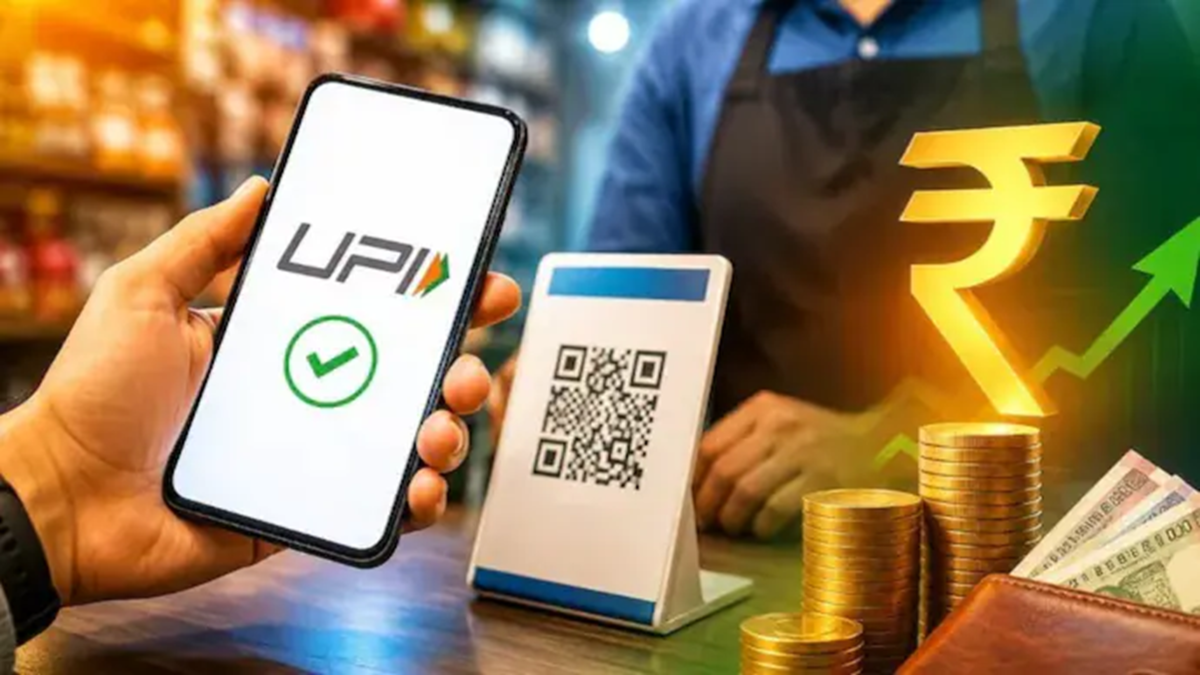
The National Payments Corporation of India (NPCI) announced on Tuesday that the government will implement a Merchant Discount Rate (MDR) on select Person-to-Merchant (P2M) UPI transactions starting October 15. Under this framework, merchants will be required to pay a fee of 0.4% on transactions exceeding ₹2,000, subject to a maximum cap of ₹300 for payments of ₹75,000 or more. The objective of this new framework is to establish a more sustainable commercial model for the UPI ecosystem. The revenue generated will be utilized to invest in payment infrastructure, cybersecurity, innovation, and customer service. This move ensures that the majority of daily UPI payments remain outside the scope of the new charge structure. According to the FAQs released by officials, no MDR will apply to transactions up to ₹2,000—a segment that accounts for over 95% of UPI P2M transaction volumes.
Customers will not be charged for making UPI payments, and Person-to-Person (P2P) transfers will remain free. Small merchants covered under the P2M framework—including vendors receiving up to ₹1 lakh per month via UPI QR codes—will be exempt from the MDR. An MDR of ₹12 will apply to a UPI payment of ₹3,000, while a transaction of ₹50,000 will incur an MDR of ₹200. For transactions of ₹75,000 and above, the charge is capped at a maximum of ₹300. This means a payment of ₹1 lakh will attract a charge of ₹300, rather than ₹400 (which would result from a straight 0.4% calculation).
The framework also provides for concessional rates for certain specific sectors. For transactions exceeding ₹2,000 in sectors such as railways, telecom, insurance, and fuel, a flat MDR of ₹5 will apply instead of the standard 0.4% rate. Capital market transactions—including payments to mutual funds, stockbrokers, and securities dealers—will attract an MDR of 0.02%, capped at ₹300. The NPCI clarified that the MDR burden will be borne by merchants and cannot be passed on to customers. This means customers will continue to pay the listed price when using UPI, and UPI apps will not charge any separate transaction or platform fees.
Why is the NPCI imposing charges on UPI transactions?
On Tuesday, the NPCI released answers to frequently asked questions (FAQs), noting that UPI processes billions of transactions every month. Maintaining the system at its current scale requires significant expenditure on server infrastructure, bandwidth, fraud prevention, cybersecurity, and technical support. According to the authority, industry estimates place the annual cost of maintaining UPI operations at approximately ₹20,000 crore.
The objective of this new model is to reduce reliance on government subsidies. The NPCI stated that the subsidy was intended as short-term support to encourage the adoption of digital payments, rather than a permanent method to cover the industry's operational costs. It is expected that revenue generated from MDR on UPI transactions will become a more reliable source of funding for investments in infrastructure and technology.
In August 2026 alone, UPI processed 2,451 crore transactions totaling ₹29.9 lakh crore, illustrating the massive scale at which the payment infrastructure now operates. The NPCI has also proposed creating a special fund for small merchants. The objective of this move is to support digital payment infrastructure in Tier 3-6 centers (including the Northeastern states, Jammu & Kashmir, and Ladakh), as well as to support notified government schemes in Tier 1 and 2 centers. It is expected that the detailed framework for this fund will be finalized within three months in consultation with the RBI.
Disclaimer: This content has been sourced and edited from TV9. While we have made modifications for clarity and presentation, the original content belongs to its respective authors and website. We do not claim ownership of the content.
