
Union Budget 2026: A Look at the History of India’s Budget and How the Presentation Date Changed Over the Years
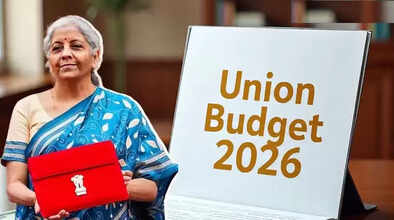
The Union Budget is one of the most important events for the Indian economy. Every year, on February 1, the Central Government presents its financial roadmap before Parliament, outlining revenue targets, expenditure priorities, and policy directions for the next fiscal year. In 2026, Finance Minister Nirmala Sitharaman will once again present the Budget on February 1, a day that has now become synonymous with major economic announcements.
But have you ever wondered how the Union Budget began in India and how many changes it has gone through since its inception? Here is a detailed look at the history and evolution of the Union Budget.
How Did the Budget System Start in India?
The roots of India’s budgeting system date back to the colonial era. The very first budget in India was introduced on April 7, 1860, by James Wilson, representing the East India Company. At that time, the document was largely focused on tax collection and administrative expenses.
After independence, India presented its first Union Budget on November 26, 1947. It was delivered by R.K. Shanmukham Chetty, the first Finance Minister of independent India. Since then, the Union Budget has evolved into a comprehensive plan that influences every sector — from infrastructure and defense to agriculture, education, and welfare.
Longest and Shortest Budget Speeches in Indian History
Over the decades, many finance ministers have created milestones with their budget speeches. Current Finance Minister Nirmala Sitharaman holds the record for the longest budget speech. On February 1, 2020, she spoke for about 2 hours and 42 minutes, although the speech had to be paused due to health reasons. Even in 2019, her speech lasted more than 2 hours, marking another significant record.
On the other hand, the record for the shortest budget speech belongs to Hirubhai Muljibhai Patel, who in 1977 wrapped up his presentation in just 800 words — a remarkable contrast!
How the Timing of Budget Presentation Was Changed
For decades, India followed a British-era tradition of presenting the budget at 5 PM. This timing allowed London’s financial markets to absorb the announcements before India. This practice continued until 1999.
It was Yashwant Sinha, the then Finance Minister, who shifted the budget timing to 11 AM to make it more convenient for Indian policymakers and citizens.
Another major change came in 2017, when Arun Jaitley rescheduled the budget from the last working day of February to February 1, enabling faster allocation of funds and smoother implementation from the beginning of the new financial year.
From English-Only Budget to Digital Budget
In the early years, the Union Budget was drafted and presented only in English. This changed in 1955, when it began being published in both Hindi and English, making it more accessible for the wider population.
A revolutionary shift occurred during the COVID-19 pandemic. The 2021–22 Union Budget became India’s first completely paperless budget, marking the move toward digital governance.
Railway Budget and Women Finance Ministers
For 92 years, India had a separate Railway Budget. However, in 2017, it was merged with the Union Budget for better alignment of financial planning and resource management.
Another significant milestone relates to women leaders:
-
Indira Gandhi became the first woman Finance Minister to present the budget (1970–71).
-
Nirmala Sitharaman became the second woman to present the Union Budget in 2019 and has continued to do so every year since.
A Budget That Shapes India’s Future
From handwritten documents to digital presentations, from evening announcements to morning sessions, the Union Budget has come a long way. Today, it not only represents the government’s financial plan but also reflects the country’s broader vision for growth, development, and economic strength.
As India gears up for the Union Budget 2026, expectations remain high across industries and among citizens who hope for tax relief, employment boosts, and policies that support a stronger, more prosperous future.
