
Under the PM Surya Ghar Yojana, a subsidy will no longer be available solely for installing solar panels; this condition must be met..
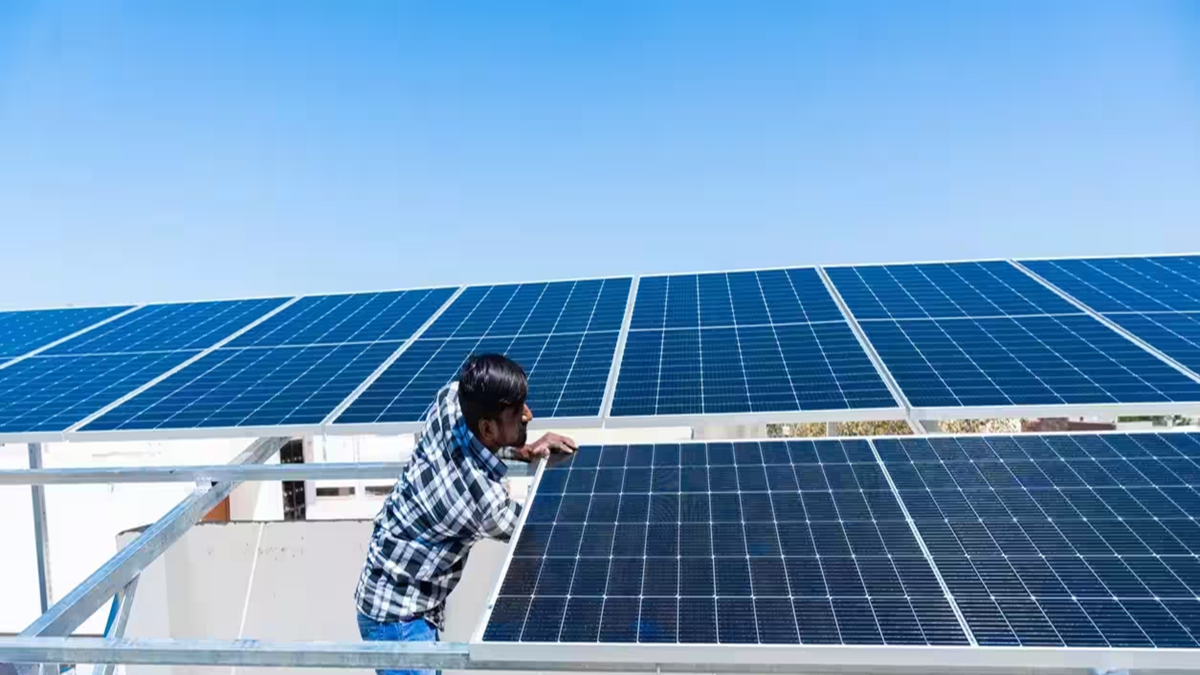
The government is preparing for significant changes in the next phase of the 'PM Surya Ghar Muft Bijli Yojana' (PM Surya Ghar Free Electricity Scheme). The focus may shift from merely increasing the number of rooftop solar panel installations to the actual electricity generated and the system's operational longevity. In other words, future government assistance is likely to be linked to the solar system's performance and the benefits it provides to the power grid.
Currently, the financial assistance provided under the scheme for rooftop solar installations is primarily linked to the system's capacity. The proposed new model may prioritize factors such as electricity generation, maintenance, battery storage, and services provided to the grid. The government is considering options like AI-based monitoring, virtual metering, and assistance tailored to different income categories. However, these changes are currently in the proposal stage, and the final rules are yet to be announced.
**Subsidy Mechanism May Change**
The government is considering splitting the financial assistance into two parts. One portion could be provided to help cover the initial installation costs, while the other could be linked to system performance, electricity generation, maintenance, or battery storage.
The assistance structure may also vary based on income levels. Higher-income households could be encouraged to adopt solar power with less government aid, whereas lower-income households might require greater support. A key objective for the government is ensuring that the cost of installing residential solar systems can be recovered within approximately 5 to 6 years.
**Increased Focus on Battery Storage**
As the number of rooftop solar installations grows, issues related to excess daytime electricity generation and feed-in to the grid may also increase. Consequently, battery storage could become a crucial component of the scheme. Residential batteries could store surplus electricity generated during the day for use when needed.
Additionally, the installation of large-scale batteries at the power distribution network and substation levels is also being considered. This could help power companies manage grid stress, meet peak-hour demand, and optimize network utilization. A model could also be devised to share a portion of the savings realized by power companies with the consumers.
**Benefits for households in apartments and those without rooftops**
The proposed changes also aim to include individuals who do not own a rooftop. Residents of apartments could benefit through mechanisms such as virtual net metering, group net metering, balcony solar installations, or solar systems mounted on building facades.
Options for small community solar plants are also being explored for low-income households. Such plants—with a capacity of around 100 kilowatts—could benefit families unable to install 1–2 kilowatt systems at their own homes.
**Focus on solar system quality**
The government intends to look beyond mere installation and ensure that solar systems are generating the expected amount of electricity. To this end, measures such as guaranteed power generation, mandatory service periods, and insurance coverage against equipment failure or underperformance are being considered.
According to a *Financial Express* report, a "Solar Passport" system might be introduced to maintain a digital record of each solar system. This record could capture details such as generation output, service history, and warranty status.
**AI-driven inspections and data-based monitoring**
Artificial Intelligence (AI) could be increasingly utilized for the inspection and monitoring of solar systems. This would help verify correct installation and detect any equipment malfunctions.
The government is also working on a shared data system involving over 100 inverter and equipment manufacturers. Daily generation data could assist power companies in grid planning, timely fault detection, and the management of warranty-related issues. Currently, the government is preparing a draft of the policy, and discussions with stakeholders are expected to take place soon.
Disclaimer: This content has been sourced and edited from News18 Hindi. While we have made modifications for clarity and presentation, the original content belongs to its respective authors and website. We do not claim ownership of the content.
