
UCC May Be Implemented in 21 States Before 2029: Know How It Could Change Marriage, Divorce and Inheritance Rules.
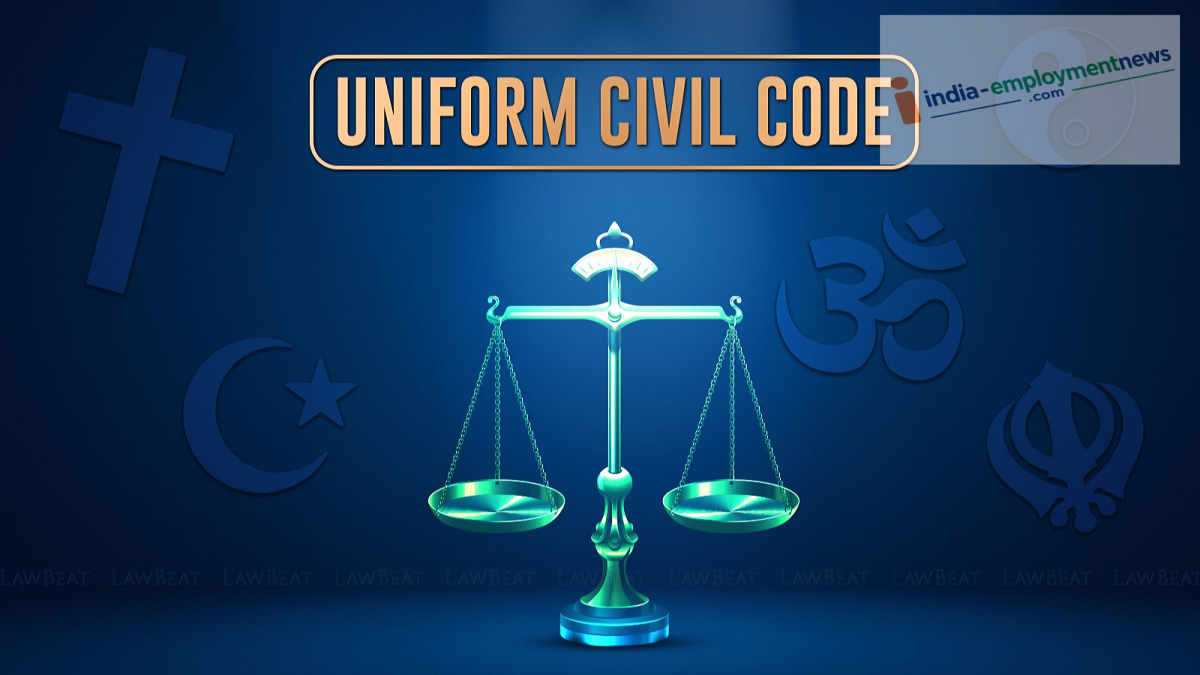
CURRENT AFFAIRS: Union Home Minister Amit Shah has announced plans to implement the Uniform Civil Code (UCC) in the 21 states governed by the BJP-NDA alliance before 2029. Following this statement, the UCC has once again become a topic of discussion. Here, we explore what the UCC is and how its implementation might impact the lives of ordinary citizens.
Uniform Civil Code Explained: The Uniform Civil Code (UCC) is back in the spotlight after a recent statement from Union Home Minister Amit Shah. Speaking in Mumbai on September 13, he stated that the UCC would be implemented across all 21 BJP-NDA-ruled states before 2029. This implies that, in the near future, we may see changes in the regulations governing personal matters—such as marriage, divorce, inheritance, and adoption—across these states.
But what exactly is the UCC? What matters fall under its ambit, and how might it alter the lives of ordinary people if implemented in a state? Let us understand this topic in simple terms in today's current affairs update.
What Exactly Is the UCC?
In simple terms, the UCC—or Uniform Civil Code—envisions a system where uniform legal rules replace the distinct personal laws based on religion that currently govern matters such as marriage, divorce, inheritance, adoption, and other family-related civil issues.
Currently, in India, different personal laws apply to various communities regarding these personal matters. The concept behind the UCC is to establish a unified legal framework for these issues. This does not mean that the implementation of the UCC would standardize rules regarding modes of worship, religious beliefs, or matters of faith; its primary focus is on laws concerning civil and family matters.
Article 44 of the Constitution also states that the State shall endeavor to secure a Uniform Civil Code for citizens throughout the country. Many subjects—such as marriage, divorce, adoption, and succession—fall under the Concurrent List of the Constitution, meaning both the Centre and the States have the authority to enact laws regarding them. This is why the conversation around the UCC is no longer limited to enacting a single law for the entire country; the process of formulating laws at the state level is also gaining momentum in several states.
What rules might change if the UCC is implemented?
When the UCC is discussed, issues such as marriage, divorce, and inheritance come to the forefront. Additionally, regulations concerning adoption, maintenance, and—in some states—live-in relationships could also fall within its ambit.
For instance, if the UCC is implemented in a state, rules regarding marriage registration, divorce procedures, or property division could be standardized across all communities.
However, there is currently no single UCC law in force across the entire country. Therefore, it would be incorrect to assume that the rules governing these matters will be identical in every state.
The example of Uttarakhand is particularly useful for understanding this.
What changed with the UCC in Uttarakhand?
The UCC has already been implemented in Uttarakhand. Rules have been established there covering marriage, divorce, inheritance, adoption, and live-in relationships.
Consequently, if the UCC is implemented in other states, it will be crucial for residents to understand the specific changes made to their state's laws.
Will the UCC be uniform across all states?
This brings up another important point. While the goal of the UCC is to create a uniform civil code, individual states are formulating their own laws. Many subjects—such as marriage, divorce, and inheritance—fall under the Concurrent List of the Constitution, meaning both the Centre and the states can enact laws regarding them.
As a result, specific provisions within the UCCs of different states may vary. For example, Uttarakhand's law contains distinct provisions regarding certain communities.
In the future, therefore, it will not be enough to track how many states have implemented the UCC simply; one must also examine the specific rules established within the laws implemented in those states.
What does this mean for the common person?
The UCC will not impact the daily routines of the average person. Its scope primarily concerns legal matters related to family and personal life. In other words, changes could be seen in areas such as marriage registration rules, divorce procedures, the determination of children's rights regarding parental property, adoption regulations, and the legal framework governing live-in relationships.
However, precise details regarding these changes will be found in the specific UCC legislation of the state where the law has been implemented.
What happens next?
Following Amit Shah's statement regarding the implementation of the UCC in 21 states before 2029, attention will now shift to the processes unfolding at the state level.
The implementation of the UCC in Uttarakhand provides a working model. As laws are drafted or enforced in other states, the specific rules governing marriage, divorce, inheritance, adoption, and other family matters will become clear.
Therefore, the best way to understand the UCC is to look beyond the political debate. The real impact will be visible in the laws themselves—laws that, once implemented, will influence decisions concerning people's marriages, families, property, and inheritance.
