
Train Travel Gets Costlier: Fares to Rise from General to AC Coaches, Know How Much You’ll Pay After 250 km
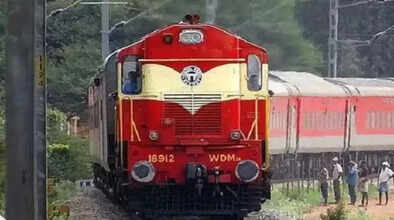
Train travel in India is set to become slightly more expensive just days before the new year. The Indian Railways has announced an increase in fares for Mail and Express trains, which will come into effect from December 26, 2025. While short-distance passengers will get some relief, those traveling longer distances will now have to pay more per kilometer across classes—from general to AC coaches.
Here is a detailed breakdown of what is changing, how much extra passengers will pay, and who will be most affected by the revised fare structure.
New Railway Fare Hike: What Has Changed?
According to the revised fare notification issued by Indian Railways, the fare hike will apply only beyond a specific distance limit, ensuring that short-distance commuters are not burdened.
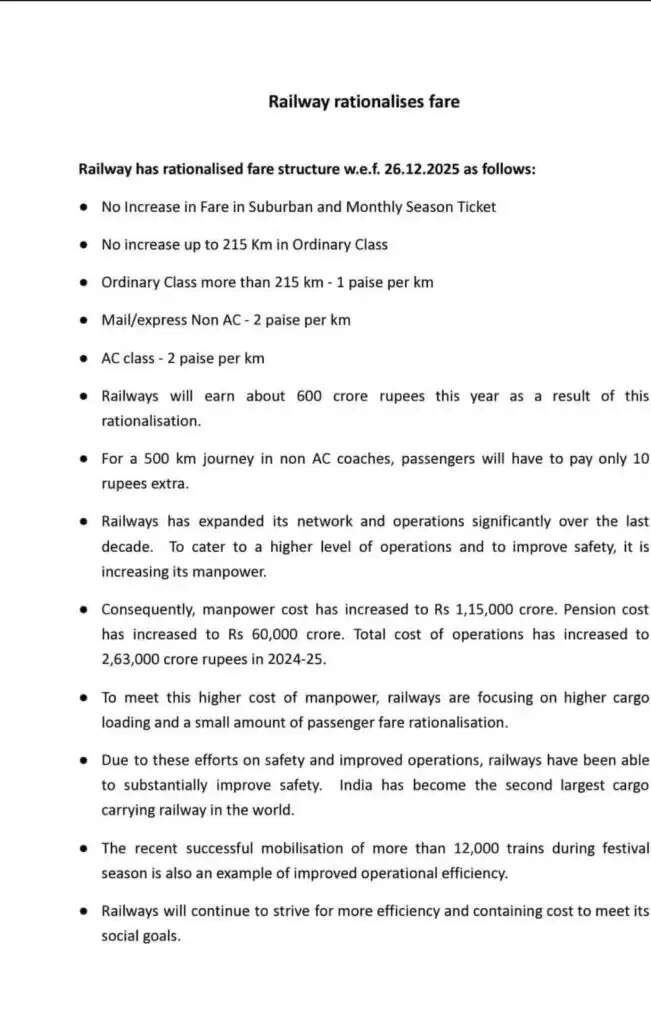
Passengers traveling up to 215 kilometers in ordinary (general) class will not see any increase in ticket prices. However, once the journey exceeds this limit, fares will rise on a per-kilometer basis depending on the class of travel.
Revised Fare Increase Structure
-
Ordinary (General) Class:
-
No increase up to 215 km
-
Beyond 215 km: 1 paisa per kilometer
-
-
Mail/Express Non-AC Coaches:
-
Beyond 215 km: 2 paise per kilometer
-
-
Mail/Express AC Coaches:
-
Beyond 215 km: 2 paise per kilometer
-
This means that the longer your journey, the more noticeable the increase will be—especially for passengers traveling several hundred kilometers.
Who Will Feel the Impact the Most?
The revised fare structure has been designed to protect short-distance travelers, including daily commuters and passengers on regional routes. However, the impact will be clearly felt by:
-
Long-distance passengers
-
Travelers on Mail and Express trains
-
Passengers using AC and sleeper classes
For instance, someone traveling 500 kilometers in a non-AC Mail or Express train will now pay around ₹10 more than before. While this amount may appear modest, the cumulative impact across millions of passengers will be substantial.
How Much Extra Revenue Will Railways Generate?
Indian Railways expects this fare revision to significantly boost its earnings. According to internal estimates, the fare hike could result in additional revenue of over ₹600 crore.
Officials believe the incremental increase is necessary to:
-
Offset rising operational and fuel costs
-
Improve passenger amenities
-
Support infrastructure upgrades and modernization
By keeping the hike minimal and distance-based, Railways aims to balance revenue growth with passenger affordability.
Delhi to Patna: How Much Will Fares Increase?
The approximate distance between Delhi and Patna is around 1,000 kilometers. Until now, the 3AC fare on premium trains like the DBRT Rajdhani Express was roughly ₹2,195 (indicative).
With the new fare rule of 2 paise per kilometer, passengers will pay approximately ₹20 more after December 26, 2025. While the increase is not drastic, frequent travelers on this route will notice the change.
Delhi to Mumbai Travel Also Gets Costlier
The distance between Delhi and Mumbai is about 1,386 kilometers. Currently, the 3AC fare on the CSMT Rajdhani Express stands at around ₹3,180.
Under the revised fare structure, the additional cost will be roughly ₹27, taking the total fare to approximately ₹3,207. Similar increases will apply to other long-haul routes across the country.
Second Fare Hike in 2025
This is not the first time in 2025 that Indian Railways has revised passenger fares. Earlier, on July 1, 2025, fares were increased:
-
By 1 paisa per kilometer for Mail and Express trains
-
By 2 paise per kilometer for AC classes
The December revision marks the second fare hike this year, signaling a gradual shift toward fare rationalization rather than sharp, one-time increases.
What Passengers Should Keep in Mind
-
Tickets booked for journeys on or after December 26, 2025, will reflect the revised fares
-
Short-distance travelers up to 215 km remain unaffected
-
Long-distance passengers should factor in the marginal increase while planning budgets
Bottom Line
While train travel in India continues to remain one of the most affordable modes of transportation, the latest fare hike means passengers traveling long distances will need to pay a little extra. The increase is modest on an individual level but significant in aggregate for the Railways.
With operational costs rising and infrastructure demands growing, Indian Railways appears to be opting for small, phased fare adjustments rather than sharp hikes—offering relief to short-distance travelers while ensuring financial sustainability.
Passengers planning journeys around the end of December should stay informed and check updated fares before booking tickets.
