
Train News: Do You Know Why Gaps Are Left on Railway Tracks? Discover the Real Reason Behind It
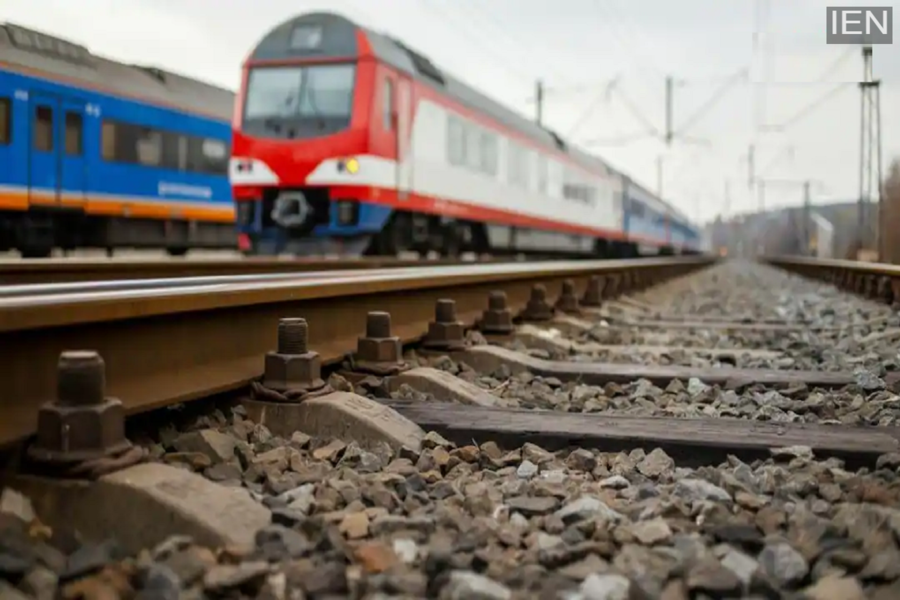
Indian Railways: Very few of you are likely aware of why gaps are intentionally left on railway tracks. So, in this report, let's explore the physics behind this phenomenon.
Railway Track Gaps: Most of you, while traveling on Indian Railways, must have surely noticed the slight gap left between the joints of two rails on the track. In reality, this is a specific engineering design implemented to ensure the safety of train passengers. So, let's find out in this article exactly why these gaps are left on railway tracks.
The Mystery Behind Leaving Gaps Between Rails?
Essentially, the real reason for leaving gaps between railway rails is nothing other than the application of a fundamental law of physics—specifically, a phenomenon known as "thermal expansion." It is common knowledge that railway tracks are constructed using steel. According to scientific principles, metals tend to expand when heated and contract when cooled.
Consequently, during the summer season, the intense sunlight and the passage of heavy trains cause the temperature of the rails to rise rapidly, resulting in an elongation of the steel rails. This gap between the railway rails provides the necessary space for them to expand during this process of thermal expansion.
The Risk of Buckling If Gaps Are Not Left
Conversely, if no gap is left between the rails, the lack of space can cause the tracks to bend or buckle in the middle—a phenomenon technically referred to as "buckling." Furthermore, a buckled track can cause a train to lose its balance and derail, thereby creating the risk of a major accident.
Modern Technology: What Are the Safety Regulations?
However, in the present day, a specialized type of welded track is being increasingly utilized for long-distance routes within the railway system; these tracks employ specific engineering techniques to balance stress. Furthermore, Indian Railways is now consistently deploying modern technologies—such as Magnetic Particle Testing—to enhance welding quality, thereby ensuring that rail travel becomes significantly safer than ever before.
