
Toll Tax Rule: Live Within 20 km of a Toll Plaza? You May Be Eligible for Toll-Free Daily Travel
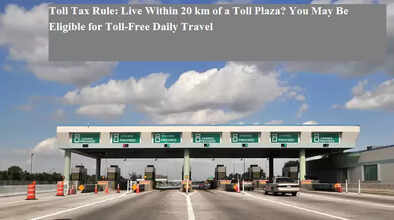
If you use a nearby highway every day to commute to your office, market, or your children’s school, there is good news for you. Many people are unaware that residents who live close to a toll plaza may not have to pay anything for their daily travel. The National Highways Authority of India (NHAI) has introduced a rule that offers toll-free access to local residents whose homes fall within a 20-kilometre radius of a toll plaza.
This initiative aims to reduce the financial burden on people who must take the same route every day for work or other essential travel.
What Is the 20 Kilometre Toll-Free Rule?
According to NHAI guidelines, any vehicle owner whose residential address falls within 20 km of a toll plaza is eligible to travel without paying toll charges. The policy is meant specifically for local residents who frequently cross the toll gate as part of their daily routine.
To avail of this benefit, the vehicle owner must present valid address proof that confirms their residence lies within the permitted distance. Acceptable documents include:
-
Aadhaar card
-
Electricity bill
-
Ration card
-
Any other government-issued address proof
Once the address is verified, the toll plaza issues a special local pass. This pass allows free entry and exit at that particular toll point for daily commuting.
How to Apply for Toll-Free Daily Travel
To activate toll-free access, the applicant must visit the nearest toll plaza office with the required address documents. The toll operator will verify the distance between the residence and the toll gate. After successful verification, the commuter receives a local concession pass that enables toll-free travel throughout the validity period.
This exemption applies only to the toll plaza for which the pass is issued, and only for the vehicle linked to the verified address.
Part of the ‘Pay As You Use’ GNSS-Based Policy
This benefit is aligned with the new GNSS-based Pay As You Use tolling system that India has begun implementing from September 2024 on a pilot basis across select highways. Under this system, toll charges are calculated based on the actual kilometres travelled rather than fixed toll booth payments. The 20-kilometre exemption serves as an additional concession for residents who frequently use the same highway stretch.
Which Vehicles Already Enjoy Toll-Free Access?
Apart from local residents, several categories of vehicles are already exempt from toll payments under central rules:
-
Central and state government vehicles
-
Police, fire brigade and ambulance services
-
Army, Navy, Air Force and NDRF vehicles
These exemptions ensure that essential and emergency services are not delayed at toll plazas and can move quickly during urgent situations.
Two-Wheelers and Pedestrians Also Travel Free
Toll charges are not applicable to two-wheelers, as these vehicles are not required to use FASTag and contribute minimal load on highways. Pedestrians are also exempt and can cross freely without any fee.
Why This Rule Matters for Local Residents
For people living in towns or villages near national highways, daily toll charges can add up to a significant monthly expense. If a commuter crosses even one toll plaza twice a day, the cost can reach several thousand rupees per month.
The 20-kilometre rule helps reduce this financial burden, making daily travel more affordable for local residents who rely on highways for essential mobility.
It is an often-overlooked provision, but once understood and used, it can save commuters a substantial amount every year.
