
Toll collection in Delhi to go seamless: How will the MLFF system work?
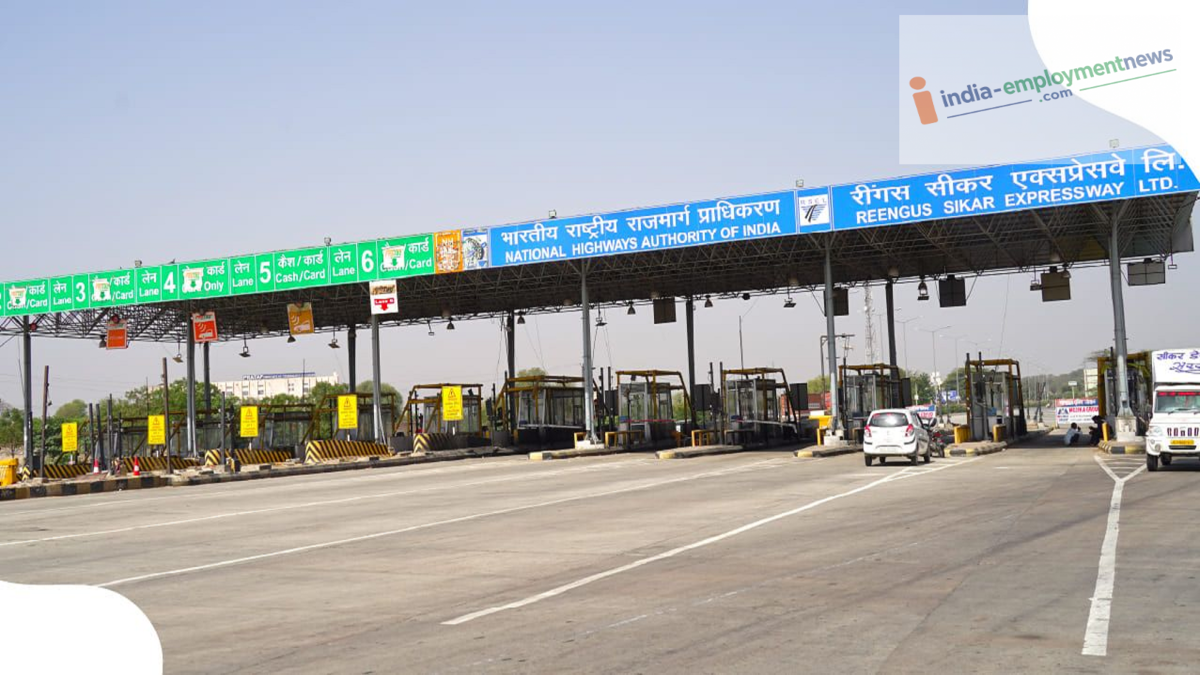
A change is coming to the toll collection system in Delhi. The government is preparing to implement the 'Multi-Lane Free Flow' (MLFF) system, which will allow for toll collection without requiring vehicles to stop. This will eliminate long queues at toll plazas.
Commuters entering Delhi—currently often stuck in traffic jams at borders like Ghazipur, Badarpur, and others—may soon find relief. Preparations are in full swing to implement the Multi-Lane Free Flow (MLFF) system at Delhi’s entry points.
With this technology, vehicles will no longer need to stop at toll plazas to make payments. The system will identify the vehicle while it is in motion, and the toll will be automatically deducted via FASTag.
What exactly is the MLFF system?
'MLFF' stands for Multi-Lane Free Flow. Simply put, it is a barrier-free toll system. Currently, vehicles must stop in front of a barrier at toll plazas; the FASTag is scanned, the toll is deducted, and the barrier opens to allow the vehicle to pass. This process often leads to long queues, but the MLFF system will eliminate this, as there will be no need for barriers at the toll plazas.
Large gantries equipped with cameras and sensors will be installed over the road. As a vehicle passes underneath, the system will identify it and automatically deduct the toll amount via its FASTag.
How will this system work?
It primarily utilizes two technologies:
First, RFID: This technology uses radio signals to identify the FASTag affixed to your vehicle. As the vehicle passes through the toll point, readers mounted overhead will scan the FASTag.
Second, ANPR: This stands for 'Automatic Number Plate Recognition.' Specialized cameras will read and identify the vehicle's number plate, allowing for verification of both the FASTag and the vehicle's registration plate. These two technologies will enable vehicle identification and facilitate electronic toll payment, eliminating the need for vehicles to stop.
What happens if there are insufficient funds in the FASTag?
The question arises: what happens if your vehicle's FASTag lacks a sufficient balance or is not functioning correctly?
In such a scenario, the toll payment cannot be processed, and an electronic notice (E-Notice) may be issued based on the identification of the vehicle.
According to the system in place on national highways, a 72-hour window is provided after receiving such a notice to pay the standard toll fee. Failure to make the payment within this period may result in a penalty equal to double the toll amount.
For the system to be implemented at Delhi's borders, official confirmation regarding the specific payment deadlines and final penalty rules will be required.
When will this system be introduced in Delhi?
The Municipal Corporation of Delhi (MCD) is preparing to implement this system at all entry points into the city. As of a report dated November 24, the necessary infrastructure has already been installed at the Ghazipur toll plaza, and trials have commenced at several locations. However, it has not yet been fully implemented across all of Delhi's borders.
This system is particularly significant for Delhi, as traffic congestion at the borders—which often worsens during the winter months—leads to increased fuel consumption and higher levels of pollution.
What are the benefits for the general public?
The primary advantage is time savings. The need to wait in long queues at toll plazas will be significantly reduced. Since vehicles will no longer need to stop repeatedly, fuel consumption will decrease, and pollution levels around toll points may also decline.
It is important to understand that the introduction of MLFF (Multi-Lane Free Flow) does not mean the abolition of toll taxes; rather, it represents a shift in the method of toll collection. Vehicles subject to tolls will still be charged, but they will no longer be required to come to a halt to make the payment.
In the near future, the appearance of toll plazas at Delhi's borders could undergo a significant transformation. It remains to be seen how quickly this technology is implemented at all entry points and how much relief from traffic congestion it provides to people on the ground.
