
This gang has already circulated counterfeit ₹10 and ₹20 coins worth ₹70 crore; here is how to spot fake coins in two minutes..
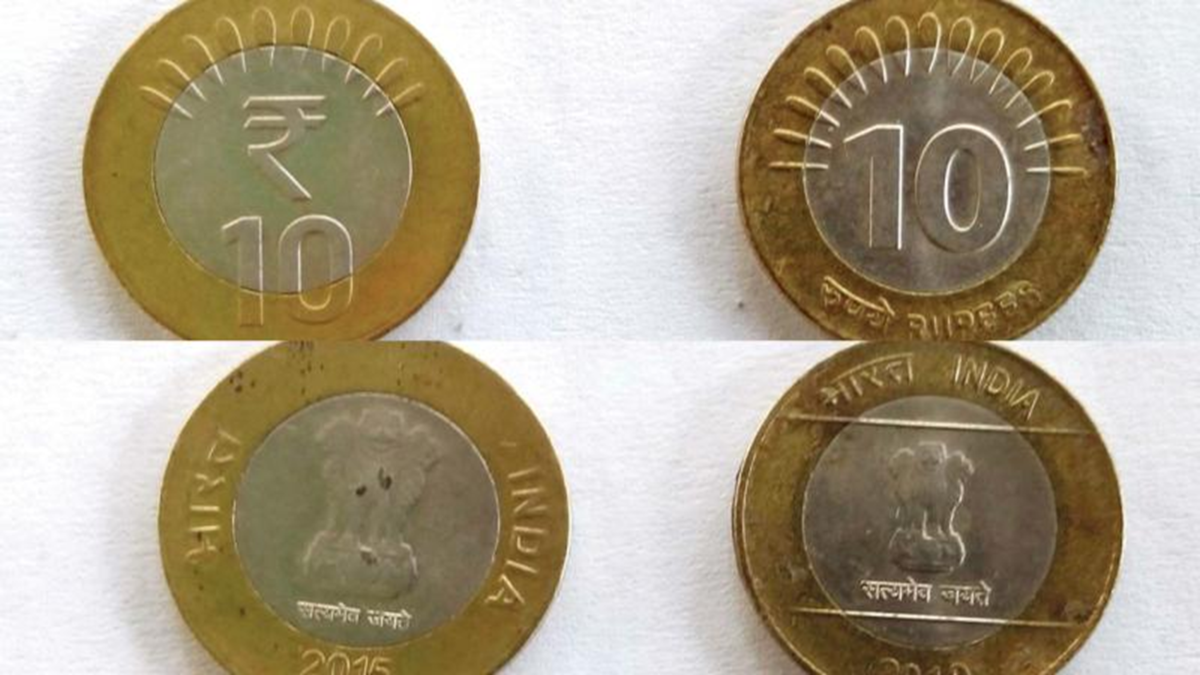
Fake Currency Coins: A joint team comprising the Saharanpur Police and the SOT has busted a major gang involved in manufacturing counterfeit coins—an operation that had been running for 25 years. Preliminary investigations suggest that counterfeit coins worth over ₹70 crore were circulated in the market through liquor shops, toll plazas, and small retailers. During the raid, the police arrested five individuals, including the alleged mastermind, Upkar Luthra (alias Abhay Pratap Singh), a resident of Mohali, Punjab.
Reports indicate that the mastermind, Upkar Luthra, has been involved in the illegal trade of manufacturing counterfeit coins since 2001. The Delhi Police had previously announced a reward of ₹1 lakh for his arrest. He had established a new base in Saharanpur and was engaged in minting coins on a massive scale.
**12,000 Counterfeit Coins Produced Daily**
During the police raid, authorities recovered six large industrial machines, iron dies (both stamped and unstamped), polishing machines, grinding stones, saws, and other equipment. According to the police, this was not a makeshift setup but a full-fledged industrial plant capable of producing approximately 12,000 counterfeit ₹20 coins daily. After minting, the coins were treated with special brushes, grinding stones, and die-polishing machines to give them a genuine shine, ensuring that the average person would be deceived at first glance.
**Estimated Circulation of Coins Worth Over ₹70 Crore**
SSP Abhinandan stated that the exact value of the counterfeit coins circulated by the gang so far is currently being ascertained. However, based on initial interrogation and an analysis of their network, it is suspected that counterfeit coins worth more than ₹70 crore have been pushed into the market. During the operation, the police seized seven registers containing transaction records and eight mobile phones from the site. These documents are expected to reveal the names of buyers and agents who supplied these coins to various states across the country.
**Targeting liquor shops, toll plazas, and small traders**
The gang circulated counterfeit coins in places where large volumes of small-denomination cash transactions occur daily. They had established a network involving liquor shops, toll plazas, vegetable markets, and small traders to push these fake coins into circulation.
**Liquor shops:** Crowded environments where coins are rarely inspected. **Toll plazas:** Places where coins are accepted hastily amidst the flow of traffic. **Vegetable markets and small traders:** Situations where there is no time to closely examine individual coins.
**How to identify counterfeit ₹10 and ₹20 coins**
**Feature** | **Genuine Coin** | **Counterfeit Coin**
**Weight and Thickness** | Standard weight and uniform thickness as prescribed by the RBI. | Lighter; uneven thickness or rough edges.
**Ashoka Pillar and 'Satyameva Jayate'** | Very sharp, raised, and clear finish | Blurred, less raised, or unbalanced print.
**Ring and Metal Joint** | The joint between metals is seamless and strong. | Loose center ring; visible gaps or marks at the metal junction.
**Luster and Polish** | Natural metallic luster that lasts a long time. | Smell of chemical polish or a sensation of color rubbing off upon touch.
