
The whole truth of eSIM! What is this new technology, and how will it change your SIM card world? Complete guide for Indian users
eSIM Technology: Smartphone technology is changing rapidly, and now eSIM (Embedded SIM) is gradually becoming popular in place of traditional SIM cards.
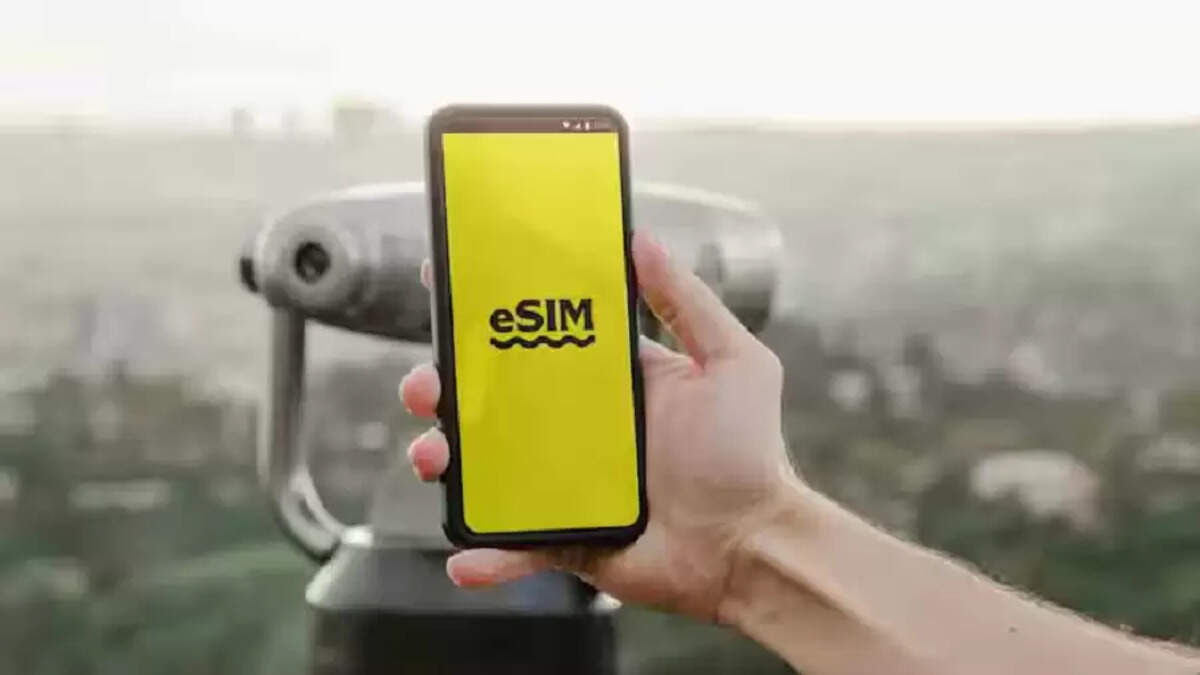
eSIM Technology: Smartphone technology is changing rapidly, and now eSIM (Embedded SIM) is gradually becoming popular in place of traditional SIM cards. It is a digital SIM that is present directly in the hardware of your phone. That is, you do not need to insert or remove it. Currently in India, big telecom companies like Jio, Airtel and Vi provide eSIM support on select devices. However, many users still have questions in their minds about what this technology is and what can be its advantages and limitations in a big market like India.
What is a normal SIM card?
The full name of SIM is Subscriber Identity Module. It is a small plastic chip that has to be inserted into the phone. It stores your mobile network details, number and some basic contacts. Currently nano-SIM is being used the most in India.
What is eSIM?
eSIM (Embedded SIM) is actually a digital version of SIM which is inbuilt in the motherboard of your phone. To activate it, you do not need to insert a separate card. Telecom operators activate it through QR code or settings. In India, iPhone, Google Pixel and some Samsung Galaxy models already support eSIM.
Difference between eSIM and normal SIM
- Normal SIM is a separate card whereas eSIM is already installed inside the phone and cannot be removed.
- In eSIM, you can change the operator by scanning the QR code whereas to change the normal SIM, the physical card has to be swapped.
- With eSIM, you can use both digital and physical SIM simultaneously.
- eSIM cannot be stolen or lost whereas physical SIM can be easily lost.
- eSIM saves extra space inside the phone, which allows companies to provide slim design or bigger battery.
Benefits of eSIM in India
- Easy to change operator without going to the store.
- No risk of SIM card getting broken or lost.
- Convenient for travelers, can activate international plan immediately without buying a new SIM abroad.
- Benefit of dual SIM, one number can be used for work and the other for personal.
Challenges of eSIM in India
- Limited device support: Currently eSIM is available only in expensive smartphones (iPhone, Pixel, Samsung Galaxy).
- Complex setup: Work does not start immediately after inserting it like physical SIM, but has to be activated through QR code and settings.
- Difficult to change phone: Like normal SIM, it cannot be transferred to another phone immediately, it has to be set up again.
- Limited operators: Currently only Jio, Airtel and Vi support eSIM. Smaller networks are behind.
- Problem in case of phone loss or damage: If the device is damaged or lost, eSIM cannot be transferred immediately and a request has to be made to the operator again for the same.
