
The Indian Rupee Is Not as Weak as It Appears; Understanding This Theory Will Take the Wind Out of the Dollar’s Sails
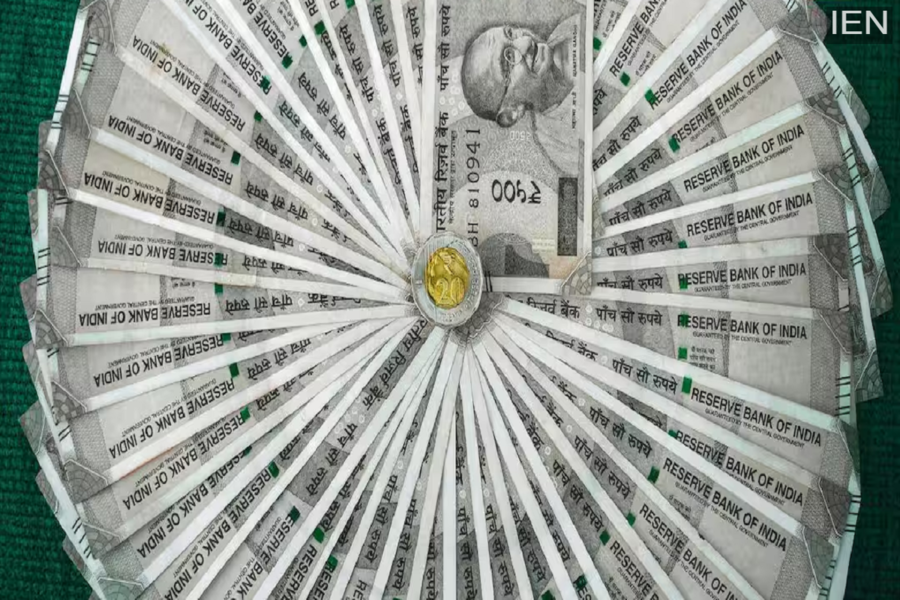
Rupee Purchasing Power: The true strength of the Indian Rupee lies not in its market value relative to the dollar, but rather in its purchasing power within India. According to one economic theory, India stands today as the world’s third-largest economic superpower.
On Monday, for the first time in history, the Indian currency crossed the 95 mark against the US Dollar. During the current financial year (2025-26), the Rupee has witnessed a massive depreciation of 9.88 percent so far. This is being regarded as the most alarming and significant decline in the Rupee’s value observed over the last 14 years. Often, when we read such reports in newspapers, we tend to assume that our Rupee is extremely weak; however, there exists a long-standing and precise economic theory that completely overturns this perception. This concept is known as Purchasing Power Parity (PPP). If you grasp this principle, you will realize that the Indian Rupee is not nearly as weak as it appears in international market statistics. In fact, India’s true economic strength is rooted in this very theory.
What Is the True Meaning of Purchasing Power Parity?
Purchasing Power Parity (PPP) is an economic metric that compares the currencies of two different nations not based on their prevailing market exchange rates, but rather on their respective purchasing power—that is, their ability to buy goods and services. Simply put, the question it addresses is: how many Rupees would be required in India to purchase the exact same quantity of goods that one dollar can buy in the United States? For instance, if a burger costs $1 in the US, and that very same burger is available for ₹25 in India, then—according to PPP—the true value of $1 should be ₹25, regardless of the fact that it may be displayed as ₹84 on a bank’s trading screen.
Gustav Cassel’s Theory: The Concept That Shifted Perspectives
The foundation of this revolutionary economic principle was laid in 1918 by the Swedish economist Gustav Cassel. He demonstrated to the world that the true value of a currency is not determined solely by the stock market or foreign trade, but rather by the extent to which that currency fulfills the basic needs of the common person. To this day, Cassel’s theory is regarded by institutions such as the International Monetary Fund (IMF) and the World Bank as the most reliable method for measuring the true size of any nation’s economy.
Market Rate vs. Real Purchasing Power
The exchange rate we typically observe is referred to as the “market rate.” This rate fluctuates every second based on the forces of supply and demand; however, it does not accurately reflect the standard of living of an average citizen residing in India. According to PPP (Purchasing Power Parity), if you can acquire goods in India for 20–25 rupees—items that would cost 1 dollar in the United States—then the actual strength of the Indian rupee is far greater than what the market rate suggests. This is precisely why the prices of goods and services in India are significantly lower compared to those in developed nations.
The World’s Third-Largest Economic Power
When we compare GDP figures based on “nominal” terms—that is, at market rates—India appears to be the world’s fifth-largest economy. However, the moment we view the data through the lens of PPP, India leaps forward to become the world’s third-largest economy. The underlying reason for this is that labor, food grains, and services are relatively inexpensive in India. The purchasing power of a single rupee here is remarkably high, enabling people to enjoy a better quality of life even with limited financial resources. This reality is what poses a formidable challenge to the global dominance of the U.S. dollar.
Understanding the True Strength of the Rupee
This concept can be easily illustrated using the example of a mobile phone or a similar gadget. Let us assume that a specific smartphone is priced at $500 in the United States. If that very same smartphone is available in India—excluding all applicable taxes—for 40,000 rupees, then the PPP exchange rate for this specific item would be 1 dollar = 80 rupees. However, if identical services (such as a haircut or a taxi ride) are available in India at significantly lower prices, the average PPP rate for the country as a whole shifts downward considerably. This indicates that the intrinsic strength of the Rupee is substantial.
Cost of Living and the Measure of Poverty
The most significant aspect of the PPP theory is that it accurately reflects the cost of living. International institutions utilize this metric to assess poverty levels in developing nations. In a country like India—where the cost of services is relatively low—even an individual with a modest income can fulfill their basic necessities; conversely, sustaining oneself on the exact same nominal income would be virtually impossible in a city in the United States or Europe. It is this latent strength of the Rupee that lends stability to the Indian economy.
