
Term Insurance Guide: Key Rules to Follow for Smooth Claim Approval and Financial Security
Focusing only on earning and investing money is not enough to build a strong financial future. True financial planning goes beyond income generation—it also includes protecting your loved ones from uncertainties. This is where term insurance plays a crucial role. A well-chosen term insurance policy acts as a financial safety net, ensuring that your family remains financially stable even in your absence.
Why Term Insurance Is Essential
Term insurance is one of the simplest and most affordable forms of life insurance. It is designed to provide a large financial cover at a relatively low premium. In the unfortunate event of the policyholder’s death during the policy term, the nominee receives a lump sum amount. This payout helps replace lost income and supports the family’s daily expenses, future goals, and liabilities.
The right time to purchase a term plan is when others depend on your income—such as your spouse, children, or elderly parents. Starting early not only ensures lower premiums but also offers longer coverage duration.
Balance Protection with Investment
While many individuals focus heavily on investments like mutual funds, stocks, or fixed deposits, ignoring insurance can leave financial plans incomplete. Experts recommend maintaining a balance between protection and wealth creation. Along with term insurance, having health insurance and long-term investments ensures a well-rounded financial strategy.
A comprehensive plan helps cover medical emergencies, secure long-term goals, and provide financial backup in case of unexpected life events.
How Much Coverage Should You Take?
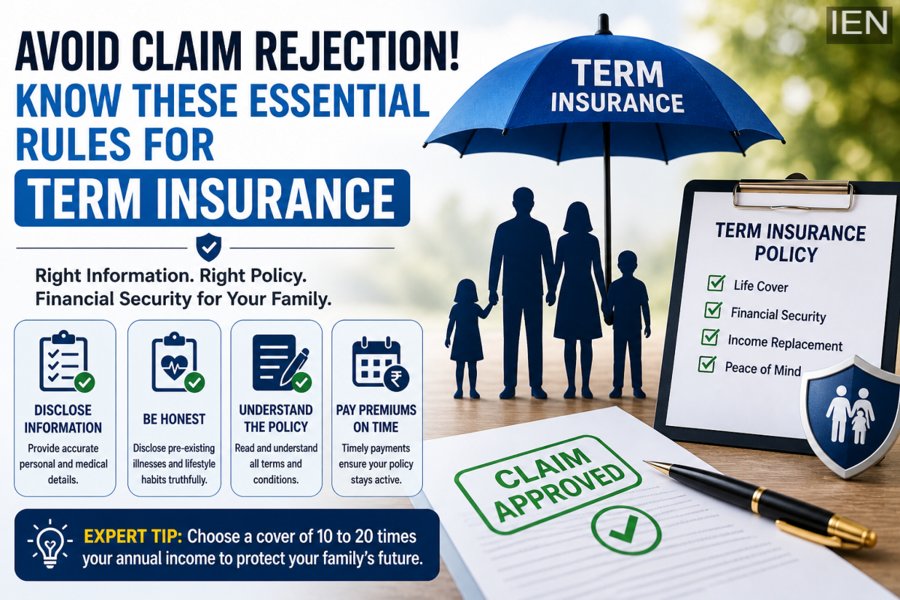
One of the most common questions is: how much term insurance is enough? Financial advisors generally suggest choosing a coverage amount that is 10 to 20 times your annual income. This ensures that your family can maintain their lifestyle, pay off debts, and meet future expenses such as education or marriage.
However, the ideal coverage may vary based on factors like existing liabilities, number of dependents, and long-term financial goals.
The Golden Rule: Always Disclose Accurate Information
One of the biggest reasons for insurance claim rejection is incomplete or incorrect information provided at the time of purchasing the policy. Many people hide details about their health, lifestyle habits (like smoking or drinking), or existing medical conditions to reduce premium costs. This can lead to serious complications later.
Insurance companies thoroughly verify the information during the claim process. Any mismatch or non-disclosure can result in claim rejection, leaving your family without financial support when they need it the most.
To avoid such situations, it is essential to:
- Provide accurate personal and medical details
- Disclose pre-existing illnesses honestly
- Mention lifestyle habits truthfully
- Share correct income and occupation details
Transparency ensures that your policy remains valid and claims are processed smoothly.
Common Mistakes to Avoid
Apart from hiding information, there are other common mistakes policyholders should avoid:
- Choosing insufficient coverage
- Delaying policy purchase
- Ignoring policy terms and conditions
- Not updating nominee details
- Missing premium payments
Being aware of these factors can help you make better decisions and avoid future complications.
Final Thoughts
Term insurance is not just a financial product—it is a responsibility toward your family. It guarantees that your loved ones remain financially secure even if life takes an unexpected turn. By selecting the right coverage, maintaining honesty in disclosures, and balancing insurance with investments, you can build a strong and reliable financial safety net.
In today’s uncertain world, securing your family’s future is not optional—it is essential.
