
Ten schemes are run for women and daughters in Bihar; find out how much financial assistance the government provides under each scheme..
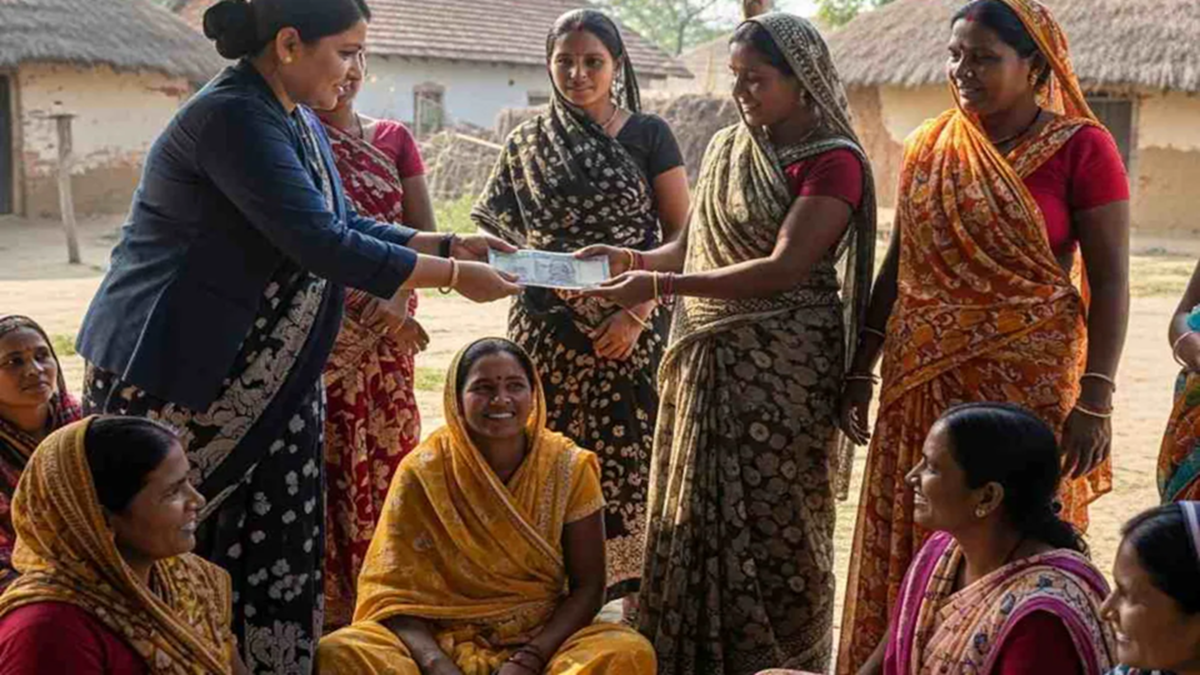
The Bihar government is implementing several welfare schemes for girls and women, providing financial assistance covering everything from birth to education, marriage, and employment. Furthermore, the government supports girls who clear the preliminary examinations for the UPSC and BPSC; they receive financial aid to encourage them to prepare for the subsequent stages of the exams. Financial assistance is also extended to girls from impoverished families and to destitute widows. Let us look at the specific schemes being run for girls and women in Bihar and the benefits they offer.
**Mukhyamantri Kanya Utthan Yojana**
Under the Mukhyamantri Kanya Utthan Yojana, benefits begin at the time of a girl's birth. Financial assistance totaling up to ₹50,000 is provided, covering the period from the start of schooling through to the completion of graduation; this aids girls in pursuing higher education. Additionally, unmarried girls who pass the Intermediate (Class 12) examination receive an incentive of ₹25,000.
**Mukhyamantri Mahila Rojgar Yojana**
The Mukhyamantri Mahila Rojgar Yojana provides financial assistance to women for self-employment and entrepreneurship. Through the 'Jeevika' initiative, an initial sum of ₹10,000 is transferred directly to the beneficiary's bank account. Further assistance is provided as the business grows; after six months, women can avail themselves of financial aid amounting to ₹2 lakh to expand their operations.
**Mukhyamantri Udyami Yojana**
The Mukhyamantri Udyami Yojana supports women who wish to establish a new business or industry. They are offered a loan of up to ₹10 lakh with a subsidy component and zero interest. Specifically, a subsidy of ₹5 lakh is provided, which does not need to be repaid, while no interest is charged on the remaining ₹5 lakh. **Competitive Examination Incentive Scheme**
Under this scheme, daughters from Bihar who pass the Union Public Service Commission (UPSC) examination or the preliminary examination of the Bihar Public Service Commission (BPSC) receive an incentive amount—₹1 lakh for clearing the UPSC exam and ₹50,000 for clearing the BPSC exam—to help them prepare for the subsequent main examinations.
**Bihar Student Credit Card Scheme**
Loans are provided to female students under the Bihar Student Credit Card Scheme. Education loans of up to ₹4 lakh are made available to daughters for higher education at an interest rate of just 1 percent.
**Chief Minister Kanya Vivah Yojana (Daughter's Marriage Scheme)**
Under this scheme, financial assistance of ₹5,000 is transferred directly to the bank accounts of daughters from poor and Below Poverty Line (BPL) families in Bihar at the time of their marriage. This scheme aims to curb child marriage by encouraging families to marry off their daughters at the appropriate age, with the financial aid provided at the time of the wedding.
**Chief Minister Balika Cycle Yojana (Girl Child Bicycle Scheme)**
Under this scheme, funds are transferred directly to the bank accounts of female students in Bihar upon their admission to Class 9, enabling them to purchase bicycles. The objective is to ensure that girls can commute to school without facing difficulties.
**Chief Minister Balika Poshak Yojana (Girl Child Uniform Scheme)**
Under this scheme, girls studying in classes 1 through 12 receive funds to purchase school uniforms. This annual assistance ranges from ₹600 to ₹1,500.
**Chief Minister Balika Protsahan Yojana (Girl Child Incentive Scheme)**
This scheme is also designed for female students; daughters who pass the Matriculation (Class 10) examination with a 'First Division' receive an incentive amount of ₹10,000.
**Lakshmibai Social Security Pension Scheme**
Under this scheme, a pension of ₹400 is transferred directly to the bank accounts of poor and destitute widows in Bihar to provide financial security. Eligibility requires the woman to belong to the BPL category and the family's total annual income to be ₹60,000 or less.
Disclaimer: This content has been sourced and edited from NDTV India. While we have made modifications for clarity and presentation, the original content belongs to its respective authors and website. We do not claim ownership of the content.
