
Take note before building a house in Delhi-NCR: certain activities have been prohibited until November 1st..
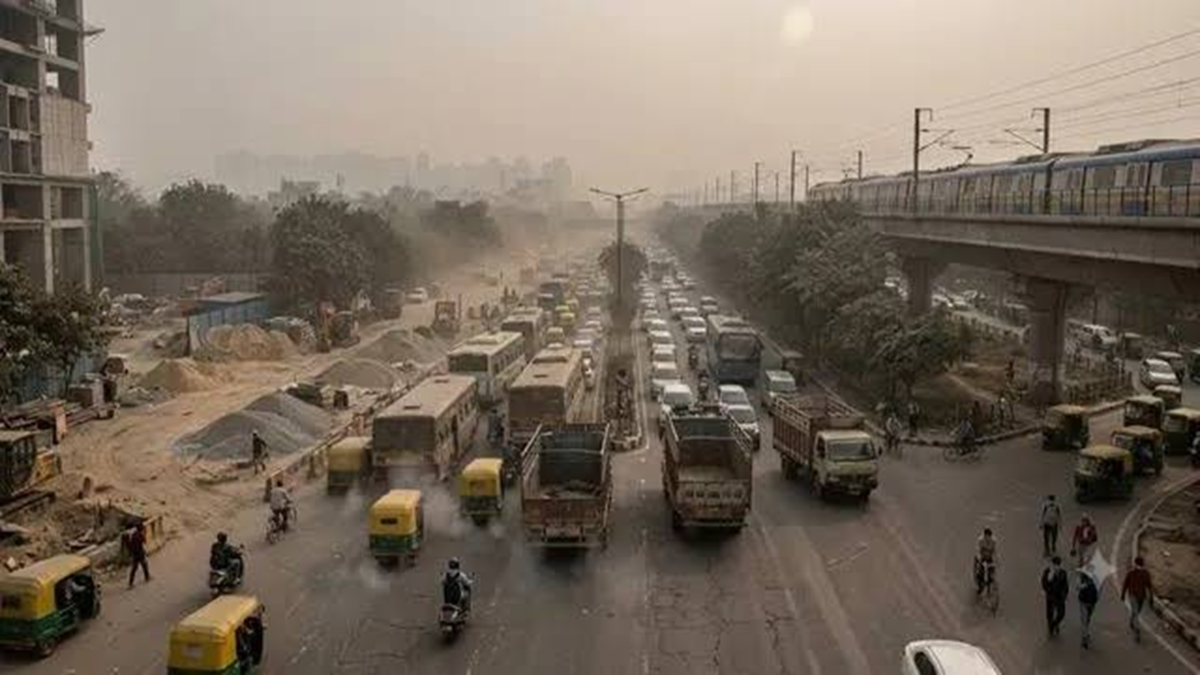
To control rising air pollution in the capital, Delhi, several strict restrictions are set to come into effect from November 1. In view of the escalating pollution levels during the winter season, the Delhi government has issued comprehensive guidelines concerning vehicles, construction activities, parking, and office operations. These measures include a ban on the entry of non-BS-VI compliant vehicles, a prohibition on construction activities, an increase in parking fees, and the implementation of 'work-from-home' arrangements for employees. The government states that the objective of these steps is to keep pollution levels under control.
Ban on the entry of vehicles below BS-VI standards
According to the news agency PTI, an order from the Delhi government’s Department of Environment and Forests mandates that, from November 1 to January 31, vehicles registered outside Delhi that do not meet BS-VI emission standards will not be permitted to enter the capital. CNG-powered vehicles, electric vehicles, and emergency service vehicles—such as ambulances, fire engines, and police vehicles—are exempted from this restriction. The Transport Department estimates that more than 1 million (10 lakh) vehicles from Gurugram, Faridabad, Noida, Greater Noida, and Ghaziabad could be affected by this decision.
Ban on construction and demolition activities.
From November 1 to January 31, demolition activities that generate dust, as well as civil construction work conducted in open areas, will be prohibited in Delhi. Only essential public infrastructure projects will be granted an exemption. Inside construction sites, tasks such as finishing, plumbing, and electrical work may continue, provided that dust-control standards are strictly followed. According to officials, a complete ban on all construction and demolition activities—including indoor work—will be in place between December 20 and January 20.
New rules to take effect from November 1
Directives issued to curb pollution
Parking fees to be doubled
To discourage the use of private vehicles, parking fees at authorized parking facilities will be doubled from November 1 to February 28. Parking facilities operated by the Delhi Metro Rail Corporation (DMRC) will be exempt from this hike. Instructions in this regard have also been issued to the Municipal Corporation and the NDMC.
**Changes in Office Timings**
To reduce congestion, offices of the Municipal Corporation of Delhi will operate from 8:30 AM to 5:00 PM, while Delhi Government offices will function from 10:00 AM to 6:30 PM. This arrangement will remain in effect from November 1 to February 28.
**Measures Taken to Curb Pollution**
**Only 50% of Staff to Attend Office**
Government and private offices must ensure that no more than 50% of their staff are present in the office at any given time between November 1 and January 31. The remaining employees will be required to work from home. Private establishments have been directed to implement staggered working hours, carpooling, ride-sharing, and the use of public transport. Essential services—such as hospitals, fire services, public transport, electricity and water supply, sanitation, and disaster management—are exempted from this arrangement.
**Strict Measures Against Waste Burning**
Resident Welfare Associations (RWAs), housing societies, government and private institutions, and contractors are tasked with preventing the burning of waste, leaves, biomass, and plastic within their premises. Instructions have also been issued to provide heating arrangements for workers using electricity or approved clean fuels, ensuring that no open burning takes place. Furthermore, directives have been issued to increase nighttime monitoring and conduct surveillance via drones.
**Action Against Violations**
The government has clarified that any violation of these orders will invite action under the Environment (Protection) Act, 1986. Such action may include the filing of cases, the imposition of environmental compensation, and the sealing or closure of the premises.
Disclaimer: This content has been sourced and edited from NDTV India. While we have made modifications for clarity and presentation, the original content belongs to its respective authors and website. We do not claim ownership of the content.
