
Supreme Court Grants Relief to Retired Employees; Two UP Pension Laws Struck Down
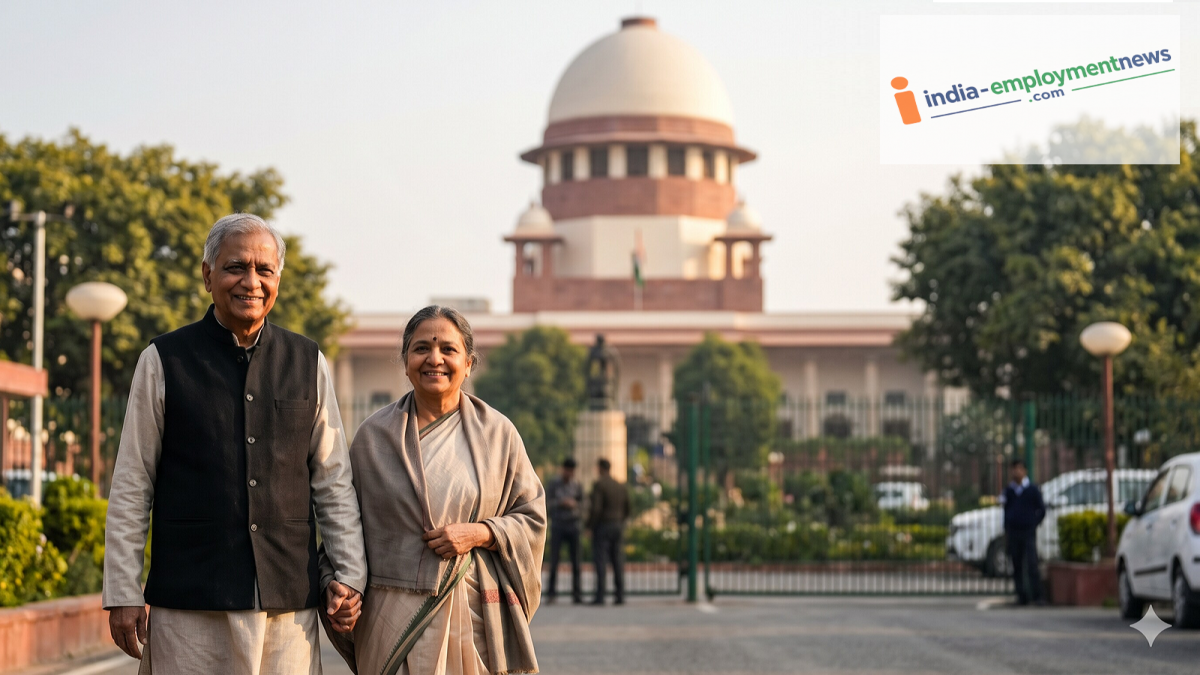
The Supreme Court’s ruling will allow eligible retired employees to include their prior service—rendered before they attained permanent status—in the calculation of their pension. The government is required to decide on such claims within six months. Failure to do so will necessitate the payment of 9% interest.
The Supreme Court has struck down two pension-related laws enacted by the Uttar Pradesh government in 2021 and 2025. These laws effectively denied pension benefits to employees who had initially worked for years on a daily-wage, muster-roll, or work-charged basis before eventually becoming permanent employees. The government had argued that service rendered prior to attaining permanent status should not be counted toward pensionable service; however, the Supreme Court ruled that since the employees had genuinely served the government and subsequently attained permanent status, their prior service cannot be disregarded.
The Court emphasized that while the government has the authority to amend laws, it cannot nullify a final judgment delivered by the Supreme Court. Consequently, such retired employees—or their legal heirs—may now file claims for pension, and the government must reach a decision within six months. Any delay will attract an interest payment of 9%.
Decision to be Made Within Six Months
Eligible retired employees may submit their applications to the relevant authority, accompanied by documentation regarding their prior service and subsequent regularization. Upon receipt of an application, the authorities are mandated to arrive at a decision within six months.
Opportunity to Present One’s Case
It is important to note that if an employee’s claim is rejected, they must first be granted an opportunity to present their side. Only thereafter may the authorities issue a formal decision, clearly stating the reasons for the rejection.
9% Interest Payable in Case of Delay
The Court reiterated that while the government may amend its rules, it cannot render a previous Supreme Court judgment ineffective by enacting new legislation. Furthermore, retired employees and their legal heirs are entitled to file claims for pension. The government is obligated to process and decide upon these applications within six months of receipt. If payment is delayed beyond this stipulated timeframe, the government will also be required to pay interest at a rate of 9 percent per annum.
Which employees will benefit?
Significantly, this decision may benefit employees who were regularized under a formal scheme. This includes those who, prior to their regularization, served in 'work-charged', temporary, or daily-wage capacities, or were engaged via a 'muster roll'. It is now possible to claim that their prior service should also be counted as 'qualifying service' for the purpose of calculating their pension.
