
Struggling With EMIs and Loans? Follow These 5 Simple Steps to Become Debt-Free
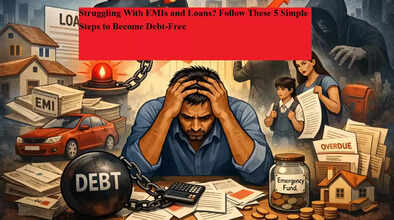
Rising inflation and easy access to credit have made it increasingly difficult for salaried individuals to maintain financial balance. Monthly EMIs, credit card bills, school fees, rent, and daily household expenses consume a large portion of income even before the next salary arrives. As a result, savings gradually disappear, and many people unknowingly fall into a growing debt trap.
For many working professionals, loans may initially seem manageable. A car loan here, a home loan there, and occasional credit card usage often feel harmless when viewed separately. However, over time, these financial commitments begin to pile up. When income fails to keep pace with liabilities, debt starts controlling personal finances instead of supporting them.
Data highlights how serious the situation is becoming. According to CRIF High Mark, the default rate on credit card dues overdue by more than 90 days rose to 15% by March 2025, up from 12.5% in March 2024 and 12.6% in March 2023. This trend clearly indicates that more borrowers are struggling to keep up with repayments.
The good news is that debt can be managed and gradually eliminated with the right strategy. Here are five practical and effective ways to regain control of your finances and move toward a debt-free life.
1. Pay More Than the Minimum Amount Due
One of the earliest warning signs of a debt problem is paying only the Minimum Amount Due (MAD) on credit cards or loans. While this helps avoid late fees, it does very little to reduce the actual outstanding amount. Interest continues to accumulate on the principal, often at very high rates.
For example, if you have a credit card bill of ₹1 lakh and keep paying only the minimum due, the repayment can stretch over several years. In many cases, the total interest paid may exceed the original amount spent. To avoid this, make it a habit to pay more than the minimum due every month. Even a slightly higher payment can significantly reduce interest and shorten the repayment period.
2. Avoid Taking New Loans to Repay Old Ones
When cash flow becomes tight, taking a new loan to clear old dues may appear like a convenient solution. Initially, this approach seems manageable, but it often leads to a dangerous cycle. Instead of reducing debt, the total outstanding amount increases, making repayment even harder.
Experts advise avoiding fresh loans unless absolutely necessary. If repayments are becoming overwhelming, consider consulting a credit counselor or discussing restructuring options with your lender. A revised repayment plan is far better than piling one loan on top of another.
3. Identify If You Are Trapped in EMI Overload
If you are paying EMIs regularly but the loan amount barely reduces, it is a strong indication that you are stuck in a debt trap. This usually happens when EMIs are stretched over long tenures or when high-interest loans dominate your liabilities.
Credit cards and personal loans typically carry the highest interest rates. Financial experts recommend prioritizing the repayment of such high-interest debt first. Clearing these loans faster can free up cash flow and help reduce the overall burden significantly.
4. Keep EMIs Within 30–35% of Your Income
One of the most important rules of healthy financial planning is controlling how much of your income goes toward EMIs. If a large portion of your salary is spent on loan repayments, there is little room left for savings or essential expenses.
For instance, if someone earns ₹75,000 per month and spends ₹25,000 on EMIs, nearly one-third of their income is already committed. Experts suggest that total EMIs should not exceed 30–35% of monthly income. Staying within this limit ensures that you have enough funds for living expenses, savings, and emergencies.
5. Build an Emergency Fund Without Delay
A major red flag is having little to no savings despite years of steady employment. When every rupee earned goes toward repaying loans, even small unexpected expenses force individuals to rely on fresh credit.
Start by creating a modest emergency fund, even if it is just ₹5,000 or ₹10,000. Over time, gradually increase this amount. An emergency fund acts as a financial safety net, helping you handle sudden expenses without taking on additional debt.
Final Takeaway
Debt does not accumulate overnight, and it cannot be eliminated instantly either. However, with discipline, planning, and conscious spending decisions, it is possible to regain financial stability. Paying more than the minimum due, avoiding unnecessary loans, controlling EMI exposure, and building an emergency fund can collectively put you on the path to long-term financial freedom.
If managed wisely, loans can be tools for growth—but without control, they quickly turn into a burden. Taking timely action today can help you break free from debt and build a more secure financial future.
