
Stocks vs Cash vs Gold: What Is the 25/25 Rule and Why ‘Dry Powder’ Matters for Smart Investing
In today’s volatile market environment, investors often struggle with one key question—where should they put their money to ensure both safety and growth? Should you invest in stocks for higher returns, keep cash for stability, or buy gold as a hedge?
Financial experts suggest that the real answer lies not in choosing one asset, but in maintaining the right balance. One popular strategy gaining attention is the 25/25 rule, which helps investors build a flexible and resilient portfolio.
What Is the 25/25 Rule?
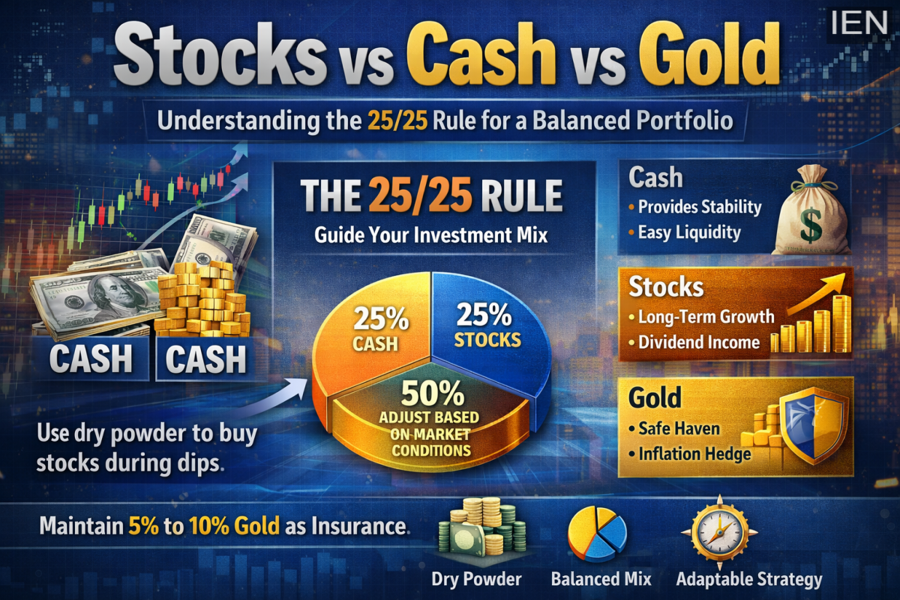
The 25/25 rule is a simple yet effective investment strategy designed to balance risk and return.
Here’s how it works:
- 25% of your money in cash for safety and liquidity
- 25% in stocks for long-term growth
- Remaining 50% adjusted based on market conditions
This approach ensures that your portfolio stays dynamic. When markets are high, you can increase your cash holdings, and when markets fall, you can deploy that cash into stocks at lower prices.
Why ‘Dry Powder’ Is Crucial in Investing
In financial terms, “dry powder” refers to cash reserves that investors keep ready to deploy during market opportunities.
Why it matters:
- Helps you buy quality stocks during market dips
- Prevents panic selling during volatility
- Ensures liquidity for emergencies
Experts emphasize that having cash on hand allows you to act quickly when the market presents attractive opportunities—something that fully invested portfolios often miss.
Stocks: The Growth Engine of Your Portfolio
Stocks are widely considered the most powerful wealth-building tool over the long term.
Key benefits:
- Potential for high returns
- Dividend income from companies
- Wealth creation through compounding
Since companies grow over time, stock investments tend to outperform most traditional assets in the long run.
Cash: The Stability Factor
While cash may not generate high returns, it plays a critical role in maintaining financial stability.
Advantages of holding cash:
- Guaranteed liquidity
- Protection against market volatility
- Immediate access during emergencies
Cash acts as a buffer, ensuring that you are not forced to sell investments at a loss during downturns.
Gold: A Safety Net, Not a Replacement
Gold is often seen as a safe-haven asset, especially during economic uncertainty. However, experts advise against treating it as a substitute for cash.
Important points:
- Gold prices fluctuate based on global factors
- It does not generate regular income
- Performance can remain flat for long periods
For example, gold delivered limited returns between 2012 and 2019, while safer instruments like fixed deposits performed better.
Ideal Role of Gold in Your Portfolio
Rather than over-investing, gold should be used strategically.
Recommended allocation:
- 5% to 10% of your portfolio
- Slightly higher allocation during uncertain times
Gold works best as an “insurance asset” that protects your portfolio during crises, not as a primary investment.
Cash vs Gold: Key Differences
| Factor | Cash | Gold |
|---|---|---|
| Stability | High | Moderate (price fluctuations) |
| Liquidity | Immediate | Depends on market conditions |
| Returns | Low but predictable | Uncertain |
| Income | None | None |
How to Build a Balanced Portfolio
A well-diversified portfolio should combine all three assets:
- Stocks for growth
- Cash for stability and opportunity
- Gold for protection during uncertainty
The key is not to overcommit to any single asset but to adjust your allocation based on market trends.
Final Takeaway
The 25/25 rule offers a practical framework for managing investments in uncertain markets. By maintaining a balance between stocks, cash, and gold—and keeping sufficient “dry powder”—investors can navigate market fluctuations more effectively.
In the long run, a disciplined and balanced approach is far more rewarding than chasing short-term gains. Smart investing isn’t about picking the perfect asset—it’s about creating the right mix.
