
Start your dairy farming business; the government is offering a subsidy of up to 50%—here is how to get a loan..
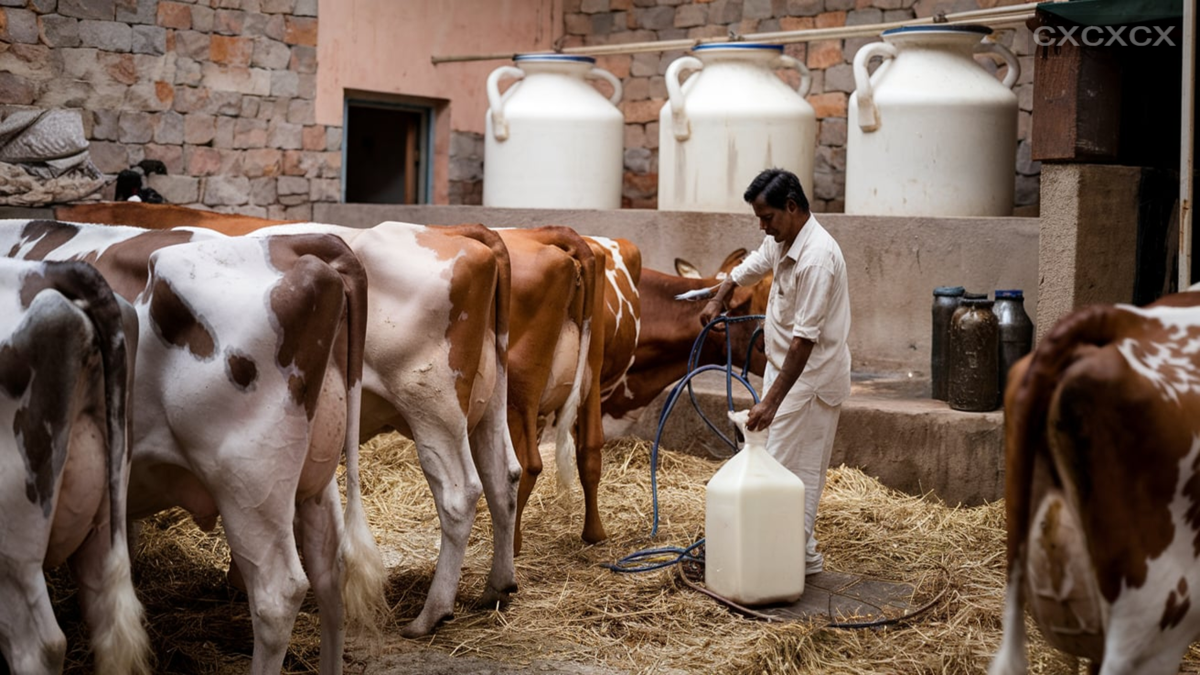
Dairy Farming Business: Unemployment in the country is currently at its peak. Many young people aspire to start their own ventures; however, a lack of proper information and experience often prevents them from doing so. To address this, the government is running various schemes to help such youth establish their own businesses. One such initiative is the promotion of dairy farming, supported by multiple schemes from both central and state governments.
To strengthen the economic viability of animal husbandry, the government offers subsidies ranging from 25% to 50% and provides loans on easy terms. However, making this business sustainable and profitable requires selecting the right breeds, employing scientific management practices, and effectively utilizing government schemes. If you are planning to start a new dairy farm, the comprehensive guide below will steer you in the right direction.
Select the Right Breeds
A dairy farm's profitability depends directly on the animals' milk yield and health. Therefore, it is crucial to choose breeds that are well-suited to your region's climate. Listed below are some high-yielding breeds known for adapting easily to the Indian environment and having lower susceptibility to diseases. Among cows, notable breeds include Gir, Sahiwal, Tharparkar, and Haryana. These breeds adapt well to the Indian climate, are less prone to illness, and produce A2 milk that commands a premium price in the market. Jersey and Holstein Friesian cows are known for very high daily milk yields; however, they require a cooler climate and specialized care. Among buffaloes, Murrah and Mehsana are excellent breeds. The Murrah breed is often referred to as "Black Gold," and its thick, high-fat milk is in high demand among manufacturers of dairy products, ghee, and *mawa* (condensed milk solids).
Scientific Methods to Increase Milk Production
Merely rearing livestock is not enough; maximizing returns from the animals is crucial, which can be achieved through proper nutrition and scientific management practices. To this end, the animal's diet should consist of 60% green fodder and 40% dry fodder, supplemented with 1 kg of concentrate mix and mineral mixture for every 2.5 liters of milk produced. Additionally, timely vaccination is essential; specifically, animals should be vaccinated against Foot-and-Mouth Disease (FMD) and Brucellosis. Furthermore, to protect animals from disease, well-ventilated sheds and clean flooring must be ensured. Installing foggers and fans in the shed helps prevent heat stress, as stress-free animals yield more milk.
Government Schemes and Subsidies
Under NABARD loan and subsidy programs—specifically the National Livestock Mission and AHIDF—subsidies of up to 25% for the general category and up to 33.33% for SC/ST and women applicants are provided.
The Pradhan Mantri Mudra Yojana offers collateral-free loans ranging from ₹50,000 to ₹10 lakh for small and medium-sized dairy setups.
The Nandini Krishak Samriddhi Yojana, implemented in states like Uttar Pradesh, provides a substantial subsidy of up to 50% for establishing units rearing indigenous cow breeds such as Gir and Sahiwal.
The Pashu Kisan Credit Card scheme provides working capital loans at a concessional interest rate of around 4% to cover the daily feed and maintenance costs of the livestock. Comparison of Key Animal Husbandry Schemes at a Glance
**Scheme Name** | **Focus Area** | **Benefits & Subsidies**
Rashtriya Gokul Mission | Conservation and breed improvement of indigenous cows | Free artificial insemination and technical support
Rashtriya Pashudhan Mission | Goat, poultry, and pig farming | Subsidy of up to 50% on project cost
Livestock Insurance Scheme | Protection against livestock accidents and death | Subsidy of 50% to 70% on premiums
AHIDF Scheme | Dairy and fodder plant infrastructure | 3% interest subvention and credit guarantee
Nandini Krishak Samriddhi Yojana | Unit of 25 indigenous breed cows | State-level grant of up to 50%
**How to Obtain a Bank Loan and Subsidy**
First, prepare a detailed project report (DPR). Include full details regarding the number of animals, purchase costs, shed construction, fodder expenses, and projected earnings. Arrange necessary documents such as your Aadhaar card, PAN card, and identity proof. Additionally, gather land documents—such as *Khasra-Khatauni* records and proof of ownership—or a lease agreement valid for at least 57 years. Also, keep a bank statement covering the last 6 to 12 months and a copy of your training certificate ready, if you have undergone training from the Animal Husbandry Department. Submit your application, along with the DPR and documents, to the nearest commercial, rural, or cooperative bank. Upon receiving the loan application, bank officials will conduct a site verification and approve the loan. Once the first loan installment is released, the bank files a subsidy claim with NABARD or on the government portal; upon approval, the subsidy amount is adjusted against your loan account.
Disclaimer: This content has been sourced and edited from NDTV India. While we have made modifications for clarity and presentation, the original content belongs to its respective authors and website. We do not claim ownership of the content.
