
Solar Panels: Reaching 6.6 Million Households Daily—Deployment Pace Increases 20-Fold
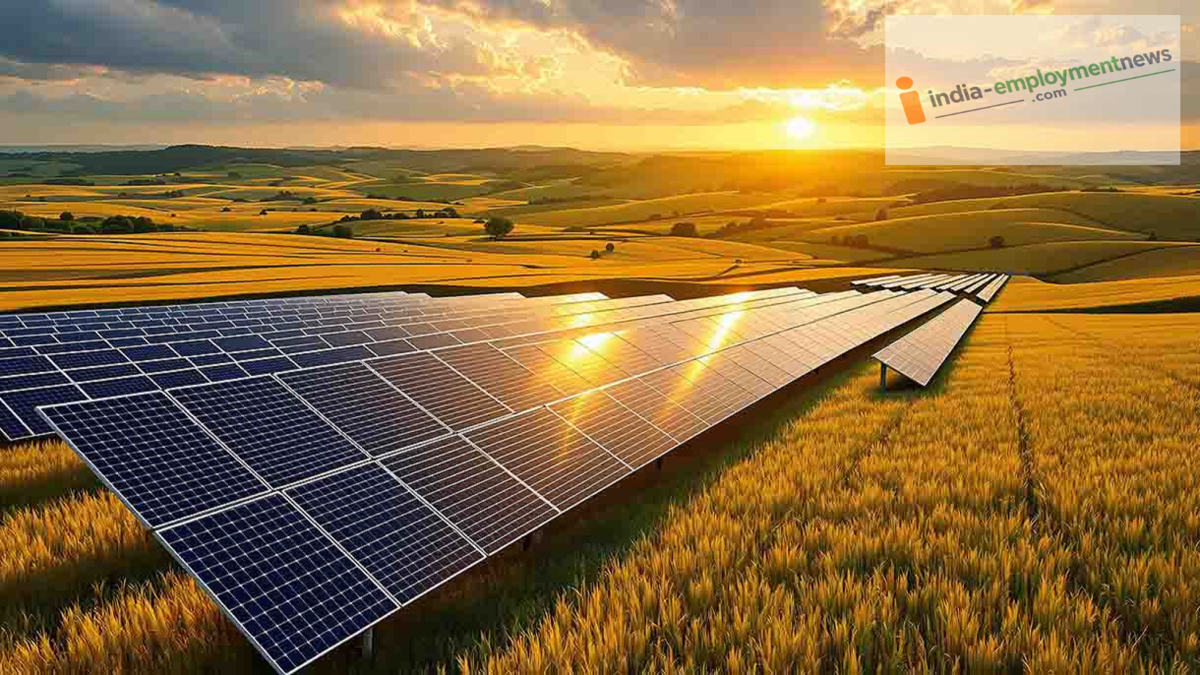
The pace of installing rooftop solar systems under the 'Surya Ghar' (Solar Home) scheme has accelerated 20-fold. So far, 6.6 million households have been covered. The government’s objective is to extend solar energy to 10 million (1 crore) households and achieve a non-fossil fuel energy capacity of 500 GW by 2030.
Efforts to promote solar energy in India are now yielding visible, rapid results. The installation of solar panels on residential rooftops has gained significant momentum compared to the past.
Under the central government’s 'Pradhan Mantri Surya Ghar: Muft Bijli Yojana' (Prime Minister’s Solar Home: Free Electricity Scheme), approximately 6.6 million families have been brought into the fold. Union Minister for New and Renewable Energy, Pralhad Joshi, stated that the pace of rooftop solar installations across the country has increased by nearly 20 times.
Target: Reaching 10 Million Households
The government has set a target to install rooftop solar systems in 10 million households under the 'Pradhan Mantri Surya Ghar: Muft Bijli Yojana'. To date, about 6.6 million households have been covered by the scheme. Andhra Pradesh has also seen significant progress, with approximately 786,000 families now equipped with rooftop solar systems.
Timeframe Reduced from 118 Days to Just 6 Days
Speaking on Friday at the 31st CII Partnership Summit in Visakhapatnam, Union Minister Pralhad Joshi provided an update on the scheme's progress. He noted that, initially, it took 118 days to reach 100,000 households with rooftop solar installations. Currently, it takes an average of only six days to complete installations for 100,000 households. The government aims to further accelerate this process, with the ministry now working toward reducing the time required to reach 100,000 households to just five days.
Target: 500 GW Capacity by 2030
India has also witnessed a major expansion in its solar energy capacity. According to Joshi, the country's installed solar capacity has grown from 2.8 gigawatts in 2014 to 175 gigawatts today. Non-fossil fuel energy sources now account for approximately 55 percent of the country's total installed power capacity. The government has set a target to achieve 500 gigawatts of non-fossil fuel energy capacity by 2030. Furthermore, the government is placing a strong emphasis on promoting clean energy and green development.
An opportunity to earn while saving on electricity bills
According to the Minister, installing solar panels provides relief to households by reducing their electricity bills. Moreover, any surplus electricity generated can be fed back into the grid, creating an additional source of income. This benefits both farmers and domestic consumers.
