
Solar Panels: Government Introduces 'Smart Grid' – A Major New Development in the 'Surya Ghar' Scheme
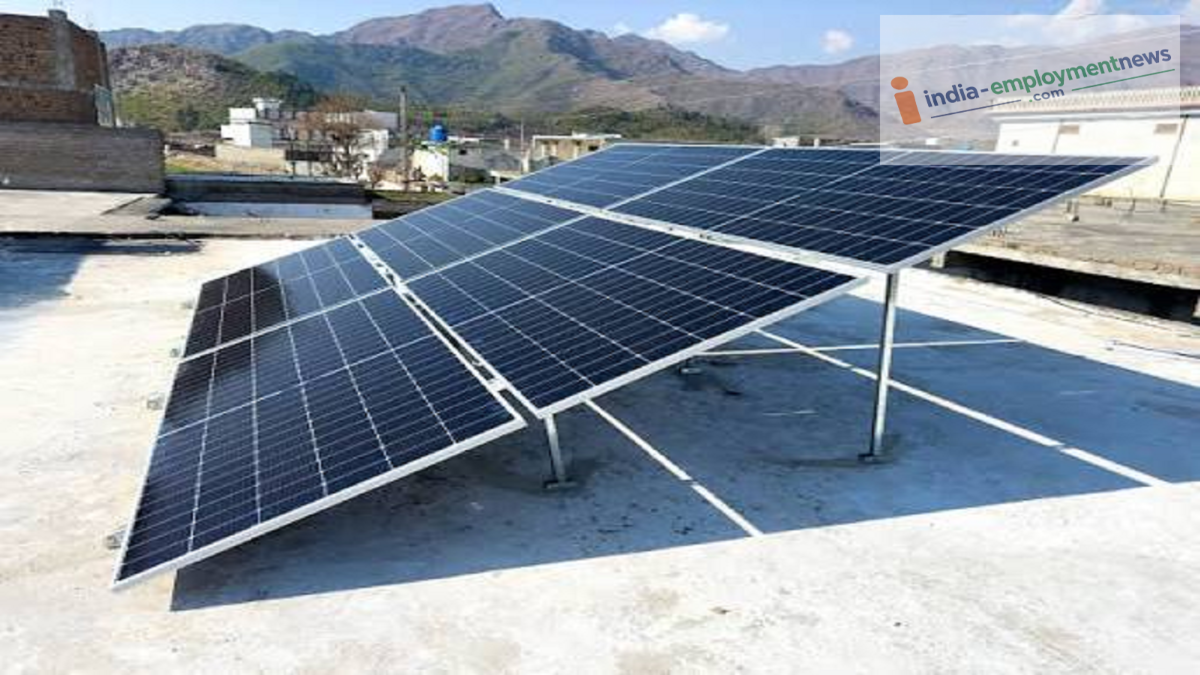
Under the 'PM Surya Ghar' (Prime Minister's Solar Home) scheme, the government is working on 'smart grid' technology. The objective is to improve the monitoring and supply of electricity generated by the increasing number of solar panels installed on residential rooftops.
The trend of installing solar panels on rooftops is gaining significant momentum across the country. However, when many households in the same area begin generating electricity through solar energy, it can place increased pressure on the power grid. To address this challenge, the government is now developing smart grid technology as part of the 'PM Surya Ghar Muft Bijli Yojana' (PM Solar Home Free Electricity Scheme). Its primary advantage lies in its ability to better manage the monitoring and supply of electricity generated by solar panels.
The core purpose of this initiative is to enhance the monitoring of solar-generated electricity and make the power grid more reliable. The National Institute of Solar Energy (NISE) has invited proposals for these projects.
What is the new 'smart grid' system?
This technology is known as a 'Distributed Energy Resource Management System' (DERMS). It will enable utility companies to monitor, in real-time, the electricity generated by solar panels installed in homes. Furthermore, it will assist in managing voltage fluctuations, electricity demand, and the growing strain on the network.
When electricity from multiple households enters the power grid simultaneously, it can lead to issues such as voltage spikes and increased pressure on the network. A smart grid will help manage such situations and ensure the efficient distribution of electricity.
What new technologies will be implemented?
The National Institute of Solar Energy (NISE) has invited proposals for innovative projects under this scheme. These include technologies such as battery storage, electric vehicle (EV) charging, the use of artificial intelligence (AI) to forecast electricity demand, and 'virtual power plants.' These solutions will help in making better use of surplus solar energy.
What is the subsidy provided under the 'Surya Ghar' scheme?
Under the 'PM Surya Ghar: Muft Bijli Yojana' (PM Surya Ghar: Free Electricity Scheme), a central subsidy is provided: ₹30,000 for a 1 kW solar system, ₹60,000 for a 2 kW system, and a maximum of ₹78,000 for systems with a capacity of 3 kW or higher.
In Bihar, eligible consumers receive an additional assistance of ₹20,000 from the state government, over and above the central subsidy. To apply, one can visit the official 'PM Surya Ghar' portal and register by providing details regarding their electricity connection and the concerned DISCOM (electricity distribution company).
