
Small Savings Interest Rates Update: Will PPF, NSC and Sukanya Scheme Returns Rise? Decision Expected by March 31
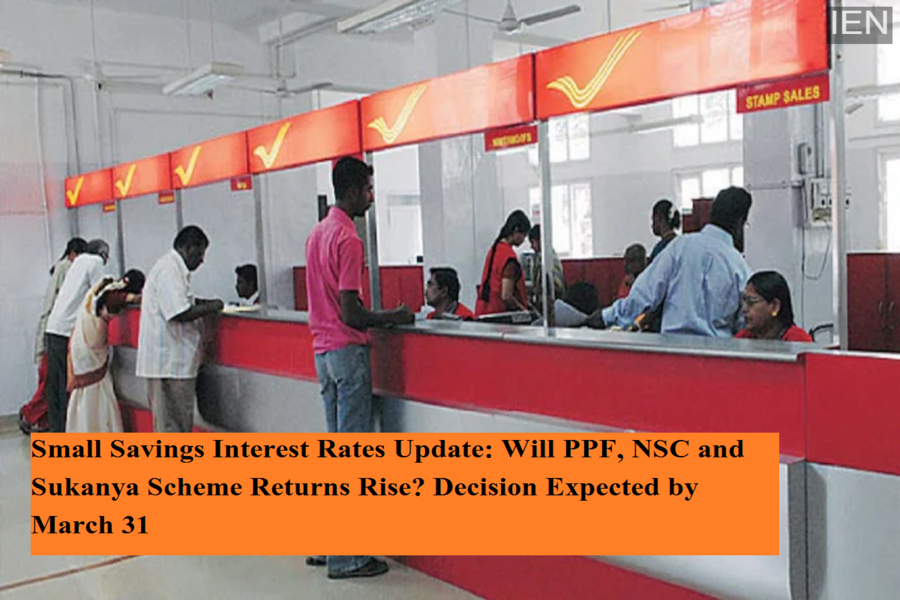
Investors in small savings schemes are eagerly awaiting a key announcement as the government is set to declare interest rates for the April–June 2026 quarter by March 31. Popular schemes like Public Provident Fund (PPF), National Savings Certificate (NSC) and Sukanya Samriddhi Yojana are under focus, as any revision will directly impact millions of investors.
While there is growing expectation among savers that interest rates might increase, experts believe the chances of a hike remain limited in the current economic environment.
Current Interest Rates on Small Saving Schemes
As of the January–March 2026 quarter, the government has maintained existing interest rates without any changes. Here’s a quick look at the current returns:
- Sukanya Samriddhi Yojana: 8.2%
- Public Provident Fund (PPF): 7.1%
- National Savings Certificate (NSC): 7.7%
- Kisan Vikas Patra (KVP): 7.5% (maturity in 115 months)
- Monthly Income Scheme (MIS): 7.4%
- Post Office Time Deposit: 7.1%
- Post Office Savings Account: 4%
These rates have remained stable for the past quarter, offering predictable returns to investors.
Why the Upcoming Decision Matters
The government reviews small savings scheme interest rates every quarter based on market conditions. These schemes are especially popular among:
- Risk-averse investors
- Retirees seeking stable income
- Families planning long-term goals like education and marriage
Any change in interest rates can significantly affect long-term returns, particularly in schemes like PPF and Sukanya Samriddhi Yojana, which are designed for extended investment horizons.
Will Interest Rates Increase This Time?
Despite expectations, a rate hike may not be very likely this quarter.
Key Factors Influencing the Decision:
- Global economic uncertainty
- Inflation trends
- Interest rate movements in broader markets
- Geopolitical tensions affecting financial stability
Given these factors, the government may prefer to keep rates unchanged to maintain balance and stability.
How Are These Rates Decided?
Interest rates on small savings schemes are linked to yields on government bonds. If market interest rates rise, there is a possibility of an increase in scheme returns. However, the government also considers:
- Fiscal impact
- Investor sentiment
- Economic stability
This is why rate changes are not always immediate, even when market conditions shift.
Why Investors Prefer These Schemes
Small savings schemes remain a top choice due to:
- Government-backed safety
- Stable and predictable returns
- Tax benefits (in schemes like PPF and Sukanya)
- Long-term wealth creation
For conservative investors, these schemes offer a reliable alternative to market-linked instruments.
What Should Investors Do Now?
Until the official announcement:
- Avoid making hasty investment decisions
- Continue SIP-style investing in long-term schemes
- Review your portfolio allocation
- Stay updated with the government’s notification
Final Takeaway
The upcoming announcement on small savings scheme interest rates is crucial for investors across India. While hopes of a rate hike exist, current economic conditions suggest that rates may remain unchanged.
For now, schemes like PPF, NSC, and Sukanya Samriddhi Yojana continue to provide stable and secure returns—making them a dependable choice for long-term financial planning.
