
SIP Strategy Guide: How to Split Your Money Across Large, Mid & Small Cap Funds
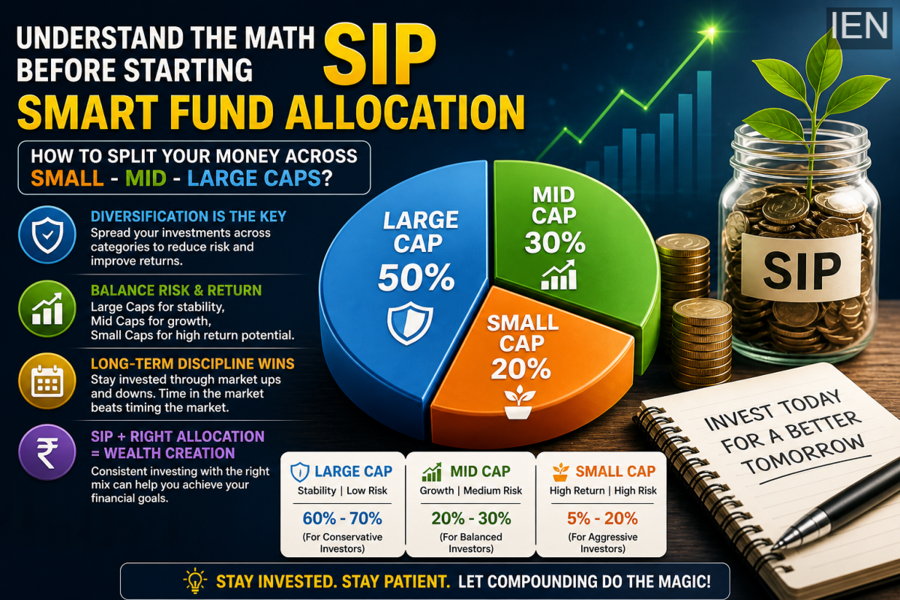
Starting a SIP (Systematic Investment Plan) is a smart move—but where to allocate your money is what really decides your returns and risk.
The biggest confusion investors face is:
👉 How much should go into Large-cap, Mid-cap, and Small-cap funds?
Let’s simplify this in a practical, no-nonsense way.
📊 Understanding the 3 Fund Categories
🟢 Large-Cap Funds (Low Risk, Stable)
- Invest in top, well-established companies
- Lower volatility
- Consistent but moderate returns
👉 Best for:
- Beginners
- Risk-averse investors
🟡 Mid-Cap Funds (Balanced Risk & Growth)
- Invest in growing companies
- Higher return potential than large-cap
- Moderate volatility
👉 Best for:
- Investors seeking growth with some stability
🔴 Small-Cap Funds (High Risk, High Return)
- Invest in smaller companies
- Highly volatile
- Can deliver strong returns over time
👉 Best for:
- Long-term investors with high risk tolerance
⚖️ Ideal SIP Allocation Strategy
There’s no one-size-fits-all formula, but experts suggest these practical allocation models:
👶 Beginner (Safe Approach)
- Large Cap: 60–70%
- Mid Cap: 20–30%
- Small Cap: 5–10%
👉 Focus: Stability + gradual growth
⚖️ Balanced Investor
- Large Cap: 40–50%
- Mid Cap: 30–40%
- Small Cap: 10–20%
👉 Focus: Growth with controlled risk
🚀 Aggressive Investor (Long-Term)
- Large Cap: 20–30%
- Mid Cap: 30–40%
- Small Cap: 30–40%
👉 Focus: Maximum growth (with volatility)
🔄 Why Diversification Is Key
Putting all money in one category = risky ❌
✔️ A mix helps:
- Reduce losses during market falls
- Capture growth during market rallies
- Maintain long-term balance
🧠 Smart Alternative: Flexi-Cap & Multi-Cap Funds
If you don’t want to manage allocation yourself:
- Flexi-cap funds → Fund manager shifts money dynamically
- Multi-cap funds → Invest across all segments by rule
👉 Ideal for beginners who want hands-off investing
⚠️ Common Mistakes to Avoid
- Investing only in small-cap for “quick returns”
- Changing funds frequently
- Stopping SIP during market dips
- Ignoring long-term horizon
📌 Final Takeaway
👉 SIP success is not about timing the market—it’s about allocation and discipline
- Start with a balanced mix
- Adjust based on your risk level
- Stay invested for the long term
Because in SIP investing, consistency beats complexity every time.
