
Silver Price Outlook 2026: Can Silver Hit ₹2.4 Lakh Per Kg? Upside Potential and Key Risks Explained
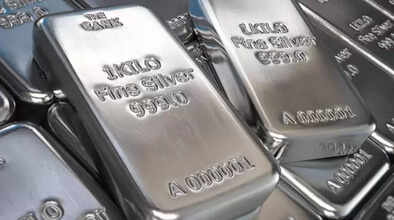
Silver has grabbed market attention after crossing the historic ₹2 lakh per kilogram mark on the Multi Commodity Exchange (MCX). With global cues turning supportive and industrial demand accelerating, several brokerage houses now believe the rally may extend well into 2026. Some estimates even place silver’s long-term target at ₹2.4 lakh per kg. However, despite the strong momentum, experts caution that the road ahead is not risk-free. Here is a detailed, balanced outlook on where silver prices could be headed and what investors should watch closely.
Silver Hits Record High, Volatility Remains
Silver recently touched ₹2 lakh per kg on MCX, driven by positive global sentiment following interest rate cuts by the US Federal Reserve. While prices saw sharp profit booking on the same day, the metal bounced back strongly. In the latest session, silver surged by nearly ₹6,000 to trade close to ₹1,98,633 per kg, highlighting both strong buying interest and elevated volatility.
According to market experts, such sharp swings are natural when prices enter uncharted territory. While the broader trend remains positive, short-term corrections cannot be ruled out.
Axis Securities’ Target: Buy on Dips, ₹2.4 Lakh by 2026
Axis Securities believes that silver still has room to rise despite the recent rally. The brokerage recommends a “buy on dips” strategy, suggesting accumulation around the ₹1.70–1.78 lakh per kg range. Based on long-term fundamentals and technical strength, Axis Securities has set a price target of ₹2.4 lakh per kg for 2026.
From a technical perspective, silver appears exceptionally strong. A long consolidation phase that lasted from 2011 to 2025 has ended, leading to a major “rounding bottom breakout” on monthly charts. Both the 20-month and 60-month exponential moving averages (EMAs) are sloping upward, with prices trading well above these levels—often seen as a sign of an early-stage bull cycle.
Valuation Concerns and Short-Term Risks
While maintaining a constructive outlook, Axis Mutual Fund has flagged valuation-related risks at current levels. Silver prices appear stretched, increasing the probability of near-term corrections. Key concerns include weak physical demand at higher prices, potential ETF outflows, and aggressive profit booking after the sharp rally.
Additionally, several macro risks could cap upside momentum. These include a stronger US dollar, rising real bond yields, easing geopolitical tensions, weakness in copper prices, and rotation away from commodities. Central banks also continue to prioritize gold over silver, which may limit official sector demand for the metal.
Why Silver Is Rising: Precious and Industrial Demand Combined
Silver’s strength in 2025 has been supported by many of the same factors that boosted gold prices—such as a weak dollar, global economic uncertainty, geopolitical risks, and volatility in global bond markets, including Japan. However, silver has an added advantage: its growing industrial relevance.
Industrial demand has surged across key sectors like solar photovoltaic (PV) technology, electric vehicle (EV) batteries, and semiconductors. Rising metal prices, shifts in commodity investment flows, and supply tightness have further amplified momentum. Some analysts also note that high copper prices have encouraged substitution toward silver in certain applications.
Over 50% of Silver Demand Comes From Industry
Silver is unique because it functions both as a precious metal and a critical industrial commodity. More than half of its total consumption comes from industrial use. The solar PV segment alone has seen silver demand rise sharply—from 94.4 million ounces (Moz) in 2020 to 243.7 Moz in 2024, accounting for nearly 21% of total global consumption.
Alongside industrial demand, ETF inflows, physical buying, and a shift of investor capital from equities to commodities have continued to support prices.
Gold-Silver Ratio Signals Strong Risk Appetite
Another bullish indicator is the sharp decline in the gold-to-silver ratio. Axis Securities points out that the ratio fell from around 105 in late 2024 to below 70 during 2025. Historically, such a decline reflects improving risk appetite among investors and rising confidence in silver’s growth potential.
Supply Deficit Continues for Fifth Straight Year
Silver supply remains structurally tight. Since most silver production is a by-product of lead, zinc, and copper mining, output cannot increase quickly in response to rising demand. This inelastic supply has resulted in a market deficit for the fifth consecutive year in 2025—a key factor keeping prices elevated.
Silver ETFs Deliver Exceptional Returns
Silver’s dual role as an investment asset and industrial metal has translated into strong ETF performance. Over the past six months to one year, several silver ETFs have delivered returns ranging from 80% to over 100%.
Top Silver ETFs (6-Month Returns):
-
Tata Silver ETF – 85.72%
-
ICICI Prudential Silver ETF – 82.37%
-
DSP Silver ETF – 82.27%
-
Aditya Birla Sun Life Silver ETF – 82.14%
-
Kotak Silver ETF – 82.08%
Top Silver ETFs (1-Year Returns):
-
Tata Silver ETF – 107.03%
-
UTI Silver ETF – 106.51%
-
HDFC Silver ETF – 104.67%
-
ICICI Prudential Silver ETF – 103.50%
-
DSP Silver ETF – 103.34%
Bottom Line
Silver’s long-term outlook remains positive, supported by strong industrial demand, tight supply, and favorable technical patterns. While the ₹2.4 lakh per kg target for 2026 appears achievable, investors should be prepared for volatility and interim corrections. A disciplined, phased investment approach and professional financial advice remain essential before making any investment decisions.
Disclaimer: Market views and targets mentioned are based on brokerage and expert opinions. Investors should consult certified financial advisors before investing.
